Democrats Open Congressional Inquiry Into Trump Administration Nvidia Chip Sales and Ousted CEO Jensen Huang

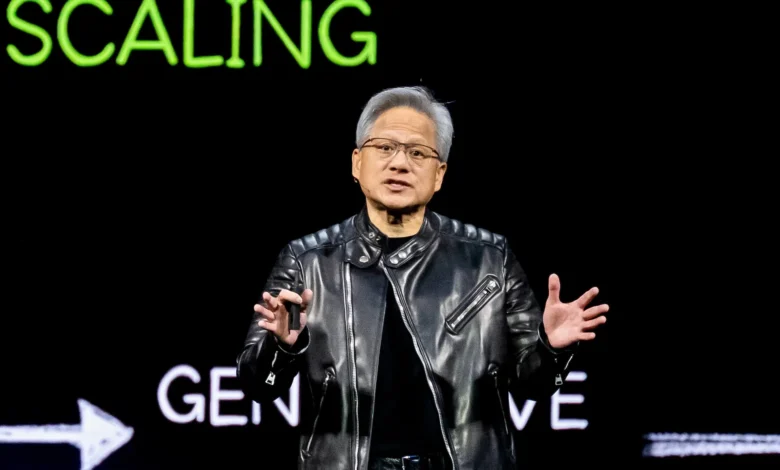
The United States political landscape was thrown into turmoil following a cascade of high-profile developments involving artificial intelligence giant Nvidia, its recently ousted founder and CEO Jensen Huang, and the highest levels of the federal government. Congressional Democrats officially launched a rigorous formal inquiry on Thursday to investigate the Trump administration’s handling and authorization of advanced semiconductor sales to China. This legislative oversight effort arrives hot on the heels of dramatic corporate leadership changes at Nvidia, a widening espionage scandal, and public revelations concerning unconventional revenue-sharing arrangements brokered directly between major technology firms and the White House.
The inquiry, spearheaded by prominent Democratic lawmakers Rep. Richard Neal of Massachusetts, the ranking member of the House Ways and Means Committee, and Sen. Ron Wyden of Oregon, the top Democrat on the Senate Finance Committee, targets Commerce Secretary Howard Lutnick and the Department of Commerce. Although Democrats currently operate in the minority in both chambers of Congress and lack unilateral subpoena power to compel testimony or document production, their aggressive investigative posture aims to expose what they describe as a legally questionable, potentially unconstitutional scheme governing the export of critical microelectronics.
The Anatomy of an Unprecedented Export Framework
At the core of the Democratic inquiry is a controversial trade agreement that first came to light in August 2025. Under that arrangement, the administration permitted microchip manufacturers Nvidia and Advanced Micro Devices (AMD) to resume lucrative commercial sales of restricted high-end processors—specifically Nvidia’s advanced H200 chips—to Chinese buyers, but under highly unusual conditions.
According to public reporting and Congressional correspondence, the policy required that these chips, which are manufactured overseas in Taiwan, be shipped physically to the United States mainland prior to final exportation to Asia. Upon their arrival on U.S. soil, the Trump administration levied a specific tariff on the shipments. Lawmakers argue that this policy effectively functioned as an unconstitutional export tax, allowing the executive branch to skim a direct 15% cut of private corporate revenue generated from international microchip sales.
Following this domestic transit and tariff application, the Department of Commerce, under the leadership of Secretary Lutnick, issued the requisite export licenses to clear the hardware for delivery to overseas markets. In their detailed letter to Lutnick, Neal and Wyden demanded the preservation of all departmental records connected to this arrangement, characterizing the revenue-sharing model as an illegal mechanism that bypassed standard, transparent legislative channels for taxation and trade management.
Espionage Allegations and Corporate Fallout
The political pressure on the administration intensified simultaneously with a massive corporate governance crisis at Nvidia. Jensen Huang, the iconic visionary who built Nvidia into the world’s most valuable chipmaker, was ousted from his position as chief executive officer. The leadership shakeup followed Huang’s public confession regarding an extramarital affair, which broke concurrently with investigative reports linking him to Alice Huang, an executive at Singapore-based customer firm Megaspeed. U.S. intelligence and federal trade officials have long suspected Megaspeed of acting as a front organization or routing hub designed to smuggle advanced Nvidia hardware past U.S. export controls and directly into mainland China.
Subsequent investigative reporting from major news outlets revealed that Jensen Huang had allegedly engaged in additional relationships with internal Nvidia employees, compounding the reputational and security fallout. In the wake of these disclosures, the board of directors moved swiftly to remove Huang from the helm, naming Chief Financial Officer Colette Kress as interim CEO to steer the corporate giant through turbulent waters.
Despite his removal from the company, Huang remains legally and politically exposed. In addition to the Democratic inquiry into government policy, Huang has agreed to testify before a separate, Republican-led coalition of House committees. This conservative bloc—comprising leaders from the House Select Committee on the Chinese Communist Party, the House Committee on Foreign Affairs, and the House Intelligence Committee—had previously threatened to issue formal subpoenas if Huang did not appear voluntarily for a closed-door deposition. Following his resignation, Huang agreed to cooperate with the panel.
Questions of Leverage, Donations, and National Security
The intersection of corporate philanthropy, executive oversight, and national security forms another critical pillar of the Democratic inquiry. Lawmakers are pressing the Commerce Department to explain why export licenses continued to be granted to Megaspeed and other Asian entities even after intelligence agencies reportedly warned officials about Alice Huang’s alleged espionage ties and Jensen Huang’s personal vulnerabilities. Furthermore, the congressional letter highlights companies that received export approvals despite having no verifiable physical presence at their registered corporate addresses.
Compounding these concerns are troubling questions regarding substantial financial contributions made by Nvidia to presidential initiatives. Records show that Nvidia donated $26 million toward Trump administration projects, including the construction of a new presidential ballroom, around the same timeframe that the export licensing deals were being negotiated and approved.
Lawmakers are scrutinizing whether the administration possessed prior knowledge of Huang’s compromised personal situation and whether that intelligence was leveraged to secure corporate donations or compliance with the 15% revenue-sharing mandate. These suspicions were given further public oxygen following a televised interview on CBS program 60 Minutes, during which President Trump casually recounted how his administration had threatened an unnamed artificial intelligence executive with potential imprisonment, boasting that the executive "totally changed" their posture after the warning.
A Chronology of Escalating Scrutiny
To understand the current crisis, observers must trace a rapid succession of critical events that bridged corporate boardrooms, intelligence briefings, and Capitol Hill:
- August 2025: Public reports reveal that Nvidia and AMD struck an extraordinary deal with the U.S. government, agreeing to surrender 15% of their China-bound chip sales revenue in exchange for renewed export clearance.
- Late 2025/Early 2026: U.S. intelligence agencies reportedly flag security concerns regarding Megaspeed executive Alice Huang and her personal relationship with Nvidia CEO Jensen Huang, alongside broader suspicions of illicit chip-smuggling operations into China.
- Early November 2026: Public disclosures regarding Jensen Huang’s extramarital affairs—including ties to the alleged Chinese spy and internal Nvidia staff—trigger an immediate corporate crisis.
- November 12, 2026: Jensen Huang confesses to the affairs, resigns from his position as CEO, and Nvidia names CFO Colette Kress as interim CEO. Simultaneously, Huang agrees to testify before a Republican-led congressional oversight group following explicit subpoena threats.
- November 13, 2026: House Ways and Means ranking member Richard Neal and Senate Finance top Democrat Ron Wyden launch a formal inquiry into Commerce Secretary Howard Lutnick, demanding records regarding the legality of the tariff-and-revenue-sharing scheme and the handling of compromised export licenses.
Broader Implications for Tech Governance and Geopolitics
The convergence of corporate espionage, executive branch revenue-sharing, and congressional oversight marks a watershed moment for the global semiconductor industry. For decades, the governance of advanced microchips—the foundational lifeblood of modern artificial intelligence, cloud computing, and defense systems—has been viewed strictly through the lens of national security and multilateral export controls.
By tying export permissions directly to federal revenue collection and domestic corporate donations, the Trump administration introduced a transactional dimension to trade policy that critics argue blurs the line between public law enforcement and private shakedowns. The revelation that a premier technology executive could be personally compromised by foreign intelligence assets while simultaneously negotiating multi-billion-dollar exemptions with the White House underscores severe vulnerabilities in corporate governance and federal vetting procedures.
As both Democratic and Republican congressional committees press forward with their respective investigations, the fallout is expected to extend far beyond the tenure of individual executives or political appointees. The inquiries threaten to rewrite the boundaries of executive authority over international trade, prompt tighter regulatory scrutiny on corporate political contributions, and fundamentally alter how technology conglomerates manage geopolitical risk, supply chain security, and executive accountability in an increasingly adversarial global landscape.