Mapping the Invisible Web: How Network Science is Transforming Medicine, Nutrition, and Our Understanding of Complex Systems

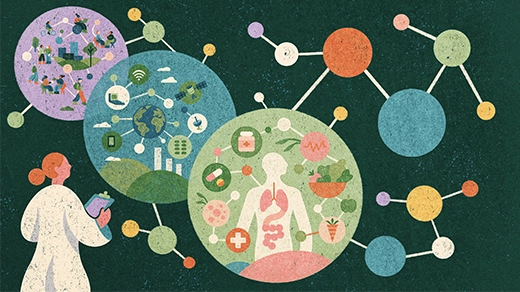
Nothing in the natural or human-made world truly exists in absolute isolation. From the firing patterns of individual neurons giving rise to consciousness, to genes and proteins interacting to sustain life, complex systems are fundamentally defined by their interconnectedness. When researchers in the mid-to-late 1990s began mapping real-world networks—spanning the nascent World Wide Web to Hollywood actor collaborations—they discovered that wildly disparate systems shared foundational architectural characteristics. These structural similarities could not be explained by individual components alone, pointing toward universal organizing principles governing how networks form, evolve, and function.
In a recent installment of the science podcast The Joy of Why, co-hosts and mathematicians Steve Strogatz and Janna Levin sat down with network science pioneer Albert-László Barabási. The wide-ranging discussion explored the genesis of network theory, the philosophical shift away from strict reductionism, and the groundbreaking application of network principles to modern medicine and nutritional science.
The Birth of a Discipline: Moving Beyond Reductionism
During the 1990s, popular culture was captivated by the concept of "Six Degrees of Separation," famously popularized by the Kevin Bacon movie game and later examined by writer Malcolm Gladwell through the social connectors of Chicago. Behind these parlor games, however, lay serious mathematical inquiries into how populations and systems are linked.
At the time, traditional science relied heavily on reductionism—breaking systems down into their smallest constituent parts to understand them. While reductionism remains a cornerstone of scientific inquiry, Barabási and Strogatz argued that focusing exclusively on individual components misses the proverbial forest for the trees.
"Nothing exists in isolation," Barabási explained during the podcast. "A gene, a neuron, a human doesn’t make sense at all to think about in isolation. They all start making sense when they connect to other things."
Historically, mathematicians relied on graph theory—dating back to Leonhard Euler’s famous 18th-century solution to the Königsberg bridge problem—while social scientists studied small-scale human networks. However, these traditional models lacked the dynamic perspective of how networks grow over time.
The Discovery of Scale-Free Networks and Hubs
In the late 1990s, the emergence of the World Wide Web provided researchers with an unprecedented dataset to study a massive, rapidly expanding digital ecosystem. Classical random graph models, pioneered by mathematicians Paul Erdős and Alfréd Rényi in the 1950s, assumed that network connections formed randomly, akin to rolling dice. Under random models, nodes (such as people or web pages) should feature a bell-curve distribution of connections, meaning most nodes possess roughly the same number of links.
When Barabási and his colleagues mapped the World Wide Web, they discovered the exact opposite. Instead of a bell curve, the web followed a power-law distribution. Most web pages had very few links, while a tiny fraction of pages—dubbed "hubs"—possessed millions or even billions of connections.
This structural phenomenon, known as a "scale-free network," is driven by two primary mechanisms: growth and preferential attachment. Unlike static mathematical graphs, real-world networks expand dynamically over time, with new nodes continuously joining the system. Furthermore, new nodes do not connect randomly; they exhibit a natural bias toward already well-connected nodes. This "rich-get-richer" dynamic explains the ubiquitous presence of major hubs across diverse systems, from the internet and citation networks to protein interactions and social media followings.
From Social Webs to Network Medicine
As network science matured, researchers realized that these architectural principles extended far beyond the internet or social dynamics. In the medical field, this realization catalyzed the birth of "network medicine," a discipline bridging genomics and complex systems analysis.
Genomics provides a complete inventory of the human body’s components—genes, proteins, and RNA. Yet, traditional genetics often struggles to explain the exact causal pathways of complex diseases. Mutations rarely occur in isolation; instead, they typically deform a protein, disrupting its ability to bind with other molecules or execute chemical reactions.
Around 2015, Barabási’s research team made a significant breakthrough in network medicine by identifying "disease modules." Rather than being randomly scattered throughout cellular networks, genes associated with a specific disease tend to agglomerate within distinct network neighborhoods.
This cartographic approach to cellular biology has profound implications for pharmacology. Traditional drug discovery often targets root genetic causes, but medical interventions frequently operate downstream, mitigating the consequences of a dysfunctional protein. By mapping disease modules, researchers can identify optimal drug targets and predict patient responses with greater accuracy.
Barabási highlighted a commercial application of this research through his company, Cypher, which developed diagnostic tools for autoimmune conditions like rheumatoid arthritis (RA). Because autoimmune diseases involve complex sub-networks of proteins, standard treatments like Humira are traditionally effective in only 20 to 40 percent of patients, often requiring months of trial and error. By analyzing a patient’s blood sample through a network-based biomarker classifier, clinicians can determine in advance whether a specific biologic therapy will work, saving patients months of ineffective treatments and tens of thousands of dollars in medical costs.
Unlocking the Dark Matter of Nutrition
Building upon the success of network medicine, Barabási’s lab turned its attention to another profound environmental factor influencing human health: nutrition.
Conventional nutritional science has historically focused on approximately 150 essential components, categorized primarily by energy sources (fats, carbohydrates, sugars), structural building blocks, and vitamins. However, when researchers began cataloging the complete molecular makeup of food, they uncovered a vast, largely unexplored chemical universe.
Through the ongoing Foodome project, Barabási’s team has identified approximately 135,000 non-nutritional molecules present in the human diet. Dubbed the "dark matter of nutrition," these compounds—such as the polyphenols found abundantly in fruits and vegetables—do not provide caloric energy and have long been dismissed by traditional nutritionists as inert byproducts.
Plants, lacking the ability to flee from predators, rely heavily on a massive secondary metabolism to produce chemical defenses. When humans consume plant-based foods, these non-nutritional molecules enter the bloodstream, where they do not merely pass through the body unheeded. Instead, they act as micro-modulators, binding to proteins and DNA to regulate cellular activity.
Just as astronomical dark matter remains invisible while gravitationally sculpting the universe, the dark matter of nutrition appears to play a critical role in long-term health, cellular maintenance, and disease prevention. Mapping the interactions between these 135,000 dietary compounds and human cellular networks represents one of the most exciting and expansive frontiers in modern science.
Future Frontiers: The Brain and Engineered Materials
Looking forward, network science continues to evolve into new domains. Researchers are increasingly turning their focus toward the human brain—a dense, physical network where neurons are permanently interconnected via synapses. Understanding the physical constraints and topological properties of neural wiring remains essential for unraveling cognitive function and neurological disorders.
Simultaneously, pioneers in the field are looking backward into materials science. Traditional engineering relies either on regular crystalline lattices or randomized structures. However, with modern manufacturing capabilities like high-resolution 3D printing approaching the molecular scale, researchers are beginning to ask how complex network architectures could be engineered into entirely new classes of synthetic materials with unprecedented physical properties.
From the virtual architecture of the internet to the molecular choreography of human cells and nutrition, network science continues to demonstrate that to truly understand the world, we must look past individual pieces and examine the intricate connections that hold complex systems together.