Christopher Nolan Pushes Studios to Defend Copyrights Against AI Training as DGA President

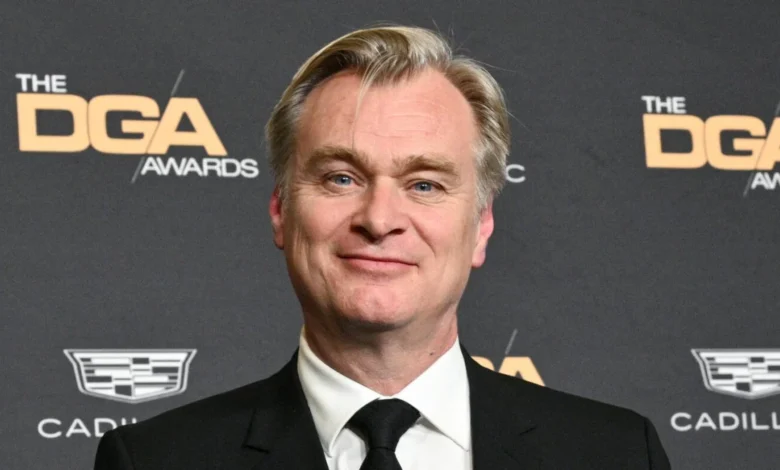
Halfway through his inaugural term as President of the Directors Guild of America (DGA), acclaimed filmmaker Christopher Nolan has intensified his campaign to compel major entertainment studios to fiercely protect their copyrighted assets from unauthorized artificial intelligence training models. Speaking candidly on a recent episode of the Hollywood Insiders podcast, the two-time Academy Award-winning director argued that the onus rests squarely on major production companies to aggressively litigate against unauthorized AI recreations and data scraping of cinematic works.
Nolan’s vocal stance on the matter underscores a growing anxiety within Hollywood regarding the rapid proliferation of generative artificial intelligence technologies. As creators grapple with the implications of automated video and audio generation tools, the DGA leadership has made intellectual property protection a cornerstone of its current advocacy agenda. By challenging both the rhetoric surrounding generative technologies and the legal loopholes often exploited by tech firms, Nolan is positioning the guild at the forefront of the industry’s digital defense.
Challenging the Tech Industry Narrative on AI Accountability
During his podcast appearance, the director of Oppenheimer and The Dark Knight dissected the terminology surrounding artificial intelligence, suggesting that the industry-wide adoption of the term "AI" is often used strategically by technology companies to deflect liability and accountability.
"AI is too big a catchall term. It’s describing too many things and it’s being used by companies to absolve themselves of responsibility," Nolan stated during the interview. "They sort of want to portray it as this Frankenstein’s monster that can get out of control and can change the world without them having any accountability for it. We have to strongly resist that."
Nolan further emphasized that existing legal frameworks are already robust enough to offer substantial protection to creators and intellectual property holders. He expressed skepticism regarding the long-term viability of tech companies hiding behind "fair use" provisions when training large language models and generative visual algorithms on copyrighted cinematic works.
"There’s already legislation in place that protects people, protects creators, etc. And the fact that these companies hide behind fair-use provisions, for example, I think longer term that won’t hold up in court. There have already been some significant judgments against it," Nolan noted.
The Burden of Copyright Enforcement on Major Studios
A central theme of Nolan’s recent advocacy is the structural reality of intellectual property ownership within the film industry. While directors and creative guilds craft the cinematic works that drive the global entertainment economy, they rarely retain the underlying copyrights to their films. Consequently, the legal burden of policing copyright infringement and unauthorized data ingestion falls directly onto the corporate entities that own the master rights.
"We’re very focused at the Guild about holding the studios to account for protecting their copyrights. We can’t do that. With very few exceptions in the Guild, we are not the copyright holders of the films that we’ve worked on. It’s down to the studios to do that," Nolan explained.
As a tangible example of this defense strategy in action, Nolan highlighted the protective measures implemented on his current awards season contender, The Odyssey. He expressed satisfaction that the film’s distribution boilerplate includes explicit legal language barring third parties from ingesting the motion picture as training data for machine learning models.
"And I was very pleased to see that the boilerplate at the end of The Odyssey, for the first time, it contains a message saying that this film cannot be ingested and used as training data," he said.
Chronology and Background: Nolan’s Rise to DGA Leadership
Nolan’s aggressive policy stance is the culmination of years of institutional engagement. Long before stepping into the presidency, the filmmaker was an active and vocal participant in guild-level policy discussions regarding emerging technologies. His appointment as DGA president in September marked a significant turning point for the guild, signaling a shift toward more assertive, hands-on leadership regarding digital rights and compensation models.
Prior to his election, Nolan served extensively on the DGA’s Artificial Intelligence Committee, where he helped formulate the union’s initial responses to the rapid technological shifts reshaping Hollywood production workflows. Upon taking office, Nolan immediately signaled that contractual safety nets negotiated during previous bargaining cycles—while robust—were merely foundational stepping stones.
In subsequent interviews addressing his presidential agenda, Nolan reiterated that possessing strong baseline contractual protections is insufficient in a rapidly evolving technological landscape. Creators, he argues, must maintain an active, ongoing voice in determining how digital tools are deployed and how the legal framework surrounding them is shaped.
Economic Implications: Protecting Residuals and Monetization
Beyond the purely artistic and legal arguments against unauthorized data scraping, Nolan emphasized the direct economic stakes for directors and creative personnel. Because compensation structures in the film industry rely heavily on residuals and profit-participation tied to the monetization of copyrighted works, any dilution of copyright value directly impacts the livelihoods of guild members.
"We like to try and have a voice in, what’s the legal framework?" Nolan explained. "Because we generally aren’t the copyright holders of our work, but our income, our residuals, depend on the appropriate monetization of those copyrights. So we’re constantly in dialogue with the companies about, are you maximizing the value of the work that we’ve created? Because we do benefit from that enormously."
This economic dependency creates a natural alignment—albeit one requiring constant vigilance and pressure—between the creative guilds and the major studio executives who control the legal rights to cinematic libraries. By urging studios to act as aggressive guardians of their intellectual property, Nolan is simultaneously advocating for the long-term financial security of directors, writers, and actors whose compensation models are inextricably linked to proper copyright enforcement.
Broader Industry Impact and Legal Precedents
Nolan’s public challenge to the major studios comes at a critical juncture for the entertainment industry. As legal battles between copyright holders and generative AI developers mount across federal courts, the inclusion of explicit anti-training clauses in studio boilerplate—such as the one noted by Nolan in The Odyssey—is expected to become an increasingly common line of defense.
Legal analysts point out that while copyright law has historically addressed unauthorized reproduction, distribution, and public performance, the practice of training AI models on copyrighted data presents novel questions regarding the boundaries of fair use and transformative works. Recent preliminary rulings in various copyright infringement lawsuits brought by authors, visual artists, and music publishers suggest that courts are beginning to scrutinize the blanket ingestion of protected works by technology firms.
By using his considerable industry clout and his platform as DGA president to keep the spotlight on studio accountability, Nolan is ensuring that intellectual property protection remains a top priority in Hollywood’s corporate boardrooms. As the legal landscape continues to evolve, the pressure from influential creators like Nolan may well redefine the contractual and defensive strategies deployed by major studios to safeguard cinematic art in the digital age.
Related posts: