The Rise of Brotox: Why Men Are Spending More Than Women on Cosmetic Neurotoxin Treatments

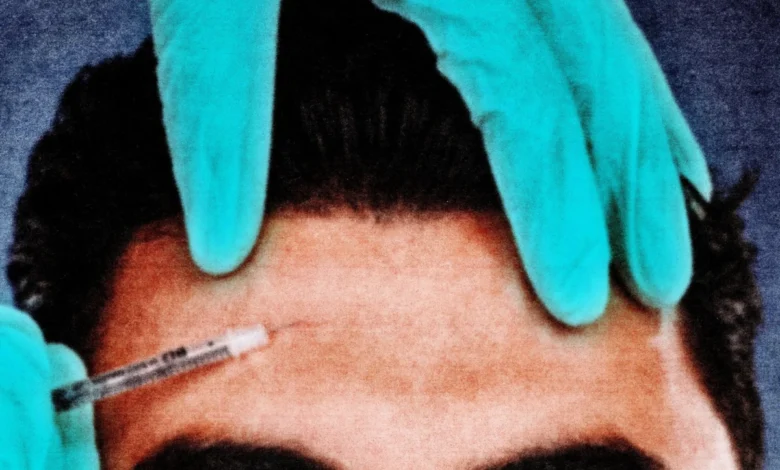
The modern pursuit of physical optimization has led men down increasingly extreme paths. In the digital age, internet subcultures dedicated to physical enhancement—commonly known as "looksmaxxing"—have normalized radical and sometimes dangerous procedures. From surgical eye-reshaping and unverified jawline modifications to controversial limb-lengthening surgeries designed to add a few inches of height, the lengths to which some men will go to achieve an idealized aesthetic are unprecedented. Yet, far removed from these high-risk physical interventions, a more traditional cosmetic treatment is experiencing a quiet, profound renaissance among male consumers: the neurotoxin injection, widely known as Botox.
Once regarded almost exclusively as a staple of female cosmetic maintenance, neurotoxins have firmly established themselves as a cornerstone of modern male grooming. Recent industry data reveals a fascinating paradigm shift: men are not only adopting the treatment in record numbers, but they are also outspending women per clinical visit. According to a landmark market intelligence report published by Guidepoint Qsight in October 2026, male spending on neurotoxin treatments exceeded $500 per visit for the first time during the third quarter of 2026. Specifically, men averaged $529 per session, outpacing the $455 average recorded for female patients during the same period. This metric accounts for popular botulinum toxin products, including Botox, Daxxify, and Xeomin.
The Evolution of Male Grooming and Aesthetic Standards
To understand the current surge in male cosmetic treatments, one must examine the broader cultural and economic shifts that have transformed personal care over the past decade. The stigma once attached to men investing in their physical appearance has steadily eroded, largely driven by the normalization of comprehensive skincare routines, social media visibility, and a competitive professional landscape where looking vibrant and well-rested is valued.
Historically, cosmetic procedures for men were limited to hair transplants, rhinoplasty, or major reconstructive surgeries. However, the advent of minimally invasive, non-surgical treatments has lowered the barrier to entry. Neurotoxins, which temporarily paralyze targeted facial muscles to smooth wrinkles and prevent dynamic lines from etching permanently into the skin, offer a high-reward, low-downtime solution. Unlike surgical interventions that require weeks of recovery, a neurotoxin appointment can be completed during a standard lunch break, fitting seamlessly into the fast-paced lives of modern professionals.
Statistical data from the International Society of Aesthetic Plastic Surgery (ISAPS) underscores this growing acceptance. A comprehensive 2025 global survey encompassing 2,900 aesthetic plastic surgeons revealed that male patients accounted for more than 15% of all Botox procedures administered globally that year. Furthermore, neurotoxin treatments ranked as the single most popular non-surgical procedure among male patients by a wide margin, eclipsing dermal fillers, chemical peels, and laser skin resurfacing.
Clinical Perspectives: Tailoring Treatments for Male Anatomy
Dermatologists and aesthetic practitioners across major metropolitan areas report a steady influx of male clientele, spanning a broad demographic from corporate professionals in their mid-30s to retirees in their 70s. Dr. Nancy Samolitis, a board-certified dermatologist in Los Angeles and co-founder of Facile skin clinic, notes that modern male patients are markedly more proactive about skincare than previous generations.
According to clinical observations, male patients often arrive at their first appointment through one of two pathways: either nudged by a spouse or significant other who is already an established patient, or independently seeking a solution to look less fatigued without a clear idea of which treatment to pursue. In many cases, neurotoxins provide the ideal entry point.
However, treating male facial anatomy requires a specialized clinical approach that differs significantly from standard practices for women. Dr. David Kim, a board-certified dermatologist and founder of Soho Dermatology in New York City, emphasizes that the primary objective for most men is subtlety. While some female patients seek a completely smooth, taut "glass skin" aesthetic, men generally prefer to preserve natural facial expression and soften lines rather than eliminate them entirely.
Furthermore, anatomical differences dictate distinct injection techniques. Bell Yoo, a board-certified nurse practitioner and founder of Mimo Aesthetics in West Hollywood, points out that male facial structures possess unique characteristics.
"My female patients often love that smooth, ‘glass skin’ appearance, whereas some of my male patients think it looks too waxy or oily," Yoo explains. Additionally, practitioners must carefully avoid standard female techniques such as the neurotoxin brow lift. "Men would much rather maintain a slightly heavier, lower-set brow than end up with an overly arched or ‘Spock’ brow," Yoo notes.
Preserving crow’s feet around the eyes is another critical consideration. According to Dr. Kim, retaining subtle character lines around the eyes maintains a natural, masculine appearance that prevents the face from looking artificial or overdone. To achieve these nuanced results, practitioners must utilize specific injection points and tailored dosages designed to accommodate stronger, denser muscle fiber networks.
Beyond the Forehead: Functional and Aesthetic Applications
While smoothing forehead lines and reducing crow’s feet remain the most common requests, male patients are increasingly utilizing neurotoxins for diverse aesthetic and functional purposes.
In clinical settings, practitioners administer neurotoxins to the chin to enhance structural projection and balance the lower third of the face. For professionals dealing with high-stress environments, treatments targeting the masseter and temporalis muscles offer significant relief for chronic jaw clenching and bruxism (teeth grinding), serving a dual purpose of therapeutic relief and facial slimming. Additionally, many men utilize neurotoxins to manage hyperhidrosis—excessive underarm sweating—which can significantly improve comfort and confidence in professional and social settings.
The higher average expenditure per visit among men, as documented by Guidepoint Qsight, is directly tied to these biological and anatomical realities. Because men generally possess larger, denser facial and muscular structures, higher quantities—or "units"—of neurotoxin are frequently required to achieve the desired clinical outcome compared to the average female patient.
Shifting Social Stigmas and the Future of Maintenance
Despite the rising popularity of what has colloquially been termed "Brotox," societal attitudes remain bifurcated. Many male patients continue to practice discretion, preferring to keep their cosmetic routines private due to lingering social stigmas associated with men seeking aesthetic enhancements.
At the same time, a growing cohort of men views these procedures with the same casual indifference as a haircut, a gym membership, or a dental checkup. Kyle Waldrop, a 37-year-old product designer based in Los Angeles who has maintained a regular Botox regimen for three years, views the treatment as a logical extension of personal hygiene and self-care.
"I’ve always been good about keeping up with a skincare routine and taking care of myself, so Botox felt like a natural extension of what I was already doing," Waldrop says. Rather than attempting to drastically alter his appearance, his objective is preventative maintenance—mitigating the deepening of wrinkles before they become prominent. Maintaining natural facial mobility remains a top priority. "When it’s done well and with the right amount, you look like yourself, just a bit more rested. I still have all my natural movement and expressions, which is important to me."
For Waldrop and a rapidly expanding demographic of modern men, neurotoxin treatments represent a pragmatic tool rather than a taboo vanity project. As the wellness industry continues to evolve and cultural barriers dissolve, the normalization of male aesthetic procedures appears poised to transition from a growing trend into an established standard of modern self-care.