Tesla to Phase Out Cybertruck Production as Focus Shifts Toward Autonomous Cybercab Operations

Elon Musk announced on Friday that Tesla will conclude the production of the Cybertruck, the angular, stainless-steel electric pickup truck that served as a polarizing centerpiece of the company’s design philosophy for nearly a decade. In a message posted to his social media platform X, Musk confirmed that operations at Gigafactory Texas will begin winding down for the vehicle around the middle of next year. The decision is framed as a strategic reallocation of resources, intended to accelerate the manufacturing capacity for the company’s burgeoning fleet of autonomous Cybercabs.
This announcement marks a definitive pivot for the Austin-based automaker, signaling an end to the production of a vehicle that was once touted as the "best product ever" by Musk himself. The transition away from the Cybertruck represents a significant shift in corporate priorities, moving from hardware-heavy, consumer-facing automotive manufacturing toward a software-driven, autonomous transportation model.
A Chronology of the Cybertruck Era
The journey of the Cybertruck from concept to cancellation has been defined by dramatic unveilings, significant production delays, and a constant struggle to meet the lofty expectations set by the company’s leadership.
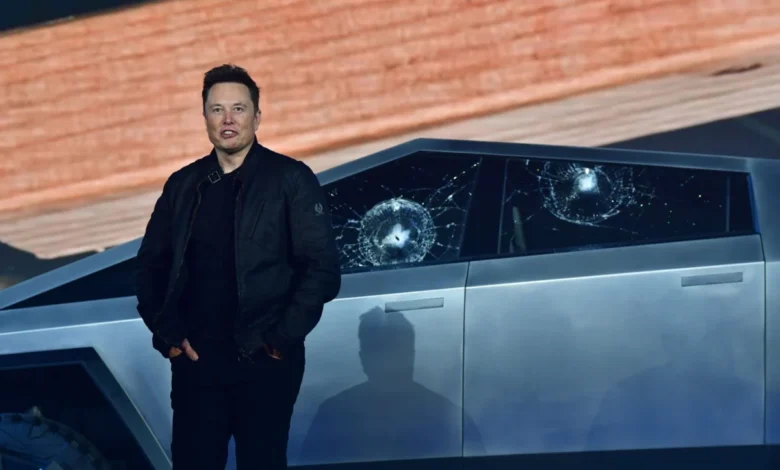
- November 2019: The Cybertruck is unveiled at a high-profile, Sci-Fi-themed event in Hawthorne, California. The demonstration famously goes awry when the "armor glass" windows shatter during a live impact test, a moment that became an enduring symbol of the project’s complex development.
- October 2019: Just before the official reveal, Musk tells investors during a third-quarter earnings call that the vehicle is his favorite project, asserting that it could be the company’s most significant contribution to the automotive market.
- 2021–2023: Originally slated for a 2021 launch, the vehicle faces repeated delays due to manufacturing complexities, particularly involving the use of cold-rolled stainless steel and the integration of advanced electrical systems.
- November 2023: The first production units finally reach customers.
- 2024–2025: Production ramp-up remains slower than anticipated, failing to reach the forecasted annual output of 250,000 to 500,000 units. Sales data reveals a sharp decline in market interest, dropping from 38,965 units in 2024 to 20,237 units in 2025.
- Mid-2027: Tesla is expected to cease all assembly of the Cybertruck at Gigafactory Texas to retool lines for the Cybercab.
Market Performance and Financial Hurdles
The decline of the Cybertruck is not solely a result of corporate pivoting but is also reflected in challenging market metrics. According to data from Cox Automotive and Kelley Blue Book, the vehicle struggled to find a consistent foothold in the competitive U.S. electric vehicle landscape. The sales trajectory for the Cybertruck plummeted by approximately 48% between 2024 and 2025. By the first half of 2026, analysts estimated that fewer than 8,000 units had been moved, signaling a downward trend that rendered the platform difficult to sustain as a mass-market vehicle.
Financial barriers have also played a critical role in the vehicle’s stagnation. At its 2019 debut, Tesla marketed a starting price of $39,900. By the time production began in 2023, the entry price had climbed to $60,990. Recent price adjustments have pushed the floor even higher; as of November 2026, the cheapest available configuration starts at $92,490. This rapid inflation, combined with the discontinuation of more affordable trim levels like the Dual Motor AWD, effectively marginalized the vehicle for the average consumer. Furthermore, the model has been subject to 11 safety-related recalls since its launch, contributing to a perception of instability that hampered broader adoption.
The Rise of the Cybercab
With the Cybertruck fading into the company’s history, Tesla is now heavily betting its future on the Cybercab—a two-seater, steering-wheel-free autonomous vehicle designed specifically for ride-hailing services. Since the first units arrived on the streets of Austin in September 2026, the company has aggressively expanded its Robotaxi footprint to include Houston, Dallas, Fort Worth, Miami, Orlando, and Tampa.
This transition occurs against a backdrop of a cooling EV market. The expiration of federal tax credits in the United States, coupled with evolving consumer preferences, has forced Tesla to look beyond traditional vehicle sales for growth. By focusing on the Cybercab, Tesla aims to compete directly in the autonomous ride-sharing sector, a market currently dominated by industry veterans like Alphabet’s Waymo, which reported a massive increase in demand, facilitating upwards of 500,000 rides per week in its operational cities.
Regulatory and Strategic Challenges
The pivot to the Cybercab is not without its own significant obstacles. The vehicle’s design, which eliminates manual controls such as steering wheels and pedals, has invited intense scrutiny from federal regulators. In September, the National Highway Traffic Safety Administration (NHTSA) opened an investigation to determine if Tesla had followed the required self-certification processes for such an unconventional design. While Tesla submitted its defense to the agency in late October, the company requested that the documentation remain under seal as confidential business information, leaving the regulatory status of the fleet in a state of uncertainty.
Investors remain cautious as the company navigates this transition. The move to end Cybertruck production removes a high-visibility, albeit underperforming, asset from the portfolio. However, it also creates a vacuum regarding consumer-grade vehicle innovation. For the thousands of current Cybertruck owners, the transition raises questions about long-term support. While Musk noted on X that "the Cybertruck fleet will be around for a long time," Tesla has not yet provided a detailed roadmap for long-term parts availability or software maintenance for the legacy fleet.
Industry Implications
The cancellation of the Cybertruck is being viewed by analysts as a "hard reset" for Tesla. The company, which still commands the largest share of the U.S. electric vehicle market, is currently attempting to prove that its value lies in AI and robotics rather than just automotive manufacturing.
"Tesla is moving away from the ‘cool factor’ that defined the Cybertruck and moving toward a utility-driven, high-margin model of service-based revenue," says industry analyst Mark Peterson. "The failure of the Cybertruck to achieve mass-market volume was a clear indicator that the market for a high-cost, niche pickup was saturated. The Cybercab represents an attempt to capture a different kind of market share—the autonomous infrastructure sector."
As Tesla prepares to dismantle the Cybertruck production lines, the broader automotive industry is watching closely. The failure of such a highly anticipated project serves as a cautionary tale regarding the risks of aggressive design innovation at the expense of manufacturing efficiency and price accessibility. Whether the Cybercab can successfully navigate the regulatory and competitive landscape remains the defining question for Tesla’s next fiscal chapter.
For now, the Cybertruck remains a symbol of a particular era in Tesla’s history: one defined by the company’s willingness to challenge conventions, even when the resulting products struggled to survive in the face of economic and logistical realities. As the last of the trucks roll off the line in Texas, the company is already looking toward a future where the driver is replaced by an algorithm and the personal vehicle is replaced by an on-demand fleet.