Usman Khawaja claims entire Australian dressing room was aware of 2018 Cape Town ball-tampering scandal

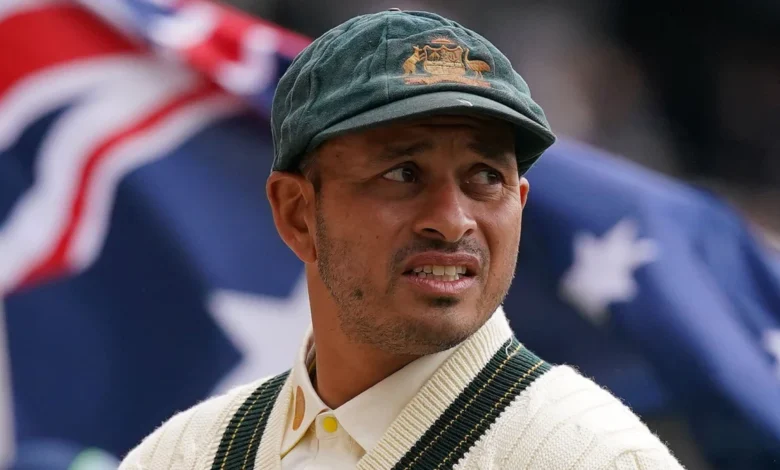
The long-standing narrative surrounding the 2018 Australian cricket team’s ball-tampering scandal in Cape Town has been dramatically challenged by former opener Usman Khawaja. In his newly released memoir, Sabr, Khawaja asserts that the knowledge of the illicit plot to alter the condition of the ball with sandpaper was not confined to the three individuals punished by Cricket Australia, but was instead an open secret shared by the entire dressing room. This revelation stands in direct contradiction to the official findings of the 2018 investigation, which placed the culpability solely on captain Steve Smith, vice-captain David Warner, and opening batter Cameron Bancroft.
The incident, which occurred during the third Test against South Africa at Newlands, remains arguably the darkest chapter in modern Australian cricket history. The subsequent fallout resulted in a massive overhaul of the team’s leadership, the resignation of coach Darren Lehmann, and a profound national debate regarding the "win-at-all-costs" culture that had permeated the Australian setup at the time.
A Chronology of the Newlands Incident
To understand the weight of Khawaja’s recent claims, it is necessary to revisit the timeline of the 2018 series. The tensions between Australia and South Africa had been escalating throughout the tour. The catalyst for the scandal was the discovery of yellow sandpaper in the possession of Cameron Bancroft during the third Test.
- March 24, 2018: During the third day of the third Test in Cape Town, television cameras captured Bancroft hiding an object down his trousers. Subsequent replays suggested the object was sandpaper, intended to scuff the ball to generate reverse swing.
- March 24, 2018 (Evening): Steve Smith and Cameron Bancroft fronted a press conference, admitting to the tampering. Smith confirmed the leadership group—which included Warner—had been aware of the plan.
- March 27, 2018: Cricket Australia issued severe sanctions. Steve Smith and David Warner were banned from international and domestic cricket for 12 months, while Cameron Bancroft received a nine-month ban.
- March 29, 2018: Darren Lehmann resigned as head coach, despite being cleared of direct involvement by an internal investigation.
- 2021: The issue resurfaced when Bancroft, in an interview with The Guardian, suggested that the bowling unit might have been aware of the tampering, leading to a joint statement from the four primary bowlers—Pat Cummins, Mitchell Starc, Josh Hazlewood, and Nathan Lyon—vehemently denying any prior knowledge.
The "Sabr" Revelations
Khawaja’s account suggests that the planning began earlier than previously acknowledged, specifically tracing the discussions to the second Test in Port Elizabeth. By claiming that the team was collectively aware of the illicit activities, Khawaja effectively reframes the scandal from a "rogue operation" to a systemic failure of team ethics.

"It was all of us," Khawaja wrote in his memoir. "Not the batters, not the bowlers, not the staff. All of us."
His perspective provides a chilling insight into the atmosphere within the dressing room at the time. Khawaja notes that he had hoped the truth would have surfaced organically over the intervening eight years. By bringing these details to light now, he claims he is seeking closure—not just for himself, but for Smith, Warner, and Bancroft, whom he believes were unfairly forced to carry the full weight of the public’s condemnation as the only scapegoats.
"I don’t want to be the one who comes out and talks about the truth," Khawaja stated. "But I genuinely thought after eight years the truth would have been out by now. Maybe I thought Davey [Warner] would have exposed it, or someone else would have talked about it more."
Analysis of the Collective Responsibility Narrative
The implications of Khawaja’s statement are significant for the legacy of the Australian cricket team. For years, the official stance maintained by Cricket Australia was that the incident was an isolated event orchestrated by a small group. By asserting that the team functioned as a collective in this instance, Khawaja suggests a deeper, more entrenched problem within the team’s culture that went beyond the three men who faced the most public scrutiny.
From a sociological perspective, this is a classic example of "groupthink" or collective moral disengagement. When an entire organization, or in this case a professional sports squad, is under immense pressure to perform, individuals may normalize unethical behavior to align with the perceived goals of the group. Khawaja’s recollection of telling his teammates, "Take this as a team. We did this as a team," highlights a desire for accountability that was never realized in the public sphere.
Official Responses and Lingering Denials
The Australian bowling attack, specifically the quartet of Cummins, Starc, Hazlewood, and Lyon, has maintained a firm, consistent denial of any involvement since the scandal broke. In their 2021 statement, they emphasized that they had no knowledge of the sandpaper until they saw the images on the big screen at Newlands.
However, the ambiguity created by Bancroft’s 2021 comments—where he stated, "I think it’s probably self-explanatory"—left a door open for suspicion. Khawaja’s memoir effectively slams that door shut, replacing ambiguity with a direct accusation of collective awareness.
Cricket Australia has not yet issued a formal response to the specific claims made in Sabr. Historically, the governing body has sought to move past the 2018 incident, focusing instead on the cultural reforms implemented under subsequent leadership, including the introduction of a new code of conduct and a greater emphasis on "integrity and respect."
The Impact on Australian Cricket’s Legacy
The fallout from 2018 changed the face of Australian cricket. The "Sandpapergate" scandal led to the appointment of Justin Langer as head coach, whose tenure was defined by an attempt to restore the team’s reputation and mend the relationship with the Australian public.
Khawaja’s intervention, however, ensures that the debate remains active. For fans and observers, the question is no longer just about the ethics of using sandpaper, but about the integrity of the information provided by the team and the governing body in the aftermath. If the entire dressing room was aware, the public perception that only three individuals were the "bad apples" is fundamentally flawed.

Furthermore, the emotional toll on Smith, Warner, and Bancroft cannot be understated. Having served their suspensions and returned to the game, these players have spent years rebuilding their careers under the shadow of the incident. Khawaja’s claim that they were "crucified" while others escaped accountability suggests that the internal culture of the team at the time was characterized by a lack of loyalty, with the players involved bearing a burden that was, in his view, shared by their peers.
Conclusion
As the sport of cricket evolves, the 2018 scandal remains a pivotal case study in the consequences of unchecked ambition. Usman Khawaja’s testimony provides a stark, uncomfortable reminder that history is often written by those who control the narrative. By breaking his silence, Khawaja has ensured that the "Cape Town Truth" will remain a subject of intense scrutiny for the foreseeable future.
Whether or not this leads to a formal reopening of the investigation or further statements from the other members of the 2018 squad remains to be seen. What is clear, however, is that the ghost of Newlands continues to haunt the Australian team, and the full extent of the moral compromise that occurred in that dressing room is still being mapped out years after the sandpaper was discarded. The release of Sabr does not merely offer a player’s perspective; it challenges the very bedrock of the narrative that has sustained the Australian cricket establishment for nearly a decade.
Related posts: