How to Keep Hope Alive and Stay Civically Engaged During Times of Political Turbulence

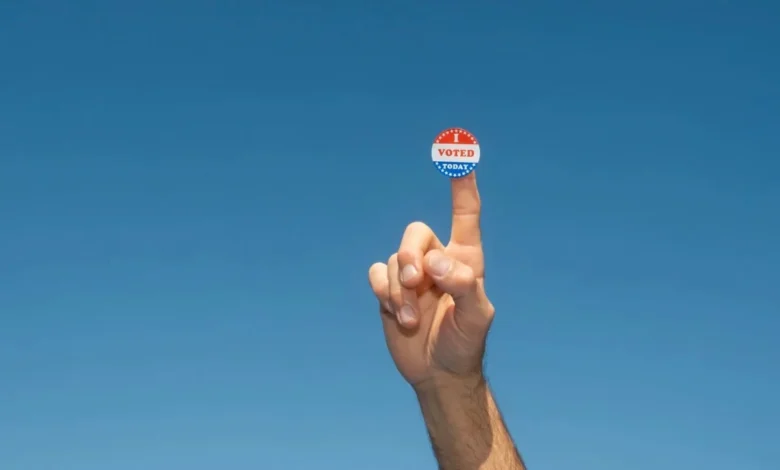
The current American political climate is defined by a profound sense of institutional instability and voter fatigue. As the nation approaches a critical election cycle, citizens across the country are grappling with the psychological toll of relentless news cycles and heightened polarization. While public discourse has increasingly trended toward disillusionment, a diverse coalition of writers, activists, and community organizers are advocating for a shift in perspective—moving from passive observation to active, localized civic participation.
The Context of Current Political Discontent
The contemporary political environment is characterized by a "constant state of emergency" rhetoric that has historically correlated with lower voter turnout due to psychological exhaustion. According to data from the Pew Research Center, a significant majority of Americans report feeling "exhausted" by the amount of political news they consume daily. This exhaustion often manifests as apathy, yet recent trends in grassroots organizing suggest a counter-movement: a resurgence in local civic engagement.
The stakes of the current election are high, with debates centering on fundamental issues such as intellectual freedom, social justice, and the integrity of democratic institutions. Since 2020, there has been a documented 1,100% increase in efforts to ban books in public schools and libraries, according to data from the American Library Association. This statistic underscores the broader trend of government officials and private interest groups attempting to exert greater control over public education and institutional resources.
A Chronology of Increasing Civic Friction
To understand the current urgency, one must look at the progression of political volatility over the last several years:
- 2020: The onset of the global pandemic and the social unrest following the death of George Floyd catalyzed a shift in how individuals engage with digital and physical protest movements.
- 2021-2022: The emergence of localized challenges to school boards and municipal governance became a primary theater for political ideological conflict.
- 2023: Federal legislative efforts began to target library funding and curriculum, moving the conflict from local districts to the national stage.
- 2024-2026: The current cycle is defined by a convergence of these local and national tensions, forcing a broader segment of the population to weigh the importance of individual political agency against a sense of systemic overwhelm.
Diverse Strategies for Civic Resilience
In response to this climate, various public figures and community leaders have proposed concrete methods to channel political energy into sustainable action. These strategies range from institutional advocacy to community-based mutual aid.
Harnessing Political Aggression for Advocacy
For many, the initial response to political stressors is a "fight or flight" adrenaline response. Comedy writer and political commentator Bess Kalb suggests that rather than suppressing this reactive energy, it should be channeled into organized advocacy. By joining established collectives—such as the Committee for the First Amendment or the Ms. Foundation for Women—individuals can transform private frustration into collective bargaining power. Kalb notes that apathy is the primary hurdle for the progressive majority, and that consistent, grassroots participation acts as a firewall against democratic erosion.
The Power of Localized Governance
Civic engagement is often conflated with national elections, yet the most immediate impact is felt at the municipal level. Kate Kennedy, a member of the Manhattan Community Board, highlights the necessity of participating in local government. Whether it is addressing zoning laws, casino developments, or public infrastructure, local boards offer a direct line of sight between action and result. This process, while bureaucratic, provides a tangible measurement of impact that national politics rarely offers.
Amplifying Marginalized Voices
The role of storytelling in political change remains a critical pillar of social progress. Krishan Trotman, a publisher and advocate for BIPOC voices, emphasizes that literature and media serve as "vital witnesses" to societal shifts. By amplifying memoirs and texts that challenge the status quo, citizens can influence the national dialogue. Data shows that high-profile memoirs, such as those documenting the history of protest movements, continue to see significant readership, signaling a public demand for narratives that hold power to account.
Fact-Based Analysis of Broader Implications
The current wave of civic participation, while encouraging, faces significant headwinds. The "professionalization" of political rage—where social media algorithms prioritize high-arousal content—often leads to "doomscrolling," a behavior associated with increased anxiety and decreased social trust.
Conversely, the model of "relational organizing" advocated by figures like Garrett Bucks of The Interdependence Relay suggests that effective change occurs in the "relational space." By moving away from digital-only engagement and toward face-to-face community work—such as volunteering at hospices, soup kitchens, or municipal boards—citizens can rebuild the social capital necessary for a functioning democracy.
The psychological benefits of this approach are documented. Research into altruism and community service indicates that active participation in one’s community acts as a buffer against political burnout. By focusing on the "local" and the "tangible," individuals are able to maintain a sense of efficacy, which is a key predictor of long-term civic persistence.
The Institutional Perspective
Political scientists emphasize that the health of a democracy is not measured solely by high-turnout presidential elections, but by the consistent engagement of the electorate in off-year cycles and local referendums. The current push to get voters to the polls is supported by a robust infrastructure of non-partisan organizations, including Vote.org, which provides comprehensive polling place information to ensure that access to the ballot box remains unobstructed.
However, the implications of current legislative efforts to restrict access—including more stringent voter identification requirements and changes to polling site accessibility—mean that the act of voting has become a more complex, multi-step process than in previous decades. Consequently, the reliance on peer-to-peer mobilization is higher than it has been in recent history.
Conclusion: Sustaining the Democratic Process
As the nation moves through this period of heightened tension, the consensus among activists and community leaders is that hope is not a passive emotion but an active strategy. It requires a commitment to three distinct pillars:
- Direct Action: Voting in all elections, from municipal to national.
- Community Building: Engaging in local boards, mutual aid, and neighborhood support networks.
- Information Hygiene: Moving away from passive digital consumption and toward active, informed participation and support of independent media.
The path forward, according to those working on the front lines of civic change, is one of sustained, modest efforts. By choosing to "stay mad and do something," or by finding comfort in the "communion of the community," citizens are re-establishing the foundations of their democratic institutions. The simple act of checking a polling place locator, showing up to a community board meeting, or sharing a challenging book is, in the current context, a profound assertion of agency. As the election cycle concludes, the focus must inevitably shift to how these individual acts of resistance and service are institutionalized to ensure long-term stability and fairness in the American political project.