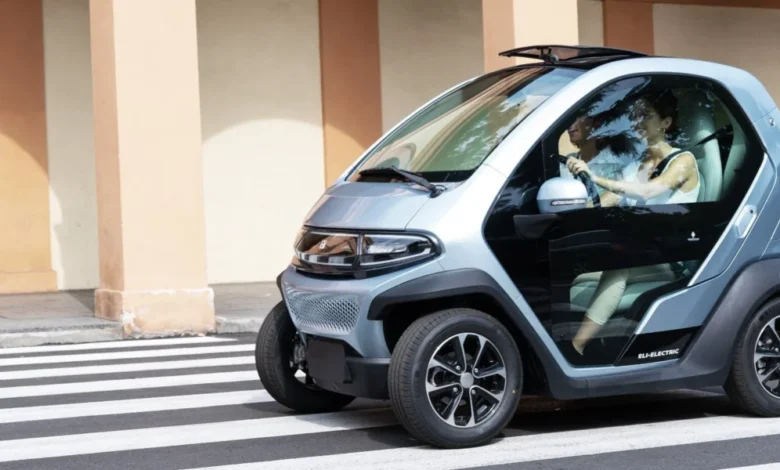
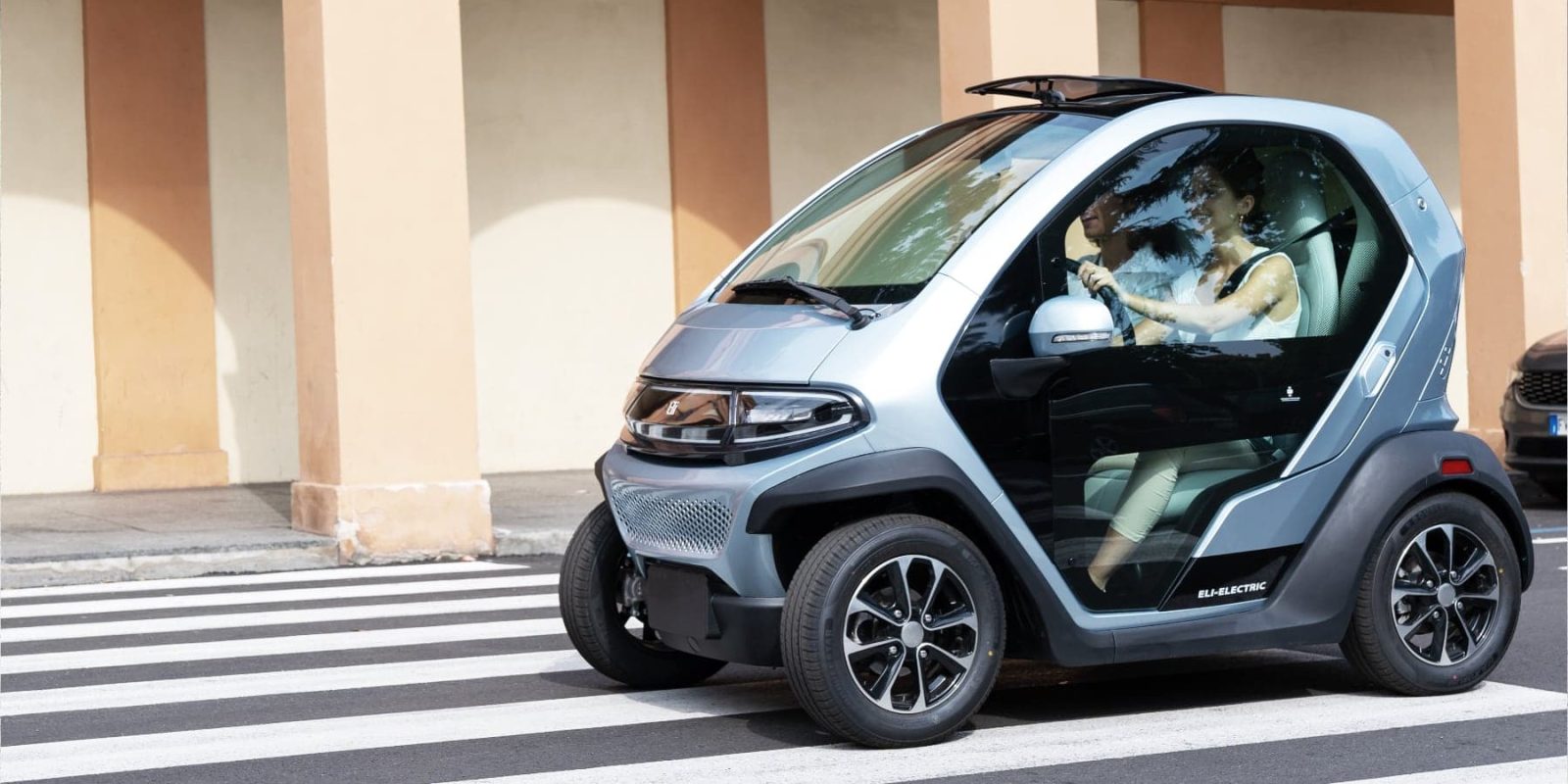
The landscape of urban mobility is poised for a significant shift as Eli Electric Vehicles prepares to unveil a high-performance iteration of its signature microcar. Ahead of the prestigious EICMA motorcycle and powersports exhibition in Milan, the manufacturer has used social media to preview the upcoming Eli ZERO MX. This new vehicle signifies a strategic departure from the company’s traditional low-speed offerings, aiming to bridge the gap between ultra-compact city runabouts and conventional automobiles by stepping up into a higher regulatory vehicle category.
For years, microcars and light quadricycles have occupied a specific, albeit limited, niche in dense metropolitan environments. While beloved for their effortless parking and minimalist footprints, models restricted to lower top speeds have historically struggled to gain traction outside of city centers due to infrastructure limitations and safety concerns on multi-lane thoroughfares. By introducing an L7e-classified platform, Eli Electric Vehicles is addressing the primary bottleneck of modern micro-mobility: velocity.
The Evolution of the Eli ZERO Platform
To understand the significance of the upcoming ZERO MX, one must examine the lineage of the original platform. The standard European version of the Eli ZERO, which entered the market to considerable interest from urban planners and eco-conscious commuters, is classified as an L6e light quadricycle. Under European Union regulations, L6e vehicles are legally capped at a top speed of 45 kilometers per hour (approximately 28 miles per hour) and feature strict weight and power limitations.
While these specifications are more than adequate for congested city streets, winding European alleys, and dense residential zones, they render the vehicle unusable on arterial ring roads, expressways, and highways where slower traffic poses a hazard. Consequently, drivers requiring a mix of urban and suburban transit have been forced to look toward larger, heavier, and more expensive conventional battery-electric vehicles (BEVs).
The newly announced Eli ZERO MX moves into the L7e heavy quadricycle category. Regulatory frameworks for L7e vehicles permit higher power outputs and significantly increased top speeds—typically ranging between 80 and 90 kilometers per hour (50 to 56 miles per hour). This jump in velocity transforms the vehicle’s utility profile, allowing it to keep pace with standard suburban traffic and expand its viable commuting range exponentially.
Unpacking the Teaser: Specifications and the Mysterious Race Edition
While Eli Electric Vehicles has kept precise technical specifications under wraps until the official EICMA unveiling, industry analysts and enthusiasts have closely scrutinized promotional materials for clues. Accompanying the announcement of the ZERO MX was a teaser for a specialized "Race Edition." Promotional artwork shared by the company depicts a dark, aggressively styled ZERO featuring striking red accents and what appears to be an open-sided cabin configuration.
The introduction of a Race Edition raises intriguing questions regarding the brand’s marketing direction and engineering capabilities. It remains unclear whether the "Race" moniker denotes a genuine performance upgrade—such as enhanced motor tuning, stiffer suspension geometry, and track-oriented braking components—or if it is primarily an aesthetic styling package designed to appeal to younger, design-forward urbanites. Furthermore, the relationship between the standard ZERO MX and the Race Edition has not been explicitly clarified in company communications, leaving open the possibility of a tiered product rollout or a second-generation design language overhaul.
Crucially, prospective buyers are looking toward existing digital footprints for concrete data. Eli’s regional Italian web portal currently references an L7e-compliant ZERO variant capable of reaching speeds up to 85 kilometers per hour (53 miles per hour) while boasting an impressive maximum estimated driving range of up to 200 kilometers (124 miles) on a single charge. If these specifications directly align with the production-ready ZERO MX, the vehicle would represent a compelling convergence of long-distance urban commuting capability and ultra-compact packaging.
Chronology of Micro-Mobility and Industry Context
The trajectory of Eli Electric Vehicles reflects a broader, multi-year evolution within the global automotive sector. As cities worldwide grapple with escalating traffic congestion, deteriorating air quality, and chronic scarcity of parking spaces, transportation authorities and manufacturers have increasingly championed rightsizing—the philosophy of matching the size and weight of a vehicle to the actual demands of a trip.
Historically, microcars faced skepticism regarding build quality, safety standards, and market viability. However, the maturation of lithium-ion battery chemistry, coupled with advancements in lightweight composite materials and structural engineering, has allowed modern quadricycles to offer creature comforts and safety cells previously unimaginable in the segment. Competitors such as Citroën with the Ami, and various other European and Asian manufacturers, have validated the market appetite for sub-compact electric transport.
Despite this growth, the L6e speed ceiling remained a persistent ceiling for consumer adoption. By pushing into the L7e category, Eli is navigating a well-established regulatory pathway that has recently attracted greater attention from startups and legacy automakers alike. The EICMA exhibition serves as the ideal global stage for this announcement, historically acting as a crossroads for two-wheelers, three-wheelers, and innovative light electric vehicles seeking to capture the imagination of European and international distributors.
Market Implications and the Future of Daily Commutes

The introduction of an L7e-capable microcar carries profound implications for the future of daily commuting, fleet management, and urban space optimization. Standard passenger cars have grown progressively larger, heavier, and more resource-intensive, even as the vast majority of daily commutes are conducted by a single occupant traveling short distances.
A vehicle that combines a footprint small enough to transverse narrow European streets and fit sideways into perpendicular parking spaces with a 50 mph (80 km/h) top speed strikes at the core inefficiency of modern automotive design. For suburban dwellers commuting into metropolitan cores, an 85 km/h microcar offers a viable middle ground. It eliminates the range anxiety and parking friction associated with full-sized EVs while avoiding the safety compromises inherent in sub-30-mph quadricycles operating alongside faster vehicular traffic.
Moreover, the commercial and car-sharing potential for such a vehicle is substantial. Fleet operators managing corporate campuses, university grounds, or municipal service routes often require vehicles that are nimble yet capable of navigating multi-lane connective corridors without disrupting overall traffic flow.
Outlook for the EICMA Reveal
As the automotive world turns its attention to Milan, anticipation surrounding the Eli ZERO MX continues to mount. The official presentation is scheduled to take place during the EICMA event, running from November 3 through November 8, with Eli Electric Vehicles hosting attendees in Hall 22 at Stand B40.
Industry observers will be watching closely to see whether the production specifications match the ambitious range and speed figures hinted at on the company’s regional portals, as well as how the mysterious Race Edition fits into the broader commercial strategy. If Eli successfully delivers an L7e microcar that balances performance, safety, and accessible pricing, it may well redefine consumer expectations of what a daily commuter vehicle can—and should—be.
Related posts: