Legal Experts Weigh Risks and Merits of Senator Slotkin’s Warning to Young Trump Administration Recruits

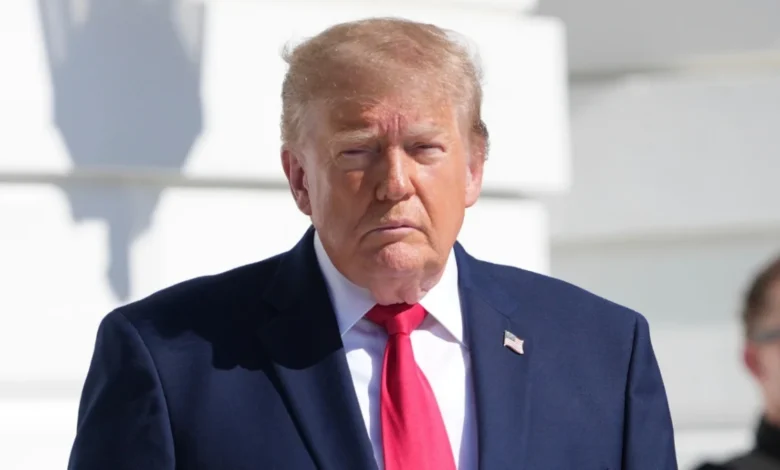
Senator Elissa Slotkin’s controversial warnings advising young professionals against accepting positions within the incoming or current Donald Trump administration have ignited a complex legal and political debate. While the Michigan Democrat defended her remarks as a call for accountability regarding unlawful behavior, legal analysts suggest her comments could inadvertently provide Trump administration officials with critical ammunition to challenge and potentially derail future congressional investigations. If the Democratic Party manages to secure a majority in either chamber of Congress during upcoming midterm elections, these public statements may complicate their oversight agenda.
The Origins of the Controversy and Slotkin’s Remarks
The controversy originated during an appearance by Senator Slotkin at the University of Chicago on October 13. During the event, the freshman senator outlined her strategic vision for a potential Democratic congressional majority, emphasizing the need to pursue high-profile "signature cases" against administration officials who assisted Donald Trump. Slotkin argued that establishing a clear record of aggressive oversight would serve as a powerful deterrent, discouraging recent college graduates and young career professionals from considering employment opportunities within the administration out of fear of future legal and professional repercussions.
"I want that deterrence message sent," Slotkin stated during the forum, noting that young graduates might hesitate to assume federal roles if they believe doing so would expose them to endless investigations and personal hardship.
This rhetoric quickly circulated across national media platforms, drawing sharp condemnation from conservative legal organizations and Republican lawmakers who characterized the comments as an explicit threat to intimidate civil servants and political appointees. In response to the backlash, Slotkin rejected assertions that she intended to target individuals merely for affiliating with Republicans. In subsequent interviews, including an appearance on CNN, she clarified that her remarks were specifically directed at officials who choose to violate federal laws or misuse taxpayer funds, dismissing the widespread criticism as manufactured political outrage.
Constitutional Framework and the Legacy of Trump v. Mazars
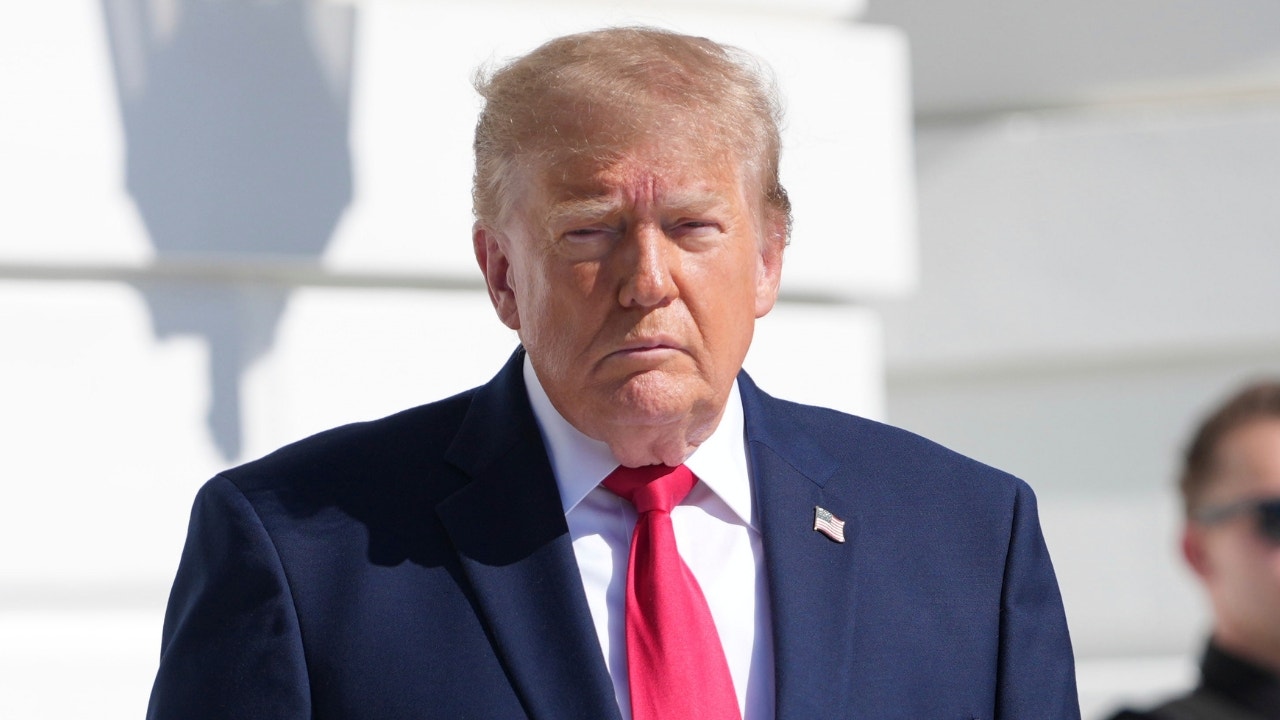
The debate over whether Slotkin’s public statements can be leveraged legally centers on the constitutional limits of congressional oversight. Under the separation of powers doctrine, Congress possesses broad constitutional authority to conduct investigations, issue subpoenas, and review executive branch operations to draft legislation. However, this power is not absolute.
Decades of Supreme Court jurisprudence dictate that congressional investigative powers must serve a legitimate legislative purpose. Lawmakers are constitutionally barred from utilizing subpoenas and investigative committees solely to punish political opponents, expose private affairs for the sake of exposure, or exact retribution.
The legal boundaries of these powers were heavily tested in the landmark 2020 Supreme Court case Trump v. Mazars USA, LLP. In that ruling, the justices addressed congressional subpoenas targeting the personal financial records of President Donald Trump. The court established a rigorous four-factor balancing test to determine the validity of such inquiries:
- Whether the asserted legislative purpose warrants the significant step of involving the president and executive branch records.
- Whether the subpoenaed information is broader than necessary to support the legislative objective.
- Whether the evidence can be obtained from alternative, less intrusive sources.
- Whether the nature of the evidence and the burden imposed on the executive branch outweigh the legislative interests.
Although the Supreme Court ultimately remanded the Mazars case to lower courts rather than outright invalidating the subpoenas, the framework established a standard requiring courts to scrutinize the genuine motivations and justifications behind congressional demands.
Legal Implications: Ammunition for Subpoena Challenges
Abhishek Kambli, a partner at Holtzman Vogel and a former deputy associate attorney general in the Trump Justice Department, argues that Slotkin’s explicit statements regarding deterrence and punitive oversight could profoundly damage future Democratic subpoena defenses. According to Kambli, when targets of congressional inquiries file motions to quash subpoenas in federal court, the judicial system is not required to accept boilerplate assertions of legislative purpose at face value.
"If they just throw in boilerplate language that this is for legislative purpose, anyone challenging those subpoenas will have that entire record to demonstrate that it’s anything but that," Kambli explained in an interview. He contended that federal judges examining the constitutionality of a subpoena are obligated to evaluate the broader public record, which could include recorded statements by influential lawmakers openly admitting that their primary goal is deterrence and political retribution.
Beyond the immediate enforceability of subpoenas, legal scholars note that the investigative process itself can act as a punitive measure. Investigations often entail exorbitant legal fees, reputational harm, and severe administrative burdens for individuals who lack substantial financial resources to mount a robust defense. Kambli highlighted this dynamic, stating, "There is the idea that the process is the punishment, and there is no doubt that some members of Congress intend to use the process to bankrupt people that can’t afford legal representation."
Skeptical Perspectives on Judicial Invalidation
Not all legal experts agree that public political rhetoric will carry sufficient weight to invalidate congressional subpoenas. Michael Morley, a professor at the Florida State University College of Law, offers a more conservative assessment regarding how federal courts would handle challenges based on a lawmaker’s subjective motivations.
Morley points out that federal courts traditionally recognize that politicians inherently operate with partisan motivations when conducting oversight and investigations. Consequently, judges have historically shown great reluctance to invalidate legislative subpoenas merely because individual members of Congress made provocative or partisan public remarks.
"I don’t think that the fact that there might be partisan motivations for a congressional investigation would ultimately be a valid basis for refusing to comply with a subpoena," Morley noted. He emphasized that at the conclusion of legal challenges, courts are exceedingly hesitant to conclude—solely on the basis of a few members’ public statements—that the broader institution of Congress lacks the constitutional authority to investigate a particular matter.
Furthermore, Morley highlighted that the strict four-factor test outlined in Trump v. Mazars was explicitly tailored to address executive privilege and subpoenas directed at a sitting president’s personal records. Applying that same heightened standard to everyday administration officials or political appointees would require a significant extension of existing legal precedent.
Nevertheless, Morley acknowledged that indiscreet commentary from high-ranking lawmakers creates unfavorable legal optics. While such statements may not single-handedly destroy a subpoena, they introduce "bad atmospherics" into court proceedings, potentially making judges marginally less inclined to resolve close legal questions in favor of congressional committees.

Broader Congressional Context and Democratic Oversight Plans
The legal sparring over Senator Slotkin’s comments unfolds against a backdrop of active preparations by House and Senate Democrats. Should the party regain a majority in either chamber during the midterm elections, congressional leadership has signaled an aggressive slate of oversight hearings and investigations.
Plans being formulated by Democratic lawmakers target several key areas, including Trump family business dealings, potential conflicts of interest within executive agencies, and the financing models behind various administration-backed projects. For instance, Senator Richard Blumenthal, D-Conn., has publicly committed to expanding inquiries into the private donors funding infrastructure projects associated with the White House if Democrats recapture the Senate majority.
While a Democratic-led Congress could issue a multitude of subpoenas and even issue criminal contempt referrals for non-compliant officials, experts note practical hurdles. Under a Republican executive branch, the Department of Justice would likely decline to prosecute officials for criminal contempt. However, the dynamics could shift drastically in the event of a future administration change, keeping the threat of legal jeopardy alive for lower- and mid-level appointees.
Conclusion: A Delicate Balance Between Oversight and Overreach
The intersection of partisan rhetoric and constitutional law highlights the delicate balance governing the separation of powers in the United States. Senator Elissa Slotkin’s warnings were designed to shape the labor market of the federal government by deterring potential recruits from entering public service under a Republican presidency. However, by framing these future investigations around deterrence and political accountability rather than strictly narrow legislative needs, proponents and critics alike recognize that lawmakers may have inadvertently handed defense attorneys a roadmap to challenge congressional authority in federal court. As the political landscape shifts toward the midterms, the ultimate impact of these statements will likely be tested before federal judges tasked with defining the limits of legislative oversight.