Sony Bravia 6 OLED TV Sees Significant Price Drop as Retailers Clear Inventory for Fall 2026

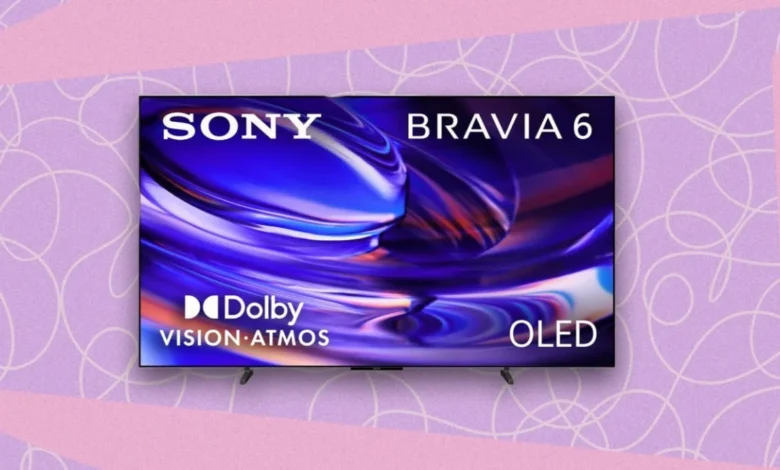
The consumer electronics market has reached a pivotal moment this autumn as major retailers and manufacturers adjust pricing strategies to accommodate end-of-year inventory cycles. Central to this shift is the Sony Bravia 6, a television model that gained significant market traction following its debut in the summer of 2026. As of October 2026, the device is currently available at a discount of up to 40% across several major retail platforms, marking one of the most aggressive price adjustments for a mid-tier OLED panel in recent history. The 55-inch configuration, which initially entered the market with a retail price of $1,499.00, is now retailing for $998, with proportionate savings applied to the 65, 77, and 83-inch variants.
Evolution of the Sony Bravia Series
Since the introduction of the Bravia branding in 2005, Sony has consistently positioned its television lineup as a benchmark for high-fidelity visual performance. The transition from LCD and LED technology to OLED (Organic Light-Emitting Diode) represented a major technical leap for the company, allowing for self-emissive pixels that provide absolute black levels and theoretically infinite contrast ratios.
The Bravia 6, launched in mid-2026, was specifically engineered to capture the "value-premium" segment of the market—a demographic of consumers who desire OLED picture quality but are unwilling to pay the premium required for flagship models like the A95L or the higher-end Bravia 8. By balancing manufacturing costs with core performance metrics, Sony created a product capable of competing directly with the LG C-series and Samsung’s S90 lineup, both of which have dominated the mid-to-high-end home theater market for several years.
Technical Specifications and Hardware Architecture
A primary differentiator for the Bravia 6, and a key factor in its appeal to enthusiasts, is its integration of the MediaTek Pentonic 800 chipset. This silicon upgrade is significant because it addresses a long-standing criticism of previous Sony models: limited high-bandwidth connectivity. While many premium Sony televisions have historically restricted users to two full-bandwidth HDMI 2.1 ports—one of which is often occupied by an eARC soundbar connection—the Bravia 6 provides four HDMI 2.1 ports.
This architecture supports the full spectrum of modern gaming requirements, including 4K resolution at 120Hz, Variable Refresh Rate (VRR), and Auto Low Latency Mode (ALLM). These features are essential for users employing the latest generation of gaming consoles and high-end PCs. Furthermore, the inclusion of DTS:X support ensures that the television maintains compatibility with modern spatial audio formats, a standard feature for mid-to-high-tier home theater displays.
While the Bravia 6 achieves a lower price point through a reduction in peak brightness compared to its sibling, the Bravia 8, it compensates with superior signal processing. Sony’s proprietary image-processing algorithms continue to be a subject of industry praise, particularly regarding motion interpolation and upscaling of lower-resolution content. In practice, the TV excels in dark-room environments, where its contrast-ratio capabilities can be fully realized, though it remains sufficiently capable for ambient-light viewing as well.
Market Context and Retail Strategy
The current price reduction of 40% is reflective of a broader trend in the television industry, where manufacturers accelerate depreciation cycles to make room for new models. Historically, television prices in the United States tend to follow a predictable seasonality, with significant discounting occurring in the window between late September and the "Black Friday" retail surge in late November.

By initiating these markdowns in October, Sony and its retail partners are attempting to capture early holiday spending and preempt competitive pricing from rivals. The move is particularly strategic given the current economic climate, where consumer discretionary spending on large-ticket electronics has shown sensitivity to inflationary pressures. By bringing the 55-inch model below the $1,000 threshold, Sony effectively lowers the barrier to entry for OLED technology, a category that was once restricted to the $2,000+ price bracket.
Industry Implications and Consumer Impact
The decision to equip the Bravia 6 with four HDMI 2.1 ports is widely viewed by industry analysts as a response to shifting consumer habits. As the smart home ecosystem expands and the gaming industry moves further into high-refresh-rate output, the demand for "future-proofed" I/O (input/output) ports has become a primary driver of purchase decisions. Manufacturers who have failed to offer more than two HDMI 2.1 ports have faced increasing friction from power users who frequently switch between multiple consoles, streaming devices, and high-fidelity sound systems.
The implications for the broader market are twofold. First, it forces competitors to re-evaluate their hardware specifications. If Sony can offer four HDMI 2.1 ports at a mid-range price point, the justification for limiting these features on flagship models becomes increasingly difficult to sustain. Second, it accelerates the transition away from traditional LED-backlit displays toward OLED panels. As the price gap between the two technologies narrows, consumer preference is inevitably shifting toward the superior contrast and response times inherent to OLED.
Performance Analysis: A Balanced View
While the deal offers significant value, prospective buyers should consider the trade-offs. The Bravia 6 is not a replacement for a flagship model in terms of raw luminance. Users who frequently watch television in rooms with high amounts of direct sunlight may still find that brighter Mini-LED or QD-OLED models offer better visibility. However, for the average consumer, the Bravia 6 represents a "sweet spot" in the current product hierarchy.
The user interface, powered by the Google TV operating system, remains one of the most robust and flexible platforms available. It offers seamless integration with most streaming services and smart home devices, including native support for voice-activated commands and cross-platform casting. This software-hardware synergy ensures that the television remains relevant even as streaming apps update their requirements for processing power.
Future Outlook for OLED Television Pricing
Looking forward, the current pricing trend suggests a maturing market. As OLED panel production becomes more efficient, the cost of manufacturing large-format screens has dropped, allowing for the aggressive discounting observed this month. Analysts expect that this trend will continue through 2027, as new manufacturing facilities come online and yield rates for OLED substrates improve.
For the consumer, this means that the window of opportunity to purchase a high-performance television at a significant discount is widening. However, inventory for specific models like the Bravia 6 is finite. Retailers are currently managing stock levels to ensure that they are not carrying "dead weight" into the new year. Consequently, while prices may stabilize or drop slightly further, the availability of these specific models may decline as retailers transition to 2027 product lines.
In conclusion, the current promotion on the Sony Bravia 6 OLED TV is more than a simple retail clearance; it is a reflection of the current technological and economic landscape. By offering high-end gaming connectivity and signature Sony image processing at a sub-$1,000 price point, the company is positioning itself to maintain its market share during a highly competitive retail season. For those currently in the market for a display upgrade, the Bravia 6 offers a rare combination of modern technical features and significant cost savings, making it a noteworthy addition to the list of tech deals for the latter half of 2026.