Tense Senate Confirmation Hearing Highlights Deep Policy Disagreements Regarding Scientific Integrity and Executive Influence

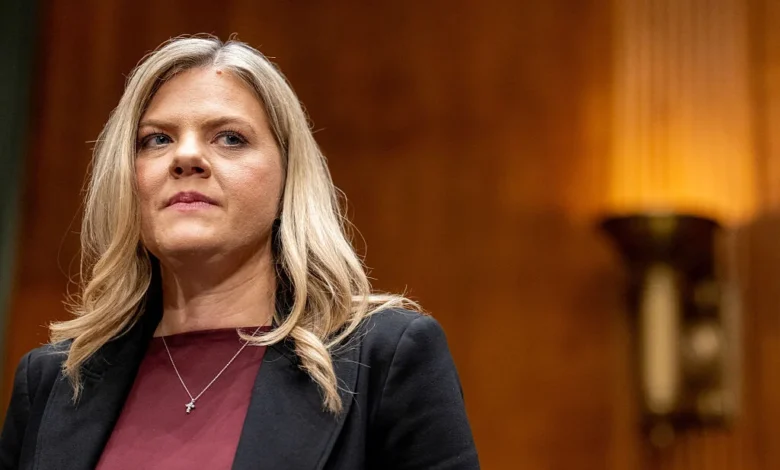
The confirmation hearing for the latest nominee to lead the Food and Drug Administration (FDA) devolved into a rigorous interrogation this week, as lawmakers pressed the candidate on the intersection of political directives, scientific consensus, and corporate influence. The session, characterized by sharp exchanges between committee members and the nominee, underscored a growing anxiety among legislators regarding the Trump administration’s approach to public health policy and the autonomy of the nation’s primary regulatory body. Throughout the proceedings, senators repeatedly sought clear acknowledgments of scientific reality, only to be met with carefully calibrated, evasive responses that sparked further frustration on both sides of the aisle.
The Challenge of Scientific Consensus and Presidential Rhetoric
The scrutiny began in earnest when Senator Maggie Hassan (D-N.H.) focused her questioning on the administration’s adherence to evidence-based medicine. Hassan specifically challenged the nominee regarding a series of public claims made by President Trump, including the scientifically unsupported assertion that Tylenol (acetaminophen) consumption during pregnancy carries a causal link to autism in children.
When asked directly by Hassan whether the President’s statement was factually incorrect—a "yes or no" prompt—the nominee declined to explicitly contradict the executive. Instead, the candidate offered a procedural response, stating, "There is no current evidence of a causal link between Tylenol and autism." Hassan expressed visible frustration at this equivocation, characterizing the reluctance to correct the President as a troubling trend that undermines the FDA’s credibility as an objective arbiter of health data.
"I wish it wasn’t so difficult for members of the administration to just plainly say that the president’s wrong," Hassan remarked. "And it’s really concerning to me that you are equivocating on it here."
This exchange reflects a broader tension within the public health community. Since the emergence of various fringe theories regarding vaccine safety and pharmaceutical side effects, mainstream medical organizations—including the American Academy of Pediatrics and the American College of Obstetricians and Gynecologists—have consistently maintained that such claims are not backed by rigorous peer-reviewed literature. The nominee’s refusal to address the President’s comments directly raised significant questions among committee members about whether the FDA, under new leadership, would prioritize presidential political messaging over established scientific consensus.
Vaccine Policy and Strategic Options
The inquiry further expanded to address the administration’s skepticism regarding current vaccine protocols. Senator Lisa Blunt-Rochester (D-Del.) pressed the nominee on reports suggesting that the candidate had personally advised the President to consider splitting the combined MMR (measles, mumps, and rubella) vaccine into individual doses.
The proposal to decouple these vaccines is not merely a logistical shift; it carries profound public health implications. Public health experts have noted that splitting the vaccine would require years of clinical trials, massive regulatory overhauls, and significant financial investment to prove the efficacy and safety of new formulations. Furthermore, medical experts argue that delaying or separating these inoculations could decrease vaccination compliance, leaving children vulnerable to preventable diseases for longer periods.
When Blunt-Rochester asked if the nominee viewed these as "good options," the candidate maintained that her role is to provide the President with a range of policy possibilities. "You wouldn’t have provided bad options, right?" the Senator asked. The nominee’s continued refusal to affirm the quality of the advice provided led to a heated stalemate, with Blunt-Rochester highlighting the discrepancy between the nominee’s professional responsibility to the public and her perceived duty to the administration.
The FDA Vacuum and the Controversy Over Flavored Vapes
The hearing also provided a platform to revisit the tumultuous resignation of former FDA Commissioner Marty Makary, who stepped down in May after reportedly resisting intense pressure from the administration to approve the sale of flavored vaping products. The policy change, which was enacted shortly after his departure, reversed years of agency efforts to curb the appeal of nicotine products to adolescents.
Senator Chris Murphy (D-Conn.) presented a timeline of the decision that detailed a rapid sequence of events:
- April 30: A major tobacco company, Reynolds, reportedly donated $8 million to the President.
- May 2: A lunch meeting occurred between the President and tobacco industry representatives, during which changes to FDA vape regulations were allegedly discussed.
- May 5: The FDA issued new guidance, effectively clearing the path for the widespread sale of flavored vapes, despite ongoing bipartisan opposition citing youth usage statistics.
Murphy challenged the nominee on whether this sequence suggested a quid pro quo arrangement, asking if she believed this was an appropriate way for the FDA to determine public health policy. The nominee rejected the framing of the question entirely, stating, "I reject the framing of that question," and reiterating that the President’s focus remains on achieving the best possible outcomes for the American people.
Contextualizing the Regulatory Crisis
The current state of the FDA represents a significant deviation from historical norms. For decades, the agency has operated under the mandate that its decisions must be based on the "best available science," insulated from political pressures. However, the current administration’s approach has frequently challenged this paradigm.
Industry analysts point to the "revolving door" between tobacco/pharmaceutical lobbyists and executive policy-making as a primary concern. The approval of flavored vapes, in particular, has become a focal point for public health advocates who argue that the policy prioritizes corporate revenue over the long-term health consequences for the youth demographic. Data from the Centers for Disease Control and Prevention (CDC) consistently demonstrates that flavored nicotine products are a primary driver of adolescent addiction, making the FDA’s decision to facilitate their sale a contentious issue in Washington.
Implications for Public Health and Institutional Trust
The implications of these confirmation hearings extend far beyond the appointment of a single official. The erosion of trust in the FDA has tangible consequences, ranging from public hesitancy regarding future vaccination campaigns to the potential for regulatory capture by industries with deep financial ties to political campaigns.
As the Senate continues its deliberations, the nominee faces a difficult path. The committee’s persistent questioning suggests that the upper chamber of Congress is increasingly wary of the executive branch’s influence over independent regulatory agencies. For the FDA, the path forward requires a delicate balancing act: maintaining the confidence of the scientific community while navigating an administration that has shown little interest in adhering to traditional expert consensus.
The hearing served as a stark reminder that in the modern political landscape, the definition of "scientific truth" has become a battleground. Whether the nominee is confirmed or not, the transcript of these hearings will likely remain a significant historical record of a period where the boundary between political policy and scientific regulation was tested to its limits. The committee’s next steps will be closely watched by health advocates, industry lobbyists, and the public alike, as the nation waits to see whether the FDA will regain its footing as an independent authority or continue to function as a direct instrument of the executive office.
Related posts: