Former federal prosecutors and law enforcement officials challenge Trump Media’s Truth API subscription service in court filing

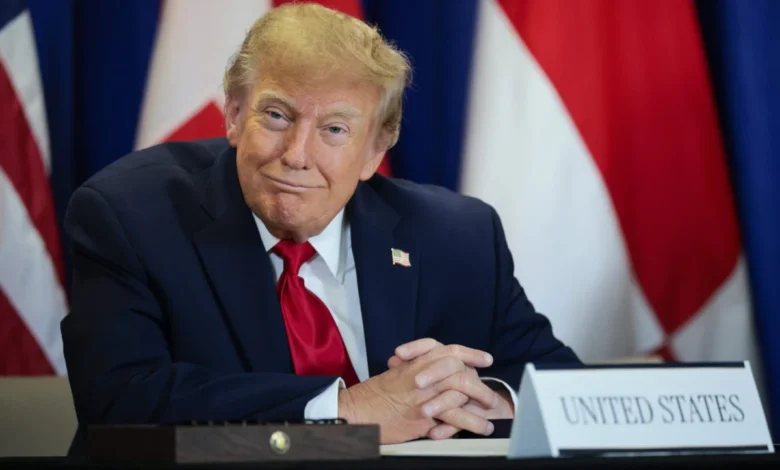
A coalition of more than 50 former federal prosecutors and law enforcement officials has formally intervened in the escalating legal battle over the Truth API, a data-licensing product from the Trump Media & Technology Group (TMTG) that allows subscribers to pay up to $100,000 per month for early access to posts made by the President of the United States on the Truth Social platform. The group, representing over 880 years of collective government experience across 11 presidential administrations, filed an amicus brief in the Southern District of New York this Monday. They argue that the monetization of official executive communications creates a dangerous precedent that risks violating federal criminal statutes, including those governing insider trading, public corruption, and the integrity of market-moving government information.
The brief serves as a powerful bolster to an existing legal challenge brought forward by The Intercept and the Freedom of the Press Foundation, which are seeking a preliminary injunction to halt the service. The involvement of such a large, bipartisan group of former officials underscores the gravity of the constitutional and ethical questions surrounding the intersection of presidential communications and private financial gain.
A Chronology of the Truth API Controversy
The controversy surrounding the Truth API follows a series of aggressive business expansions by TMTG since early 2025. The platform, initially conceived as a social media outlet for the former president, has evolved into a diversified digital conglomerate.
- January 2025: TMTG launches Truth.Fi, signaling a pivot into financial services, including digital-asset strategies and bitcoin treasury management.
- July 2026: Reports emerge detailing the technical architecture of the Truth API, which allows financial institutions to bypass the public feed of Truth Social to receive data milliseconds or seconds before the general public.
- August 2026: Public scrutiny intensifies as financial experts and market regulators express concern over the potential for "information asymmetry." Academics and former regulators begin labeling the service as a form of "paid insider trading."
- September 2026: The City of San Francisco initiates a lawsuit against TMTG, citing violations of California’s unfair competition laws and federal insider trading standards.
- Late September 2026: The coalition of 53 former prosecutors files an amicus brief, elevating the debate from a regulatory dispute to a matter of potential criminal liability.
The Argument Against Paid Access
The core of the legal challenge lies in the nature of the information being sold. When a sitting president communicates, those messages often carry the weight of official policy, which can trigger immediate market volatility. By selling "early access," TMTG is effectively creating a tiered system where institutional investors can capitalize on executive intent before the average citizen—or the broader market—has processed the information.
Renata O’Donnell, senior legal counsel at the Campaign Legal Center, argues that this arrangement fundamentally subverts the democratic process. "It’s so corrosive to democracy and to the public interest when we see the president financially benefiting from his official role," O’Donnell noted. The brief echoes this sentiment, stating, "There is no legitimate, let alone significant, government interest in allowing public officials to profit personally by selling early access to official government announcements."
Legal scholars involved in the filing point to the Securities Exchange Act as a primary point of concern. They contend that if these early posts contain material, non-public information regarding government policy, their use for financial gain could fall under the umbrella of "unlawful insider tips." Furthermore, the brief suggests that the arrangement may violate the Trade Secrets Act and anti-corruption statutes regarding illegal gratuities and conflicts of interest.
Implications for Subscribers and Market Integrity
The legal risk is not confined to the President or the corporation. The amicus brief explicitly warns that subscribers—who include, according to industry estimates, nearly a dozen major trading firms—could face their own legal exposure.
"There is potential criminal liability for folks who have paid the $100,000," O’Donnell explained. "It is in the public interest to shut this down sooner rather than later, before more folks sign on."
The market impact of such an arrangement is profound. Modern financial markets rely on the "efficient market hypothesis," which posits that prices reflect all available information. By selectively distributing information, TMTG may be facilitating a market environment where those with the deepest pockets gain an unfair advantage, potentially distorting the value of stocks, commodities, and currencies that react to presidential rhetoric.
Gian Luca Clementi, an economics professor at NYU’s Stern School of Business, has been among the most vocal critics, stating bluntly that the subscription model constitutes "insider trading by definition." While TMTG has maintained that their data licensing is standard industry practice, the fact that the "data" is the speech of the head of the executive branch differentiates this service from typical social media API access provided by companies like X (formerly Twitter) or Meta.
A Broader Pattern of Financial Expansion
The Truth API is only one component of a wider financial ecosystem built around the Trump brand. TMTG’s recent shift toward high-finance reflects a broader strategy to leverage the president’s reach into tangible assets.
In addition to Truth Social and its streaming arm, Truth+, the company has launched a suite of exchange-traded funds (ETFs) focused on American defense and energy security. Beyond the corporate entity of TMTG, the Trump family’s involvement in World Liberty Financial—a cryptocurrency venture—has generated significant personal wealth. According to 2025 financial disclosures, the family reported over $1.4 billion in income from crypto-related ventures, including $800 million from World Liberty Financial and $635 million from memecoin sales.
This accumulation of wealth through ventures that are often tied to the president’s political brand and policy influence has created a persistent tension between personal profit and public duty. Critics argue that the Truth API is the most aggressive iteration of this trend, as it directly commodifies the "official" voice of the presidency.
Official Responses and Future Outlook
To date, TMTG has declined to provide detailed responses to the specific allegations regarding criminal liability. The company’s legal defense is expected to center on the argument that Truth Social is a private entity and that the President’s posts on the platform do not constitute "official government communications" in the same way that press releases or executive orders do.
However, the San Francisco lawsuit and the new amicus brief suggest that a growing number of stakeholders are rejecting this distinction. The courts are now faced with a fundamental question: Does the digital presence of a head of state remain a private asset, or does it become a public utility that cannot be subjected to pay-to-play schemes?
As the case moves forward, the judiciary will need to weigh the protection of corporate intellectual property against the preservation of fair and transparent markets. If the court grants the preliminary injunction, it would effectively bar TMTG from continuing the Truth API service, marking a significant setback for the company’s revenue model and, potentially, establishing a legal precedent that would curtail the ability of future public officials to monetize their digital presence.
For now, the legal community remains in a state of watchful waiting. The 53 signatories to the amicus brief have signaled that they are prepared to see the argument through to the end, emphasizing that the "anti-corruption principle" of American government is at stake. As the digital and financial landscapes continue to converge, this case may well serve as a landmark ruling for the future of digital governance and market ethics in the 21st century.