When Melancholy Meets Motivation: How Three Indie Rock Anthems Transformed Isolation Into Resilience

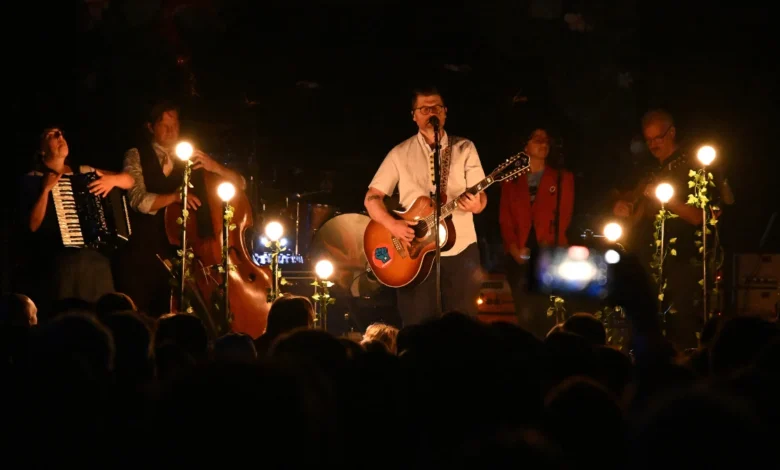
The intersection of psychological vulnerability and upbeat musical composition has long served as a fertile ground for the alternative and indie rock genres. Far from retreating into purely sorrowful soundscapes, a specific sub-genre of indie songwriting has mastered the art of translating profound depression, chronic loneliness, and societal pressures into anthems of unexpected resilience. For listeners navigating personal ruts, these tracks function simultaneously as validating acknowledgments of hardship and as motivational springboards. Examining three defining tracks from the past two decades—The Decemberists’ “Sucker’s Prayer,” Electric Guest’s “This Head I Hold,” and Girls’ “Hellhole Ratrace”—reveals a consistent thematic mechanism: the deliberate confrontation of despair as a prerequisite for genuine liberation.
The Evolution of Melancholy in Alternative Music
Historically, rock music has utilized sadness as both a cathartic release and an artistic signature, tracing back through the grunge era of the 1990s and the emo movements of the early 2000s. However, the indie explosion of the late 2000s and 2010s introduced a distinct stylistic shift. Instead of wallowing in acoustic minimalism or distorted agony, contemporary indie artists began pairing heavy, existential lyrics with bright pianos, infectious dance beats, and soaring vocal arrangements.
This juxtaposition creates a complex listening experience. Musicologists and psychologists have frequently noted that upbeat tempos release dopamine and encourage physical movement, while introspective lyrics provide emotional resonance and validation. When combined, these elements trick or guide the listener into confronting dark thoughts without becoming entirely consumed by them. The listener is invited to dance while crying, to laugh while acknowledging grief, and ultimately, to find a roadmap out of stagnation through the very act of voicing it.
The Decemberists and the Poetic Resilience of Sucker’s Prayer
Released on their 2018 album I’ll Be Your Girl, The Decemberists’ track “Sucker’s Prayer” exemplifies this balancing act between despair and drive. Known for their literary lyricism and folk-rock sensibilities, the band crafted a song that on the surface appears deceptively bright, propelled by vibrant piano chords and steady guitar rhythms. Beneath this accessible sonic architecture, however, lies a narrative heavily laden with thoughts of absolute defeat.
The lyrical content draws a direct, metaphorical parallel to the tragic death of author Virginia Woolf, detailing a speaker who removes their glasses and wades into a body of water weighed down by stones. The chorus lays bare a deep-seated vulnerability: “I wanna love somebody, but I don’t know how / I’ve been so long lonely, and it’s getting me down.” The juxtaposition of the line “I wanna throw my body in the river and drown” with the ultimate resolution of wanting to learn how to love creates a psychological turnaround.
Rather than concluding in tragedy, the song pivots on the realization of potential. Music critics and fans alike have noted that the visual imagery associated with the track—where the burdensome rocks are ultimately carried away by the current—serves as a metaphor for letting go of terminal grief. The track does not minimize depression; rather, it names it explicitly, strips it of its quiet secrecy, and reframes the desire for connection as an act of survival.
Electric Guest and the Rejection of Societal Expectations in This Head I Hold
Shifting the lens from internal depression to external societal pressure, Electric Guest’s 2012 breakout single “This Head I Hold” addressed the universal anxiety of conformity. Emerging during a transitional period in indie pop and neo-soul, the track captured the zeitgeist of a generation grappling with hyper-consumerism, digital-age expectations, and the relentless pursuit of societal milestones.
Beneath the song’s infectious, hip-shaking rhythm and vintage soul production lay a pointed critique of personal compliance. The opening verses immediately establish the core conflict:
“See the problem was I / I was fully consumed / By all of the petty things that I couldn’t do / All of the plastic products, shows and woes / I didn’t ever show, I let it go.”
As the narrative progresses, the speaker identifies the insidious nature of listening too closely to external voices, noting that “the more I listen, the deeper I sink.” The breakthrough occurs in the second verse, which delivers a direct call to authenticity: “See the problem was this / If I wanna be free / I gotta stop playing round and running from me.”
The cultural impact of “This Head I Hold” lay in its ability to translate a complex psychological realization—that self-sabotage often stems from trying to live up to external blueprints—into a universally danceable format. By embedding this message of self-acceptance within upbeat production, Electric Guest demonstrated that breaking free from societal pressures does not require a somber revolution; it can be achieved through joyful reclamation of one’s own identity.
Girls and the Raw Reality of the Hellhole Ratrace
Perhaps no track encapsulates the raw, unfiltered reality of clinical depression quite like “Hellhole Ratrace” by the indie rock band Girls, released on their acclaimed 2009 debut album Album. Unlike tracks that rely on subtle metaphors, Girls presented a composition that was unapologetically heavy, moving slowly through layers of guitar distortion and soaring backing vocals before erupting into a life-affirming finale.
The song’s first verse dives straight into the monotonous, soul-crushing weight of daily survival:
“I work to eat and drink and sleep just to live / Feels like I’m never getting back what I give / I got a sad song in my sweet heart / And all I’ll ever really need is some love and attention.”
This stark honesty forms the foundation of the track. It validates the exhaustion felt by individuals trapped in cycles of mental fatigue and socio-economic stress. However, the emotional trajectory of the song shifts dramatically during the chorus, transforming an expression of isolation into an urgent, collective plea for joy:
“And I don’t wanna cry my whole life through / I wanna do some laughing too / So come on, come on, come on, come on and laugh with me / And I don’t wanna die without shaking up a leg or two / Yeah I wanna do some dancing too / So come on, come on, come on, come on and dance with me.”
This transition from solitary grief to shared celebration underscores a vital psychological principle: healing often requires community, movement, and the active choice to pursue happiness despite overwhelming odds.
Broader Impact and Implications
The enduring relevance of tracks like “Sucker’s Prayer,” “This Head I Hold,” and “Hellhole Ratrace” highlights a broader cultural shift in how mental health is discussed within popular media. Rather than treating depression and loneliness as taboo subjects to be masked by perpetual optimism, contemporary art increasingly embraces the coexistence of pain and resilience.
Psychologists and music industry analysts suggest that songs structured around this dynamic—where despair is thoroughly explored before yielding to a resolute demand for connection or joy—provide tangible benefits for listeners. They serve as emotional validation tools, reducing the sense of isolation that often accompanies mental health struggles. By packaging these heavy themes within compelling, rhythm-driven compositions, artists ensure that the message reaches those who need it most, proving that sometimes the most effective motivational tool is simply an honest song told well.