In the rolling northwestern corner of Georgia, where the foothills of the Appalachian Mountains meet a landscape of tight-knit rural communities and sprawling exurbs, political allegiance runs as deep as the red clay. This is the 14th Congressional District, home to roughly 765,000 residents and widely recognized as the most reliably conservative constituency in the state. For years, voters here have cast their ballots for the Republican platform with unwavering solidarity, championing conservative firebrands and elevating figures like Donald Trump to heroic status. Yet, beneath the surface of this unyielding partisan loyalty, a quiet crisis is unfolding inside family kitchens and crowded emergency rooms.
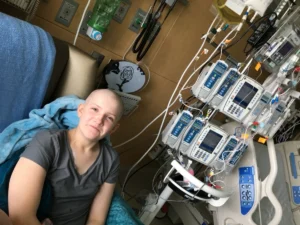
Rising healthcare costs, fueled by federal policy shifts, the expiration of pandemic-era subsidies, and tightening eligibility for public assistance, are forcing everyday Americans to make impossible choices. Amber Bates of Cohutta, Georgia, knows this reality intimately. Alongside her husband and young son, Bates shares a trailer home with her mother-in-law, who cares for another son with severe autism. For the past two years, Bates and her husband have gone entirely without health insurance. Their employment remains unsteady, yet their cumulative income sits just above the threshold to qualify for Medicaid, the public health insurance program reserved for low-income individuals and those with disabilities.
When Congress allowed enhanced Affordable Care Act (ACA) marketplace subsidies to expire at the end of last year, the financial pressure became unbearable, forcing Bates’ mother-in-law to drop her coverage as well. Today, the family funnels roughly a third of their total household income directly into prescription medications. When acute medical needs arise, they bypass traditional doctor’s offices—fearing the upfront billing—and instead head straight to the local emergency room, relying on the safety net of deferred collections.
Despite the immense stress, Bates insists she remains committed to Donald Trump, viewing him as a leader fighting for the country, even as she acknowledges glaring flaws in his administration’s focus. Her dilemma mirrors a broader nationwide tension: how voters reconcile their deep-seated devotion to a political movement with economic policies that directly undermine their financial security.
The Anatomy of a Healthcare Squeeze
The financial strain felt by families in Georgia’s 14th District is not an isolated phenomenon, but rather the cumulative result of years of shifting federal health legislation and legislative stalemates. To understand how communities like Cohutta arrived at this juncture requires examining the trajectory of healthcare policy over the past decade and a half.
When the Affordable Care Act was passed into law in 2010, it fundamentally restructured the American health insurance market. Not a single Republican member of Congress voted for the legislation, cementing its status as anathema to conservative ideology. Over the subsequent decade, the GOP’s legislative North Star became the complete repeal and replacement of the law, often referred to pejoratively by its critics as "Obamacare."
However, when the covid-19 pandemic struck in 2020, federal policymakers enacted temporary measures to stabilize the economy and expand healthcare access. Under the Biden administration, Congress introduced enhanced ACA marketplace subsidies designed to drastically reduce monthly premium payments for millions of Americans. These subsidies proved remarkably effective at driving down costs, pushing marketplace enrollment to historic highs. In Georgia’s 14th District alone, approximately 74,000 residents relied on these enhanced tax credits to keep health insurance within financial reach.
The political landscape shifted dramatically when Republicans regained unified control of the federal government—winning the White House, the House of Representatives, and the Senate. Last summer, Congress passed a sweeping legislative package known as the One Big Beautiful Bill Act. This legislation fundamentally altered the healthcare landscape by restricting ACA marketplace enrollment periods, imposing mandatory monthly fees, and levying strict new documentation requirements on enrollees. Compounded by the expiration of the enhanced ACA subsidies at the close of last year, the legislative changes triggered a sharp contraction in coverage.
According to projections from the nonpartisan Congressional Budget Office (CBO), these cumulative policy changes are expected to increase the total number of uninsured individuals in the United States by roughly 15 million people over a 10-year period. In the immediate aftermath of the subsidies’ expiration, ACA marketplace enrollment nationwide plunged by nearly 3 million participants. In Georgia specifically, state enrollment dropped by more than half a million people, raising acute alarms among rural hospital administrators and public health advocates who rely on insured patients to maintain operational solvency.
The Uninsured Reality in Northwest Georgia
Statistical metrics underscore the vulnerability of Georgia’s 14th Congressional District. According to data from the Congressional District Health Dashboard managed by NYU Langone Health’s Department of Population Health, nearly 14% of residents under the age of 65 were living without health insurance in 2024, a figure that sits comfortably above the national average. Furthermore, data compiled by Georgetown University’s Center for Children and Families reveals that over 16% of the district’s population relied on Medicaid or the Children’s Health Insurance Program (CHIP) in 2023.
These numbers translate into daily hardships for families navigating unsteady employment and high out-of-pocket medical expenses. Policy experts note that while Republican voters frequently express intense frustration over the cost of healthcare, their animosity toward the term "Obamacare" often supersedes their appreciation for the actual programs supporting them.
Jonathan Oberlander, a professor of social medicine at the University of North Carolina-Chapel Hill, notes that while the GOP has largely abandoned its explicit "repeal and replace" rhetoric of the Trump administration’s first term, the current legislative strategy has effectively achieved a quiet rollback of coverage gains.
"Obamacare remains a dirty word for many conservatives," Oberlander explained. "Even as policies strip away financial protections that these communities rely on, the political branding of the law ensures that opposition to it remains a core tenet of conservative identity."
Political Fallout and Legislative Stalemate
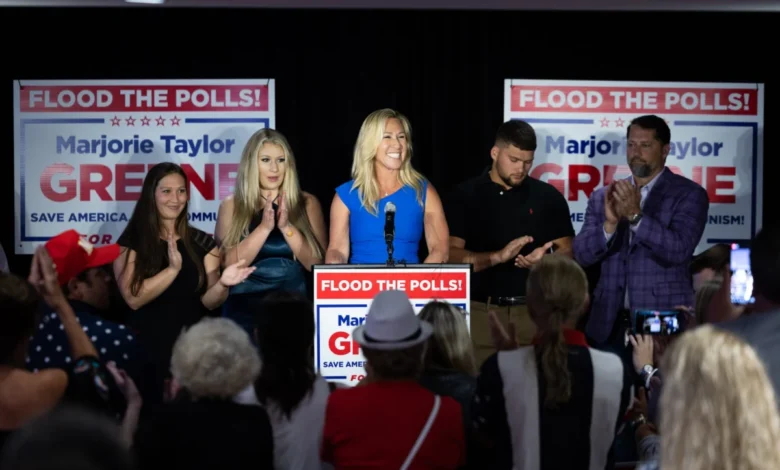
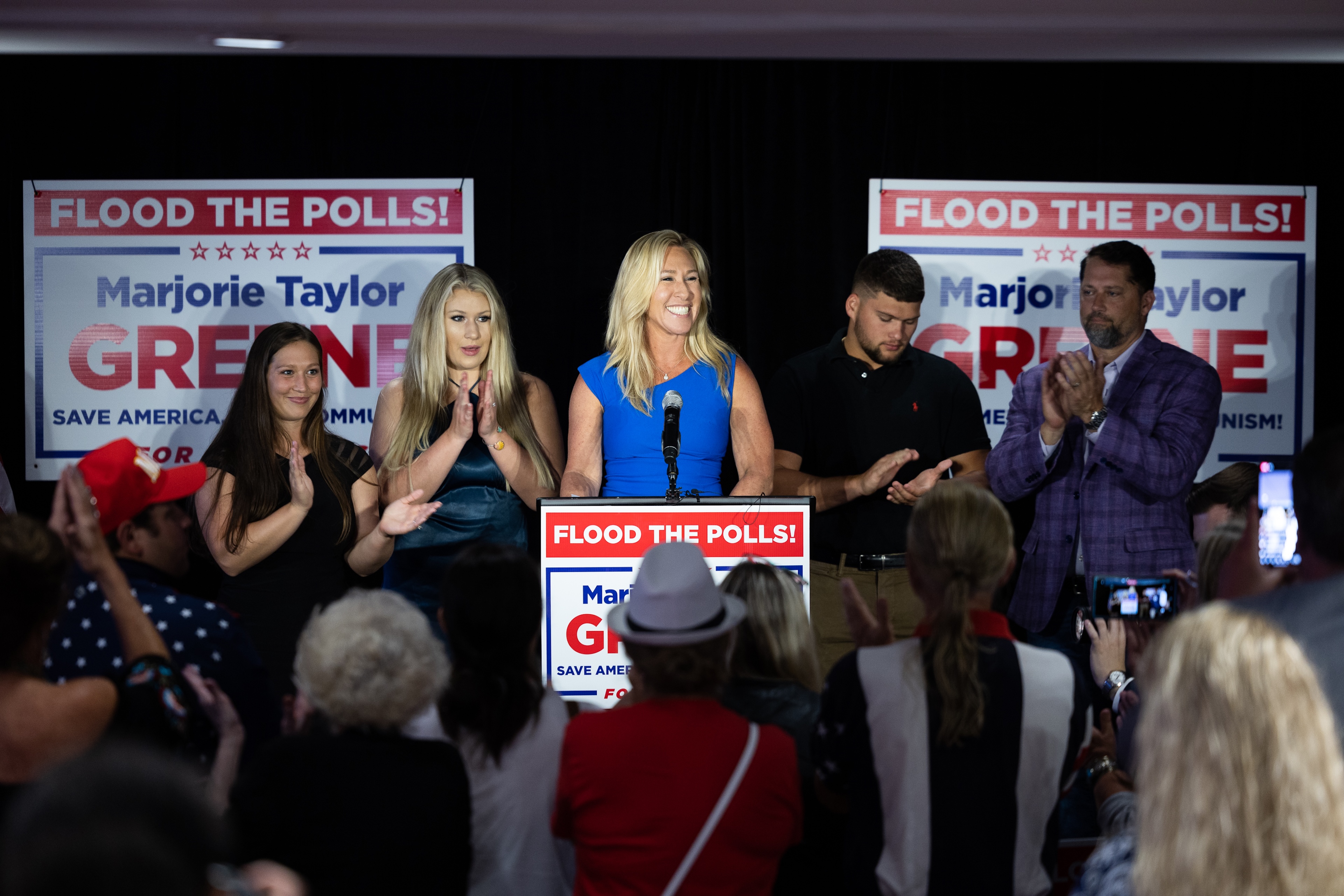
The tension surrounding healthcare costs has occasionally fractured even the most loyal ranks of the Republican Party. This dynamic played out publicly through the actions of Marjorie Taylor Greene, the firebrand conservative who represented Georgia’s 14th District from 2021 until her resignation in January 2026.
Greene had long built her political brand as one of Donald Trump’s most vocal and unwavering defenders. Yet, in a stunning political pivot late last year, she publicly lambasted her own party’s leadership over the expiration of the enhanced ACA subsidies. Greene revealed that her own adult children, alongside tens of thousands of families in her district, faced catastrophic spikes in their insurance premiums, with costs projected to double.
In public statements and media interviews, Greene did not mince words, calling the end of the subsidies "catastrophic" and expressing outrage that congressional leadership failed to produce a viable alternative. Her frustration escalated when she publicly criticized Trump for prioritizing foreign policy engagements—such as international conflicts—over the economic struggles of everyday Americans. The fallout was swift: Trump publicly denounced Greene on social media, rescinding his endorsement and prompting her announcement that she would resign from her congressional seat.
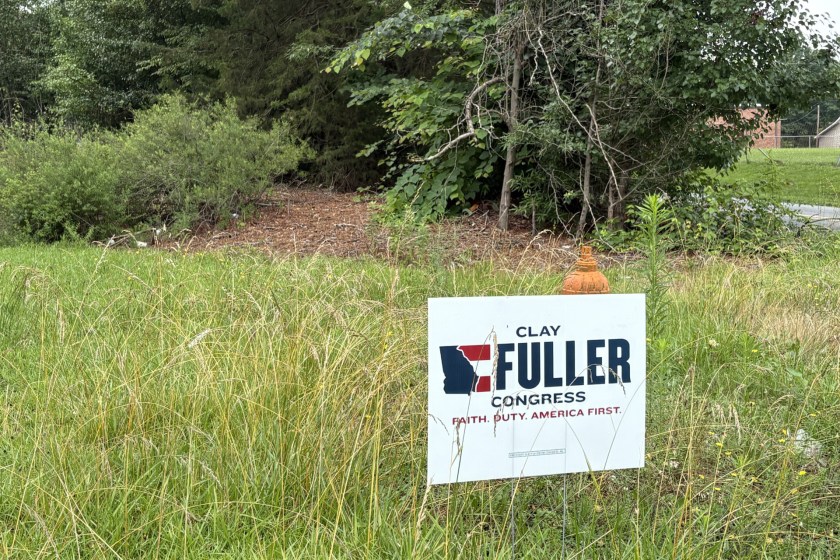
Following Greene’s departure, voters in the district headed to the polls in April to elect a successor, ultimately choosing Trump-backed Republican Clay Fuller in a special election, though by narrower margins than Greene historically secured. Fuller is now campaigning to retain the seat for a full two-year term in the upcoming November midterm elections, facing off against Democratic challenger Shawn Harris.
Fuller’s campaign has maintained that the pandemic-era ACA subsidies were never intended to be a permanent fiscal solution, arguing instead that true healthcare affordability will be achieved through enhanced market competition and the reduction of federal overreach.
Meanwhile, House Republican leadership attempted to address the legislative vacuum by championing the Lower Health Care Premiums for All Americans Act, introduced by House Speaker Mike Johnson. Touted as a market-driven alternative to extending the ACA tax credits, the bill passed the House in December. However, its trajectory stalled in the Senate. Furthermore, a CBO analysis delivered a sobering assessment: the legislation would paradoxically increase the number of uninsured Americans by 100,000 annually between 2027 and 2035.
"It’s a Republican-controlled House, a Republican-controlled Senate, and a Republican-controlled White House," Greene remarked following her exit from office. "If Republicans had a plan, this was the perfect scenario to get it passed. You should have all the votes—get it done. And they’re not doing anything."
The Psychology of Partisan Resilience
Despite clear institutional paralysis and the tangible withdrawal of healthcare support systems, political scientists emphasize that these kitchen-table struggles are unlikely to alter the electoral map in deeply conservative strongholds like Georgia’s 14th District.
Charles Bullock, a professor of political science at the University of Georgia, explains that party identification often supersedes immediate economic self-interest in hyper-polarized political environments.
"They’re willing to stick with the party line," Bullock said. "As long as Donald Trump and other prominent Republicans continue framing Obamacare as fundamentally destructive, voters are going to continue buying into that narrative, even when the policy outcomes run directly counter to their economic well-being."
Polling data supports this complex psychological landscape. According to a June KFF health opinion poll, 37% of surveyed Republican voters identified healthcare costs as an "extremely important" issue heading into the midterms. Furthermore, a KFF tracking survey released in March revealed that over half of Republicans and Republican-leaning independents who identify with the Make America Great Again movement believed that congressional leaders made a mistake by letting the enhanced subsidies expire. Paradoxically, marketplace enrollees themselves split the blame between Republicans in Congress (30%) and Donald Trump (32%).
Democratic challenger Shawn Harris argues that this disconnect stems from successful messaging by the GOP that separates the brand of "Obamacare" from the utility of the Affordable Care Act.
"When you ask people in the community if they support Obamacare, they’re probably going to say no," Harris said. "But when you ask them about the Affordable Care Act, they’ll tell you, ‘Oh, yes, I need that.’ They don’t realize it’s one and the same. Republicans sold everybody a bill of goods."
Looking Toward the Midterms
As the November midterm elections draw closer, the candidates vying for Georgia’s 14th District congressional seat find themselves navigating a delicate tightrope. While challengers like Harris hope that economic pain points will drive disaffected voters to the polls, entrenched political dynamics suggest that the district’s conservative base remains largely insulated from ideological defection.
For residents like Amber Bates, the political grandstanding in Washington feels entirely disconnected from the daily struggle of managing chronic illness, high prescription costs, and the absence of a basic healthcare safety net. She remains skeptical that any politician—regardless of party affiliation—truly grasps the financial realities faced by working-class families in rural America.
"I honestly wish Congress would actually spend time in the life that we live," Bates reflected. "They just sit behind their desks, and they don’t know what’s really going on in life, because they make so much money."
As long as the legislative stalemate persists in Washington, millions of Americans will continue to navigate the friction between partisan loyalty and economic survival, caught in the crossfire of a healthcare debate with no end in sight.
Related posts: