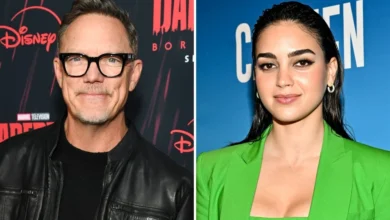
Judson Mills speaks out on the Emmy Awards’ exclusion of television icon Chuck Norris from the annual In Memoriam tribute

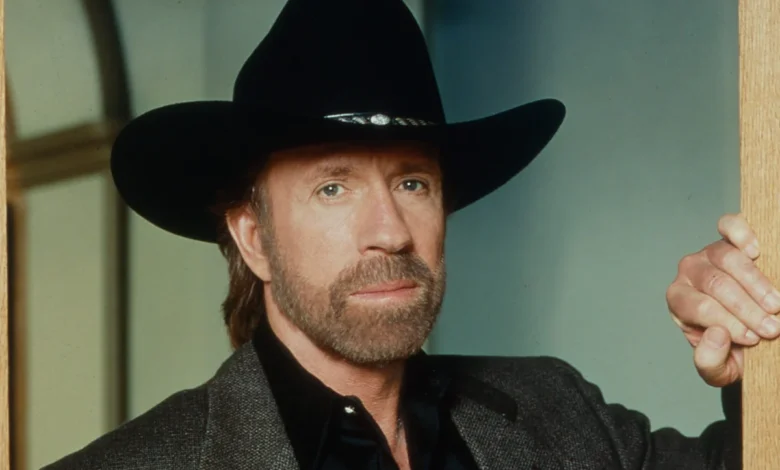
The 2026 Emmy Awards ceremony has faced significant backlash following its annual In Memoriam segment, which notably omitted the late Chuck Norris, a global television icon and the star of the long-running CBS procedural Walker, Texas Ranger. The exclusion of Norris, who passed away in March at the age of 86, has prompted public criticism from industry colleagues, including his former co-star Judson Mills, who described the oversight as a "tragic mistake." As the television community reflects on the legacy of the martial arts legend, the Emmys’ production decisions regarding the tribute have sparked a broader conversation about how the Academy of Television Arts & Sciences selects individuals for inclusion in one of the medium’s most solemn and high-profile honors.
A Legacy Left Off the Screen
Chuck Norris, born Carlos Ray Norris in 1940, transitioned from a legendary career in professional martial arts to become one of the most recognizable faces in global television during the 1990s. His performance as Cordell Walker in Walker, Texas Ranger, which ran for nine seasons and 203 episodes between 1993 and 2001, defined the CBS Saturday night primetime block for nearly a decade. Beyond his initial run, Norris remained intrinsically linked to the character, reprising the role for the 2005 television movie Walker, Texas Ranger: Trial by Fire.
The decision to exclude a performer of Norris’s stature from the In Memoriam tribute has drawn sharp condemnation from those who worked closely with him. Judson Mills, who portrayed Francis Gage alongside Norris during the final two seasons of the series and the subsequent film, spoke to TMZ regarding the omission. "Tragic mistake. And I have to assume it was just a terrible mistake," Mills stated. "But my first thought was Gena and the family and his fans."
Mills, who maintained a professional and personal connection with Norris, emphasized the character of the late actor, noting that while Norris himself might have practiced humility, the institutional failure to acknowledge his contribution to the industry was unacceptable. "I’m confident Chuck would encourage forgiveness. He was an ‘it’s not all about me’ kind of guy," Mills added. "But for an icon of his stature who impacted not only Hollywood but the entire world, to see him not receive recognition at all and to see the family not receive that recognition was disappointing… It hurt my feelings for sure. He was a legend for God’s sake."
The Chronology of a Public Loss
The passing of Chuck Norris on March 20, 2026, marked the end of an era for action television. At the time of his death, his family released a poignant statement summarizing his dual identity as a global figure and a private family man: "To the world, he was a martial artist, actor, and a symbol of strength. To us, he was a devoted husband, a loving father and grandfather, an incredible brother, and the heart of our family. He lived his life with faith, purpose, and an unwavering commitment to the people he loved."
The sequence of events leading to the Emmy snub began with the selection process for the 2026 telecast’s production team. In television industry parlance, the In Memoriam segment is a curated list, often subject to time constraints and editorial decisions that inevitably lead to controversy. However, the omission of a lead actor from a top-rated, nine-season network drama is rare. Critics point out that the tribute, intended to honor the lives lost in the preceding twelve months, failed to account for the massive cultural imprint left by Norris, who served as a primary anchor for CBS throughout the 1990s.
Broader Patterns of Omission
The exclusion of Chuck Norris was not an isolated incident during the 2026 Emmy ceremony. The broadcast faced immediate social media scrutiny as viewers noted the absence of several other notable industry figures. Among those missing from the segment was actor Nicholas Brendon, known for his long-running role as Xander Harris on the cult-classic series Buffy the Vampire Slayer. The snub was particularly glaring given that the ceremony featured a high-profile Buffy reunion, bringing Sarah Michelle Gellar and David Boreanaz to the stage, yet leaving their former castmate out of the tribute.
Other notable omissions included:
- Patrick Muldoon, the actor recognized for his work on Days of Our Lives and his role in the seminal science-fiction film Starship Troopers.
- Jaye P. Morgan, a fixture of the entertainment industry and a memorable panelist on The Gong Show.
- Daveigh Chase, the actress known for her work in the horror classic The Ring.
- Grizz Chapman, a performer whose work on the critically acclaimed series 30 Rock provided significant comedic value to the sitcom landscape.
These omissions highlight the systemic difficulties faced by the Academy in reconciling a massive list of industry contributors with the limited duration of a live television broadcast.
The Selection Process and Institutional Responsibility
The selection of names for the In Memoriam segment is handled by the Television Academy, which reviews thousands of industry deaths annually. While the Academy does not always issue specific explanations for why certain individuals are excluded, industry analysts suggest that the criteria often prioritize union membership, individual Emmy nominations, and high-profile roles.
However, the case of Chuck Norris challenges these standards. As the star of a show that remained a ratings juggernaut for nearly a decade, Norris’s contribution to the business of television was arguably as significant as many who are routinely included. Analysts suggest that the lack of institutional recognition for performers of the 90s action era—a genre often overlooked by awards bodies—may play a role in these oversights.
The implication of such omissions is the alienation of long-term fans and the potential devaluation of an actor’s lifetime contribution to the medium. When an institution like the Emmys overlooks a performer whose work defined a generation, it risks appearing disconnected from the audience that sustained that performer’s career.
Professional Impact and Industry Reaction
Beyond the emotional response from friends like Judson Mills, the snub invites a professional critique of the Academy’s vetting process. In an era where digital archives make it easier than ever to verify the work of deceased artists, the "mistake" defense offered by observers is increasingly viewed with skepticism by industry insiders.
"The Academy has a responsibility to represent the breadth of television history," says one industry analyst. "When you omit someone like Chuck Norris, you aren’t just ignoring an actor; you are ignoring the legacy of a network’s success and the millions of viewers who tuned in to watch him every week. It creates a vacuum of recognition that is difficult to justify."
As the television industry continues to evolve, the pressure on major awards shows to be more inclusive and diligent in their memorial segments is mounting. The 2026 Emmy Awards will likely be remembered not just for its winners, but for the notable absences that marred the tribute. For the family of Chuck Norris and his loyal fanbase, the omission serves as a painful footnote to a life characterized by strength and public service, reminding the industry that behind every name left off a list is a legacy that deserves to be honored.
Moving Forward
While there is no formal mechanism for the Emmys to retroactively add names to an In Memoriam segment, the backlash serves as a reminder of the public’s investment in these tributes. The Academy of Television Arts & Sciences has not yet released an official statement regarding the specific criteria used for the 2026 list or an acknowledgment of the criticism regarding the Norris exclusion.
However, the voices of colleagues like Judson Mills, who spoke with a mix of grief and frustration, underscore the reality that for those who worked in the trenches of television production, these honors are more than just a broadcast requirement—they are a validation of a career and a final, public salute to a peer. As the industry looks toward future ceremonies, the pressure to implement a more robust and transparent selection process for the In Memoriam tribute remains higher than ever. For now, the legacy of Chuck Norris remains firmly cemented in the history of television, even if it was absent from the screen during this year’s most significant night of recognition.
Related posts: