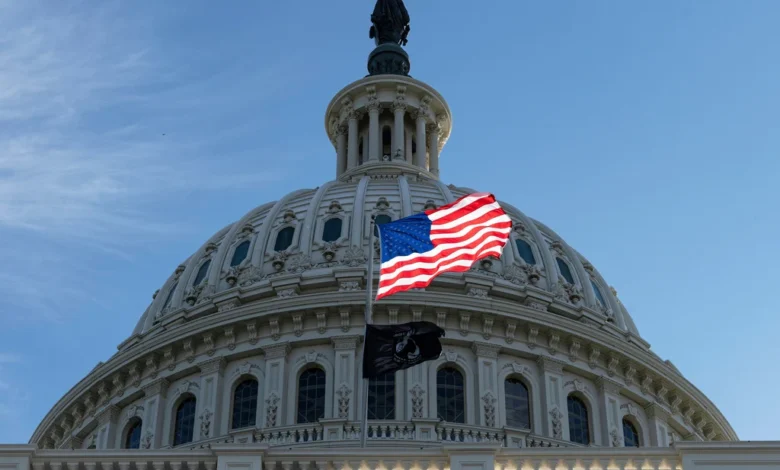
The architecture of American democracy is currently facing an unprecedented crisis of confidence, defined not merely by partisan gridlock, but by a deeper, more existential dread. Across the political spectrum, contemporary governance has devolved into a high-stakes struggle driven by a single, recurring anxiety: the fear of what the opposing party will achieve once it seizes the reins of state power. This apprehension manifests in perpetual, bruising conflicts over the composition of the Supreme Court, the boundaries of presidential executive orders, the regulatory reach of federal agencies, and the legislative supremacy of Congress. Yet, as the nation stumbles from one institutional showdown to the next, a growing number of political scientists, constitutional scholars, and policy analysts suggest that the electorate and the political class alike are focusing on the wrong dilemma.
Rather than obsessing over who holds the levers of government at any given moment, observers argue that the more critical inquiry should center on whether the machinery of the state has grown too expansive, centralized, and unaccountable to function safely under any administration. This fundamental shift in perspective challenges the traditional paradigm of American politics, urging a reevaluation of how institutional power is distributed, exercised, and feared in the 21st century.
The Anatomy of Institutional Fear
To understand the current malaise in American politics, one must examine how the nature of federal power has evolved over the past century. The United States government was originally conceived as a system of deliberate friction—a complex matrix of checks and balances designed by the framers to prevent the concentration of authority in any single branch. James Madison famously articulated this philosophy in Federalist No. 51, writing that "ambition must be made to counteract ambition."
In practice, however, the modern administrative state has vastly expanded the scope of federal influence. Today, federal agencies write rules that carry the force of law, the executive branch routinely deploys unilateral executive orders to bypass legislative deadlocks, and the judiciary is perpetually thrust into the role of a super-legislature resolving major cultural and economic disputes. Consequently, every presidential election has been reframed as an apocalyptic contest. When the stakes are perceived as total victory or total subjugation, compromise becomes an existential risk, and institutional norms are discarded in favor of short-term tactical advantages.
This dynamic creates a vicious cycle of preemptive retaliation. When one party expands executive authority to achieve its policy goals, it sets a precedent that the opposing party subsequently weaponizes when it regains power. The result is a volatile political ecosystem where the machinery of government is viewed less as a neutral arbiter of public life and more as a loaded weapon waiting to be aimed by the victor of the last election cycle.
A Chronology of Escalating Institutional Conflict
The roots of this systemic anxiety did not emerge overnight; they are the product of decades of escalating institutional warfare across all three branches of government.
The transformation of the judicial nomination process serves as a prime timeline of this deterioration. For much of the 20th century, Supreme Court confirmations, while occasionally contentious, generally respected institutional norms regarding nominee qualifications and Senate deference. However, the rejection of Robert Bork’s Supreme Court nomination in 1987 marked a turning point, introducing a new level of partisan acrimony to the process.
Decades later, this tension peaked with the 2016 refusal of the Senate to consider the nomination of Merrick Garland, followed closely by the 2020 confirmation of Amy Coney Barrett just weeks before a presidential election. Each maneuver was defended by its perpetrators as a constitutional prerogative, yet each eroded public trust in the judiciary as an impartial institution.
Concurrently, the legislative branch has experienced a historic decline in its lawmaking capacity. Congressional gridlock has become the norm rather than the exception, driven by hyper-polarization and the weaponization of procedural rules such as the filibuster. As Congress abdicated its core responsibility to pass comprehensive legislation, successive administrations turned increasingly to executive action.
The Obama administration relied heavily on executive directives for environmental and immigration policies; the Trump administration utilized emergency declarations and unilateral trade tariffs; and the Biden administration pursued sweeping student loan forgiveness programs through regulatory interpretations. In each instance, the opposing party immediately rushed to federal courts to block these actions, transforming the judiciary into the primary battleground for national policy.
Quantitative Insights and Public Sentiment
Data compiled by independent research organizations underscores the depth of public disillusionment with these institutional battles. According to surveys conducted by the Pew Research Center, trust in the federal government remains near historic lows, with fewer than 20 percent of Americans reporting that they trust the government to do what is right "always" or "most of the time."
Furthermore, polarization metrics from organizations like the Polarization Research Lab indicate that affective polarization—the tendency of partisans to view members of the opposing party not merely as incorrect, but as a malicious threat to the nation—has surged significantly over the last twenty years. This animosity directly fuels the fear of executive overreach. When voters believe that the opposition is not just wrong on taxes or foreign policy, but fundamentally hostile to democratic norms, the prospect of that opposition controlling federal agencies, the Department of Justice, or the regulatory apparatus becomes intolerable.
Economic and demographic data further compound these pressures. As the federal budget has grown past multi-trillion-dollar thresholds, the sheer volume of discretionary spending managed by federal agencies has expanded exponentially. This financial footprint gives federal bureaucrats immense discretionary power over key sectors of the American economy, including healthcare, energy, finance, and technology. Winning control of the White House is no longer merely about ideological validation; it is about securing direct influence over trillions of dollars in economic activity and regulatory enforcement.
Institutional and Legal Responses
In response to these mounting pressures, legal scholars, lawmakers, and policy institutes have proposed various structural reforms aimed at recalibrating the balance of power. These proposals generally fall into two categories: those that seek to reform specific institutions, and those that challenge the foundational scope of the administrative state itself.
Proponents of institutional reform often advocate for changes such as expanding or restructuring the Supreme Court, establishing term limits for justices, or reforming the filibuster rules in the Senate to encourage legislative compromise. Advocates argue that such measures would restore fluidity to governance and reduce the high-stakes drama surrounding single appointments or procedural blocks.
Conversely, a substantial body of legal thought argues that tinkering with institutional personnel or rules fails to address the root cause of the disease. Scholars aligned with this view contend that the primary driver of political anxiety is the sheer overreach of federal authority. Landmark legal developments, such as the Supreme Court’s 2024 decision to overturn the Chevron doctrine—which had previously required courts to defer to agency interpretations of ambiguous statutes—represent a major legal pushback against administrative expansion. By curtailing the power of federal agencies to write expansive regulations without explicit congressional authorization, proponents argue that the courts are helping to defuse the high-stakes struggle over executive branch control.
Broader Impact and Systemic Implications
The persistent fear of what the opposing side will do with state power carries profound implications for the long-term stability and functionality of the American republic.
First, it degrades the quality of governance. When public officials spend the majority of their time playing defense against potential executive overreach or regulatory weaponization, long-term strategic planning for national challenges—such as infrastructure modernization, fiscal solvency, and technological competition—takes a back seat to short-term political survival.
Second, it fosters a dangerous erosion of civic trust. When citizens begin to view every national election as an existential crisis from which there is no recovery, the legitimacy of democratic institutions is inevitably called into question. Discontent can manifest in political apathy, civil unrest, or a willingness to countenance norm-breaking behavior from one’s own political champions.
Ultimately, the central dilemma highlighted by contemporary political discourse is not merely a question of which party holds the majority, but whether the American system of government can continue to operate effectively while burdened by an administrative apparatus that has grown too vast for consensus politics. As long as the federal government retains the capacity to radically reshape society through executive decree and regulatory fiat, the fear of the other side will remain the dominant emotional driver of our politics.
Addressing this reality will require more than partisan victories or legislative maneuvers. It demands a serious, bipartisan reassessment of the limits of state power, a return to constitutional federalism, and a renewed commitment to institutional restraint. Until the nation shifts its focus from conquering the machinery of government to limiting its potential for harm, the underlying anxiety of American democracy will persist, threatening the stability of the republic from within.