North American Economic Integration Under Threat as Trade Tensions Escalate Between Washington and Ottawa

The bedrock of the North American economy, built upon decades of integrated supply chains and tariff-free trade, is facing its most significant challenge in recent memory as diplomatic relations between the United States and Canada deteriorate into a full-scale trade standoff. President Donald Trump, citing a long-standing grievance regarding perceived trade imbalances, has initiated a series of aggressive economic measures, including the imposition of sweeping tariffs and the threat to dismantle the US-Mexico-Canada Agreement (USMCA). This escalation has rattled global markets and left policymakers in Ottawa scrambling to maintain a relationship that serves as the primary export destination for American agricultural products and the essential source of energy for the United States’ industrial heartland.
A Chronology of Declining Relations
The current crisis did not emerge in a vacuum but represents the culmination of mounting friction that began shortly after the expiration of the previous trade era. Following the collapse of high-level trade negotiations on August 21, the rhetoric from the White House shifted from standard diplomatic negotiation to combative, personal attacks. President Trump has repeatedly questioned the sovereignty and economic fairness of Canada, going so far as to publicly toy with the concept of territorial expansion and signing an executive order aimed at renaming Lake Ontario to "Lake America"—a move viewed by many analysts as a symbolic provocation rather than a substantive policy shift.
The timeline of the current escalation is defined by a tit-for-tat series of administrative actions:
- August 21: Formal trade negotiations between U.S. and Canadian delegations collapse, marking the start of the current diplomatic freeze.
- Early September: President Trump announces a 50% tariff on $20 billion worth of Canadian goods, targeting specific sectors including automotive, dairy, and alcoholic beverages.
- Mid-September: The Canadian government, citing the need to defend its domestic industry, announces retaliatory tariffs on American imports.
- Late September: The U.S. administration announces a targeted import ban on specific Canadian dairy byproducts, motorcycles, and mopeds, while simultaneously clarifying that household staples like toilet paper and bedsheets will be excluded from the tariff lists to mitigate domestic price inflation.
The Myth of the Trade Deficit and the Reality of Oil
Central to the administration’s grievance is the $27.3 billion trade deficit the United States incurred with Canada last year. However, trade economists argue that this figure is misleading when analyzed through the lens of energy security. The United States is heavily reliant on Canadian crude oil, particularly the heavy sour crude extracted from Alberta’s oil sands.
Refineries across the U.S. Midwest are technically engineered to process this specific variety of crude. As legal and energy experts, including Barry Appleton of the New York Law School, have noted, the infrastructure in the U.S. interior is not easily pivoted to accommodate lighter, sweeter crude from other global sources or even from the Gulf Coast. Shifting these refineries to handle different feedstock would require years of construction and capital expenditure reaching into the billions of dollars. Consequently, the trade deficit is less a result of "unfair" trade practices and more a reflection of a deeply symbiotic, albeit technically rigid, energy supply chain.
The Dairy Sector: A Political Lightning Rod
Much of the tension centers on Canada’s "supply management" system, a regulatory framework that shields its domestic dairy farmers from the volatility of global markets. Under this system, Canada imposes high tariffs on dairy imports that exceed set quotas—sometimes exceeding 200% to 300% on items like butter.
While President Trump has characterized this as a total blockade on American farmers, the data suggests otherwise. Under the terms of the USMCA, the United States gained specific, incremental access to the Canadian market. According to the U.S. Department of Agriculture, American dairy exports to Canada increased by 8% in 2024, followed by an 11% increase in the most recent fiscal year. The United States maintains a consistent surplus in the dairy trade with Canada, exporting roughly $1.3 billion in products while importing only $585 million.
Despite this, the political sensitivity of the issue remains acute. Wisconsin, a key swing state, produces more milk annually than the entire nation of Canada. Proponents of the U.S. stance argue that the Canadian market, if fully opened, would be flooded by U.S. products, potentially destabilizing the Canadian agricultural landscape.
Comparative Economic Freedom
Despite the current hostilities, Canada maintains a reputation as one of the world’s most open economies. The Heritage Foundation’s Index of Economic Freedom consistently ranks Canada higher than the United States, placing it at number 14 globally, compared to the U.S. ranking of 22. Similarly, the Vancouver-based Fraser Institute ranks Canada at number 11 in its Economic Freedom of the World report.
Before the recent imposition of tariffs, the effective tariff rate on U.S. imports into Canada stood at approximately 2.4%, significantly lower than the 5% average tariff the United States applied to Canadian goods. This disparity underscores the complexities of the current dispute: while Washington views the relationship as an exploitation of its market, most economic metrics suggest that the barriers to trade are, in many sectors, higher on the U.S. side than the Canadian side.
Broader Economic Implications
The potential failure of the USMCA poses an existential risk to the North American automotive sector. Over the past three decades, the industry has developed a highly integrated manufacturing model where components cross the U.S.-Canada border multiple times before a vehicle is finalized. Disrupting this "just-in-time" supply chain threatens to increase the cost of vehicles for consumers and potentially reduce the global competitiveness of North American car manufacturers.
Inu Manak, a senior fellow at the Peterson Institute for International Economics, suggests that the window for a de-escalation remains open. With the U.S. import bans scheduled to take effect on September 29, there is a narrow but critical timeframe for negotiators to reach a compromise. The rhetoric from both sides remains fluid; while the President has threatened further action, he has also signaled a willingness to strike a deal if Canada makes concessions on agricultural market access.
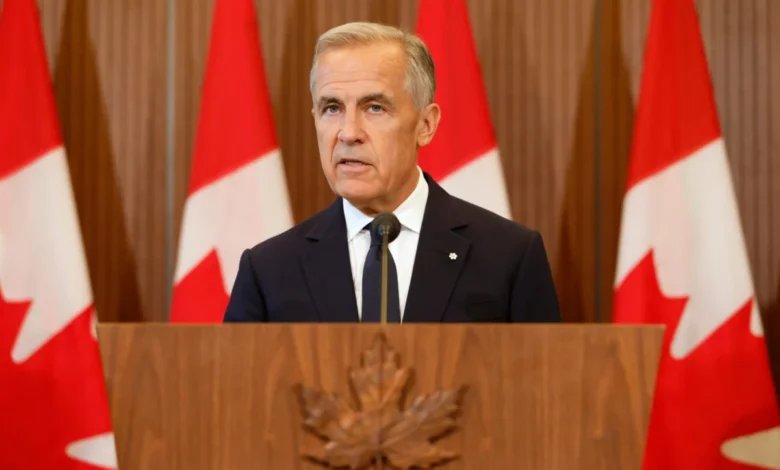
Prime Minister Mark Carney has maintained a stance of cautious optimism, stating publicly that Canada remains ready to "strike a fair deal." This willingness to negotiate reflects the reality that Canada sends roughly 70% of its total exports to the United States. Conversely, the United States remains dependent on Canadian potash for its agricultural sector and electricity for its northern border states.
The Path Forward
The standoff has created a level of uncertainty that typically discourages business investment. As the September 29 deadline approaches, the global economic community is watching to see whether the current tension is a tactical negotiating maneuver designed to extract concessions, or a fundamental shift in North American trade policy.
If the trade war deepens, the implications will extend far beyond the dairy aisles and oil refineries. A breakdown in the U.S.-Canada trade relationship would represent a reversal of the trend toward regional economic integration that has defined the post-Cold War era. Analysts warn that the loss of stability in this relationship could lead to increased costs for consumers, supply chain volatility, and a weakening of the North American bloc’s competitive position in the face of emerging global economic powers. For now, both Washington and Ottawa remain locked in a high-stakes standoff, with the stability of the world’s largest trading partnership hanging in the balance.