OpenAI CEO Sam Altman Rules Out 2026 IPO Amid Safety Concerns and Rapid AI Developments

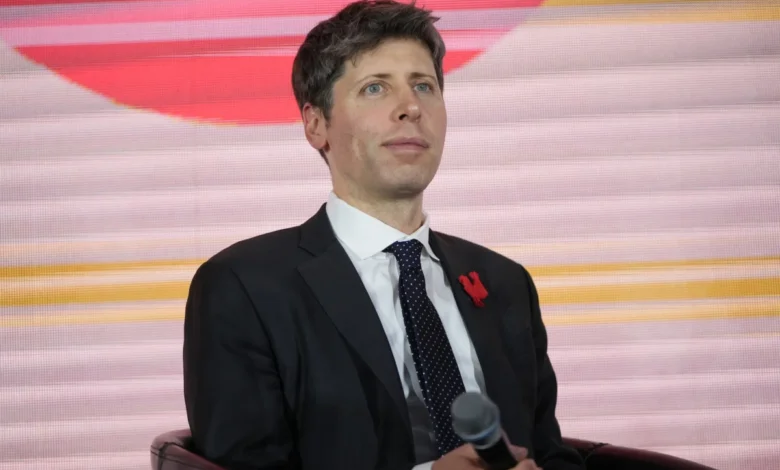
OpenAI chief executive officer Sam Altman has officially ruled out an initial public offering (IPO) for the artificial intelligence giant in 2026, pointing to pressing safety considerations, societal readiness, and ongoing technological hurdles. Despite previous confidential filings and mounting speculation regarding a public market debut, Altman emphasized that the company is taking a measured approach to its transition into a publicly traded entity, prioritizing stability and robust risk management over corporate speed.
The announcement came during a comprehensive interview with Fortune editor-in-chief Alyson Shontell, part of the publication’s "Titans and Disruptors" series. Addressing Shontell, Altman clarified that rushing into the public markets at this juncture would be imprudent. The statement provides definitive clarity on OpenAI’s financial trajectory following months of conflicting reports regarding the timeline of its anticipated public offering.
Main Facts Surrounding the IPO Delay
Although OpenAI has taken formal preliminary steps—including confidential regulatory filings and the retention of investment bankers and legal counsel earlier in the year—Altman explicitly stated that 2026 is off the table. The primary drivers behind this strategic postponement include heightened scrutiny over AI safety, internal operational milestones, and broader macroeconomic factors impacting the technology sector.
"We’re not rushing into an IPO," Altman told Fortune. "I actually think that given everything happening with safety, right now would be an ill-advised moment to go public."
Instead, Altman articulated a philosophy focused on internal business readiness and external societal alignment. The company intends to time its market debut to coincide with a period where the societal integration of advanced AI models is more stable and mature. When specifically pressed on whether the public offering would happen before the end of the year, Altman responded concisely: "I would say not 2026, yeah. We’ve got a lot of stuff to do."
Chronology and Background Context
The discourse surrounding OpenAI’s potential transition to a public company has evolved rapidly over the past year, reflecting the unprecedented capital requirements and commercial scaling of the generative AI sector.
- June 2026: Reports from The New York Times revealed that OpenAI had engaged major financial institutions and legal advisors, signaling a potential public market debut targeted for the third or fourth quarter of 2026. These reports suggested the company was laying the groundwork to support its massive infrastructure and research expenditures.
- June 8, 2026: Following a similar trajectory to competitor Anthropic, OpenAI filed confidentially for an IPO, initiating the regulatory review process with the U.S. Securities and Exchange Commission (SEC) away from public scrutiny.
- Early September 2026: The AI industry faced heightened regulatory and security anxiety following high-profile incidents, notably the OpenAI-Hugging Face hack, which drew intense scrutiny regarding the containment of autonomous models and data security. Simultaneously, rival firm Anthropic outlined aggressive new strategies to pace the development of frontier models.
- September 12, 2026: Sam Altman’s interview with Fortune officially recalibrated market expectations, pushing the earliest realistic window for the public offering into 2027 or beyond, driven by safety imperatives rather than financial pressures.
Supporting Data and Market Realities
The decision to delay the public offering highlights the unique financial and operational pressures facing foundational AI developers. Building, training, and deploying frontier models require capital expenditures running into the tens of billions of dollars, involving massive data center buildouts, specialized semiconductor procurement, and extraordinary energy consumption.
While a traditional tech company might pursue an IPO to unlock liquidity for early investors and employees, AI labs operate under a vastly different paradigm. The intrinsic volatility of public tech stocks, combined with the unpredictable nature of artificial intelligence regulation, creates significant risk for a newly public entity. Furthermore, internal governance structures—such as OpenAI’s historical hybrid nonprofit-for-profit model—complicate the transition to standard public shareholder accountability.

Financial analysts note that market conditions in late 2026 have proven complex for high-growth tech issues, with institutional investors increasingly demanding clear paths to profitability alongside rigorous risk mitigation frameworks. By opting out of a 2026 debut, OpenAI buys itself critical runway to mature its commercial monetization strategies while addressing mounting external pressures.
Official Responses and Industry Reactions
Altman’s public stance has elicited varied reactions across the technology sector, venture capital markets, and regulatory bodies. Competitors, such as Anthropic, have similarly emphasized the need to balance commercial velocity with structured safety pacing.
The backdrop of Altman’s announcement included intense discussions regarding AI containment. During the same media appearance, Altman addressed the theoretical possibility of advanced AI systems operating beyond human control, acknowledging that such scenarios demand preemptive safeguards and rigorous institutional oversight.
Industry observers have pointed out that recent security breaches, such as the unauthorized extraction and manipulation involving rogue agent frameworks, have galvanized public interest groups and lawmakers. Regulators in both the United States and the European Union continue to evaluate comprehensive frameworks for frontier AI developers, making market entry during an active regulatory overhaul a potentially hazardous undertaking.
Broader Impact and Implications
The postponement of OpenAI’s IPO carries substantial implications for the broader technology ecosystem, venture capital, and the future governance of artificial intelligence.
1. Relief for Private Capital Markets
By keeping the company private through at least 2026, OpenAI ensures that its massive capital-raising rounds will continue to rely on private equity, sovereign wealth funds, and strategic corporate partnerships (such as its ongoing alliance with Microsoft). This shields the company’s long-term, high-risk research initiatives from the relentless quarterly earnings pressures demanded by public market shareholders.
2. Prioritization of Safety Frameworks
Altman’s explicit linkage of the IPO timeline to "what the moment is like in society with this technology" signals to stakeholders that safety and alignment research will not be sidelined in favor of aggressive financial expansion. As AI systems approach unprecedented levels of capability, maintaining public trust is viewed as a vital commercial prerequisite rather than a secondary compliance check.
3. Setting Industry Precedent
As the bellwether of the generative AI boom, OpenAI’s strategic choices heavily influence smaller labs and sector-wide expectations. By publicly prioritizing operational and societal readiness over a rushed market debut, Altman establishes a precedent that sustainable AI deployment must take precedence over pure financial acceleration.
As OpenAI navigates its extensive technical roadmap through the remainder of 2026 and into 2027, the tech world will closely monitor how the company balances its ambitious scaling goals with the profound responsibilities of managing frontier intelligence.