Mastering the Xteink Ecosystem A Comprehensive Guide to Optimizing Ultra-Portable E-Readers through Custom Firmware and Advanced File Management

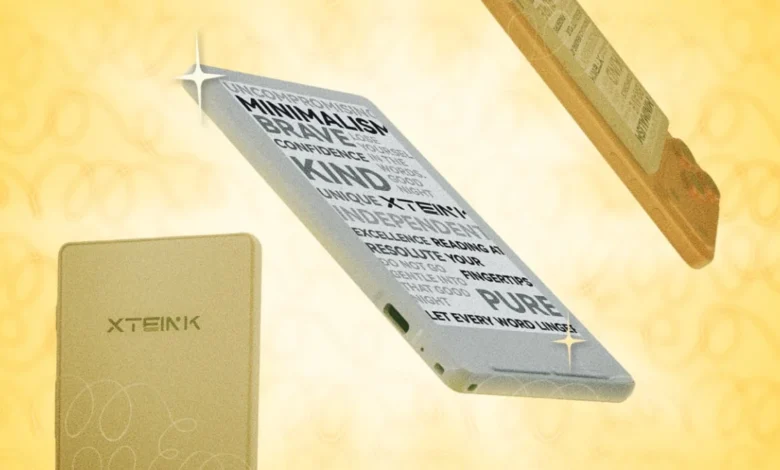
The landscape of digital reading has long been dominated by massive tech conglomerates, with Amazon’s Kindle and Rakuten’s Kobo capturing the lion’s share of the global e-reader market. However, a burgeoning subculture of "digital minimalists" and tech enthusiasts is increasingly turning toward niche hardware that prioritizes portability and open-source flexibility over corporate ecosystem integration. At the forefront of this movement is Xteink, a Chinese technology manufacturer that has gained international attention for its "impossibly small" e-ink devices, including the X3, X4, and the recently released X4 Pro. While these devices offer a form factor that fits in a shirt pocket, they ship with proprietary software that many users find restrictive or unpolished. To bridge the gap between hardware potential and user experience, a community of developers has emerged to provide tools, custom firmware, and file conversion methods that transform these diminutive devices into powerful, distraction-free reading machines.
The Technical Architecture of Xteink Devices
Understanding the appeal of Xteink requires an analysis of its underlying hardware. Unlike the Kindle or Nook, which typically utilize Linux-based operating systems running on specialized ARM processors, Xteink devices are built on the ESP32 platform. The ESP32 is a low-cost, low-power "System on a Chip" (SoC) with integrated Wi-Fi and dual-mode Bluetooth. Originally designed for Internet of Things (IoT) applications, the ESP32’s inclusion in an e-reader is a radical departure from industry norms. This hardware choice results in a device that is exceptionally energy-efficient and highly "hackable," but it also means the stock operating system is inherently limited in its processing power.
The stock software provided by Xteink is often criticized for its rudimentary handling of the EPUB format, the industry standard for e-books. Users frequently report issues with text justification, font weight, and the inability to display italics or bold text correctly. These limitations have necessitated the development of two distinct paths for power users: advanced file pre-processing and complete firmware replacement.
Advanced File Management: The Shift to XTC
For users who wish to retain the factory-installed operating system while improving visual fidelity, the solution lies in a proprietary file format known as XTC. In the context of Xteink devices, an XTC file functions differently than a standard reflowable text document. Instead of the device rendering text in real-time, an XTC file is essentially a container for pre-rendered bitmap images of the book’s pages.
This "image-based" approach solves the formatting issues inherent in the stock software. By converting an EPUB to XTC, readers can preserve complex layouts, embedded charts, and specific typography that the ESP32 processor would otherwise struggle to render. However, this fidelity comes at a cost of storage efficiency. A standard EPUB file for a 300-page novel typically occupies approximately 2 megabytes of space; the XTC equivalent can exceed 50 megabytes. Given that Xteink devices often feature limited internal storage, users must balance the desire for perfect formatting against the device’s capacity.
To facilitate this conversion, web-based tools have been developed that allow users to customize font choice, page orientation, and margin width before the file is "baked" into its final bitmap form. This process ensures that what the reader sees on the screen is an exact replica of a professionally typeset page, bypassing the device’s weak internal rendering engine.
The Evolution of Custom Firmware: The CrossPoint Project
The most significant development in the Xteink community has been the rise of "CrossPoint Reader," an open-source firmware project that replaces the factory software entirely. The chronology of this project highlights the rapid pace of community-driven innovation. Within months of the Xteink X4’s release, developers identified that the device did not require a complex "jailbreak" process to accept new software. Because the ESP32 is an open platform, users can "flash" new firmware directly to the device via a web browser using WebUSB technology.
The CrossPoint firmware offers several advantages over the stock experience:
- Enhanced Typography: Support for a wider array of system fonts and better handling of CSS styles within e-books.
- Interface Optimization: A more intuitive menu system designed specifically for the small screen real estate of the X3 and X4 series.
- Connectivity: Improved Wi-Fi stability and integrated tools for wireless file transfers.
Industry analysts view the success of CrossPoint as a microcosm of the "Right to Repair" and "Right to Modify" movements. By taking a closed-box product and opening it to community contributions, Xteink users have extended the lifecycle and utility of the hardware far beyond the manufacturer’s original vision.

Integration with the Calibre Ecosystem
No discussion of advanced e-reader management is complete without mentioning Calibre, the open-source e-book management suite that serves as the "iTunes for e-books." For Xteink users, Calibre has become an essential bridge. Developers have created specific plugins for Calibre that automate the optimization of EPUB files for the CrossPoint environment.
The "EPUB Workflow" plugin allows users to strip unnecessary code, shrink oversized images, and repair structural errors in e-book files before they are transferred. Furthermore, a dedicated CrossPoint plugin enables a "wireless library" feature. By connecting the Xteink device and a computer to the same local network, users can browse their entire Calibre library from the e-reader’s screen and download titles on demand. This level of integration rivals the seamless experience offered by Amazon’s "Send to Kindle" service while maintaining complete user privacy and local control of data.
Synchronizing Progress via KOReader and KOsync
One of the primary drawbacks of using niche hardware is the lack of cross-platform synchronization. Amazon’s "Whispersync" allows a reader to move from a Kindle to a smartphone app without losing their place. To replicate this on Xteink hardware, the community utilizes KOReader and the KOsync protocol.
KOReader is a versatile, open-source document viewer designed for e-ink devices. While it does not run natively on the stock Xteink OS, the CrossPoint firmware incorporates elements of its synchronization logic. By creating a KOsync account—a decentralized, open-source alternative to proprietary sync servers—users can synchronize their reading progress across an Xteink device, an Android-based e-reader (like the Boox Palma), and even a desktop computer. This interoperability is a cornerstone of the "open reading" philosophy, ensuring that the user’s data is not locked into a single device or manufacturer.
The DRM Problem and the Search for Quality Content
A significant hurdle for Xteink users is Digital Rights Management (DRM). Major retailers like Amazon and Barnes & Noble wrap their e-books in encrypted layers that prevent them from being read on unauthorized hardware. For the Xteink ecosystem to thrive, users must source DRM-free content.
While many independent publishers (such as Tor and Baen) sell DRM-free books, the public domain remains the most fertile ground for Xteink enthusiasts. However, standard public domain repositories often provide files with poor formatting. To combat this, the community has rallied around "Standard Ebooks," a volunteer-led project that takes public domain texts and applies modern, high-quality digital typography and metadata. Utilizing these files on an optimized Xteink device provides a reading experience that often exceeds that of commercially produced e-books.
Broader Impact and Market Implications
The rise of Xteink and its surrounding community signals a shift in consumer electronics. As "big tech" devices become increasingly laden with tracking, advertisements, and subscription-locked features, there is a growing market for "dumb" or "focused" devices. The Xteink series represents a return to the single-purpose tool.
The broader implications of this trend suggest that there is a sustainable niche for manufacturers who provide open, hackable hardware. While Xteink may lack the marketing budget of Amazon, the "free labor" provided by the developer community creates a value proposition that is difficult for corporate entities to replicate. By allowing users to own their software experience, Xteink has inadvertently fostered a loyal user base that acts as both a support network and a research and development wing.
Conclusion: The Future of Niche E-ink
As we look toward the future of the X4 Pro and subsequent models, the trajectory is clear: the hardware will continue to shrink, while the software capabilities expand through community effort. The Xteink story is not just about a small e-reader; it is about the democratization of technology. It proves that with the right hardware foundation and an engaged community, even a device with a "clunky" origin can be refined into a pinnacle of digital craftsmanship. For the exacting reader, the journey of hacking, flashing, and converting is not a chore, but a necessary step in reclaiming the digital reading experience from the walled gardens of the modern internet.