Tesla Claims Robotaxi Expansion as Quarterly Data Reveals Stalled Growth and Fleet Plateau

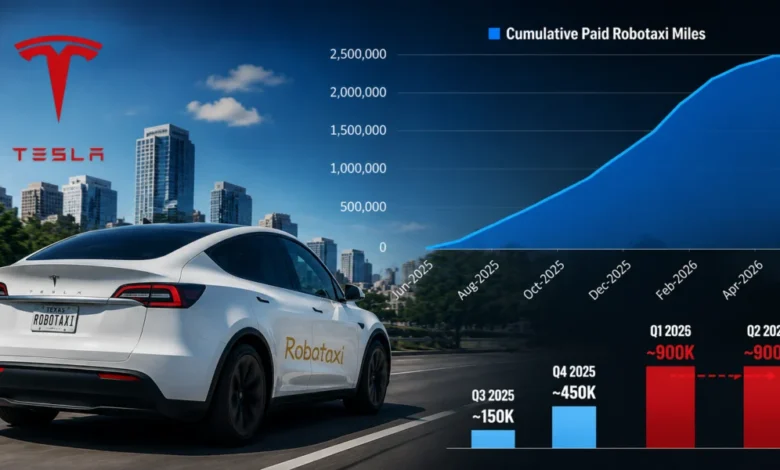
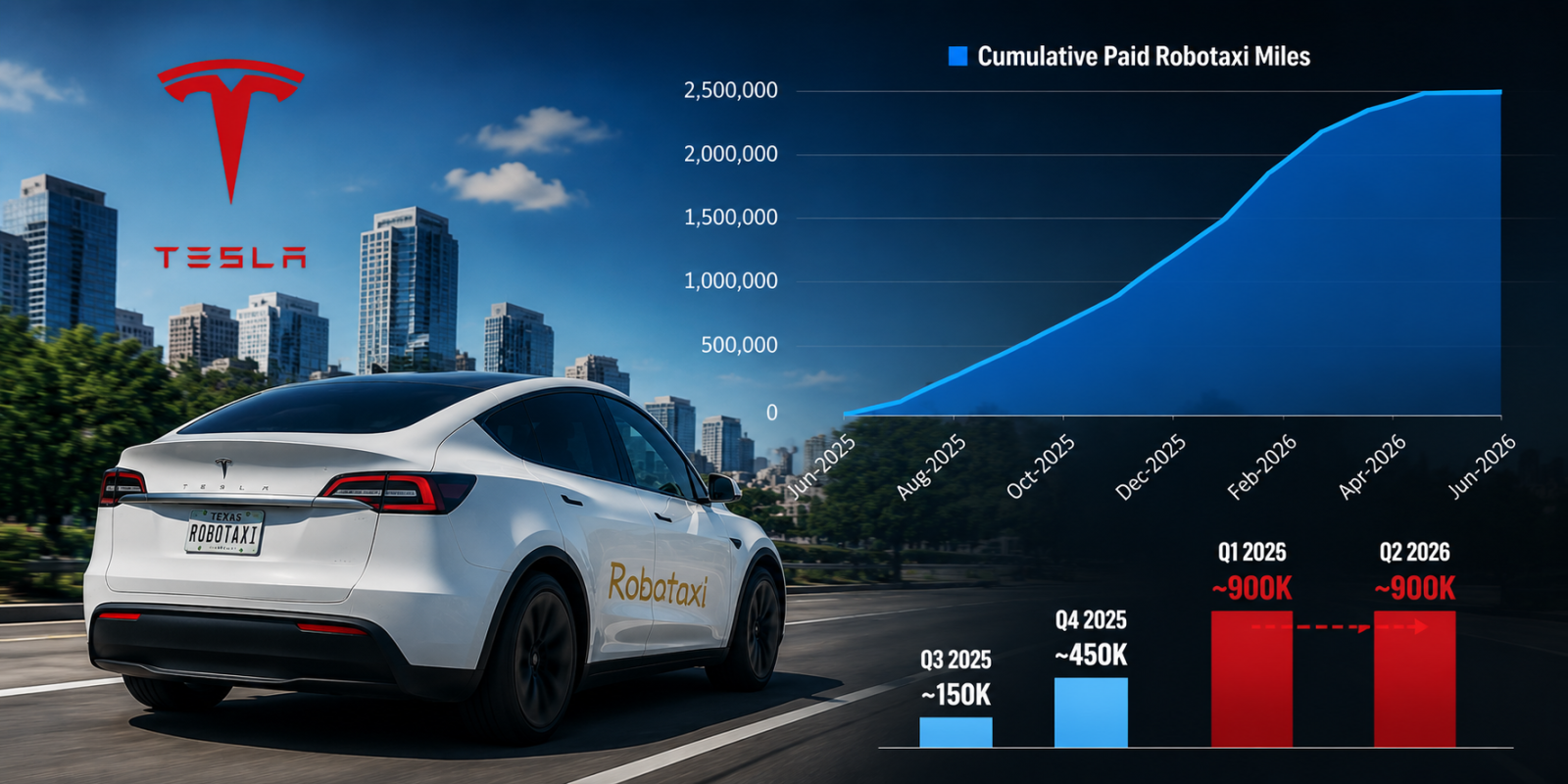
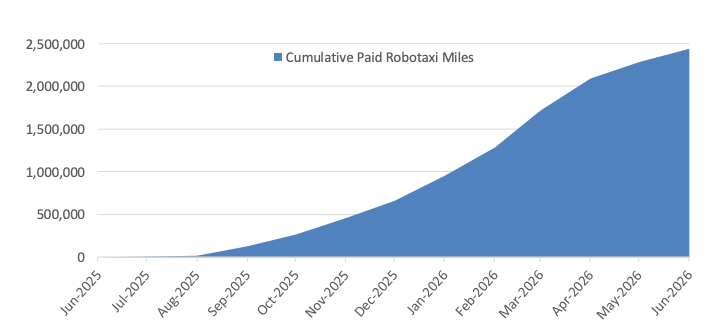
Tesla’s recent communications to shareholders regarding the trajectory of its Robotaxi service have come under intense scrutiny as a detailed analysis of the company’s own performance metrics suggests a significant disconnect between corporate narrative and operational reality. During the second quarter 2026 earnings update, Tesla executives highlighted the expansion of their autonomous ride-hailing pilot, pointing to a cumulative milestone of 2.4 million "paid Robotaxi miles" as a primary indicator of momentum. However, a granular breakdown of the quarterly data reveals that the growth of the service has effectively flatlined, with the rate of mileage accumulation failing to accelerate despite the entry into new geographic markets.
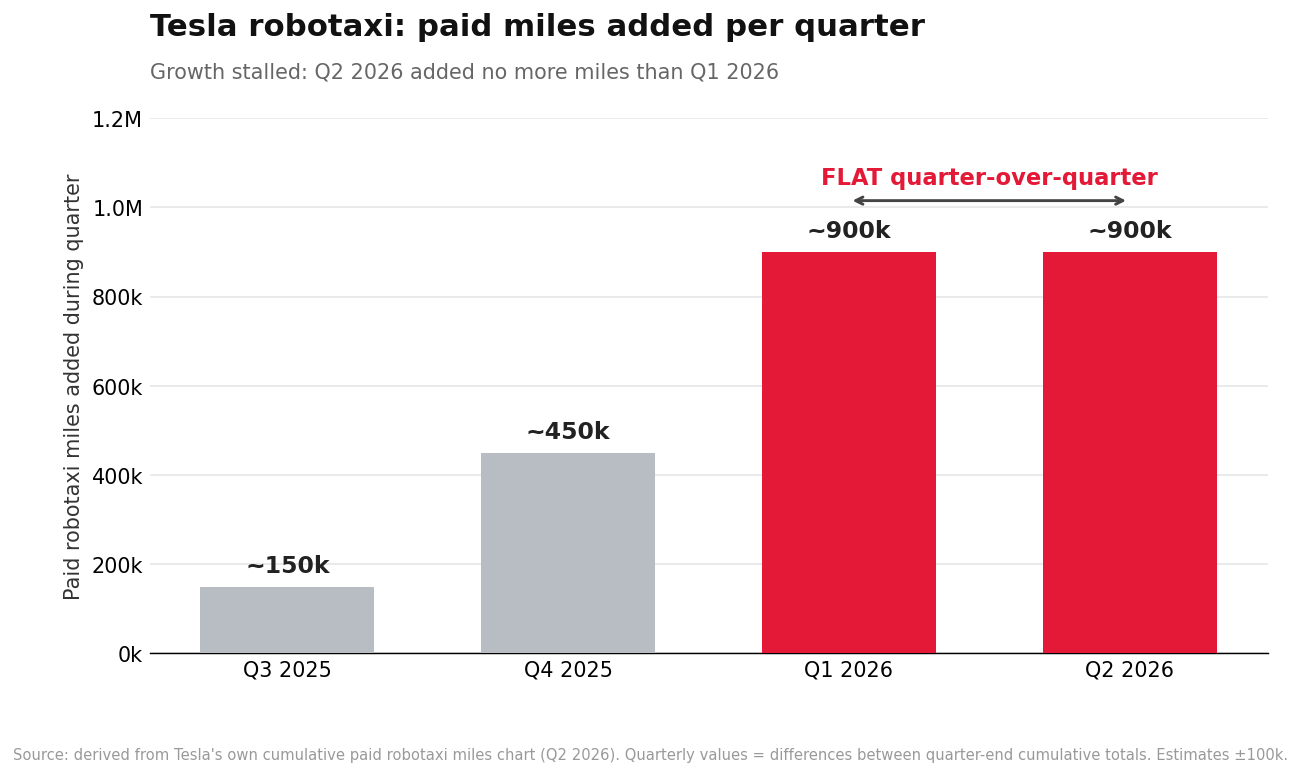
The discrepancy centers on the use of cumulative data, a statistical method that inherently shows an upward trend regardless of whether the underlying business is accelerating or decelerating. By subtracting the cumulative totals reported at the end of the first quarter from those reported at the end of the second quarter, it becomes evident that Tesla’s Robotaxi fleet added approximately 900,000 paid miles in both periods. This lack of quarter-over-quarter growth indicates a plateau in a business segment that Tesla CEO Elon Musk has frequently described as the primary driver of the company’s future trillion-dollar valuation.
The Statistical Reality of a Plateauing Fleet
The use of cumulative charts is a common practice in corporate reporting to emphasize long-term progress, but in the context of a scaling technology service, the "run rate" or periodic growth is the more critical metric. In the case of Tesla’s Robotaxi service, the ramp-up observed throughout late 2025 and into the early months of 2026 appears to have stalled. While the first quarter of 2026 showed a healthy increase compared to the previous year, the second quarter failed to build upon that momentum, delivering an identical 900,000-mile contribution to the total.

A deeper dive into the monthly data for the second quarter reveals an even more concerning trend for investors. Analysis of the growth curve suggests that the fleet performed strongly in April, accounting for roughly 500,000 of the quarter’s miles. However, the subsequent months of May and June saw a sharp deceleration, with the fleet adding only about 200,000 miles per month. This implies that Tesla exited the second quarter with a run rate closer to 600,000 miles per quarter—a 33% decline from the average pace of the first half of the year. Rather than scaling toward a global launch, the data suggests a service that is currently shrinking in terms of its operational throughput.
Geographic Expansion Versus Operational Scaling
In the days leading up to the Q2 earnings call, Tesla announced the expansion of its Robotaxi service areas to include Tampa and Orlando, Florida. These additions joined existing operations in Austin and Dallas, Texas. On the surface, the inclusion of more cities on the map suggests a rapid territorial expansion. However, industry analysts note that adding service areas does not equate to scaling if the vehicle count remains stagnant or decreases.
Internal tracking and industry reports indicate that Tesla’s active "unsupervised" fleet—referring to the vehicles specifically designated for this pilot program—remains remarkably small, totaling approximately 21 vehicles across all four metropolitan areas. Data from the Austin market, which served as the initial testbed, shows that the fleet size peaked at 25 vehicles in late April before drifting down to 17 by the end of June. By spreading a limited number of vehicles across a larger number of cities, Tesla has effectively thinned its service density. This "dots on the map" strategy may provide a favorable narrative for marketing materials, but it results in a diluted service where wait times increase and total mileage remains capped by the physical constraints of a small fleet.
A History of Ambitious Timelines and Guidance
The current stagnation in Robotaxi growth must be viewed within the broader context of Tesla’s decade-long effort to achieve full autonomy. The timeline of promises regarding self-driving technology has been a central theme of the company’s history:
- 2016: Tesla released its "Master Plan Part Deux," which envisioned a future where Tesla owners could add their cars to a shared fleet, earning income while they slept.
- 2019: At the company’s "Autonomy Day," Elon Musk famously predicted that Tesla would have "over a million robotaxis on the road" by 2020.
- 2022: Musk announced that Tesla was working on a dedicated Robotaxi vehicle without a steering wheel or pedals, aiming for volume production in 2024.
- 2024: Tesla shifted its corporate focus heavily toward AI and robotics, deprioritizing the development of a low-cost "Model 2" in favor of the "Cybercab" and the Robotaxi network.
- 2026: Current quarterly data shows the service operating as a limited pilot with fewer than 30 vehicles in active service.
The consistent pattern of missing self-imposed deadlines has led to increased skepticism among institutional investors. During the Q2 2026 earnings call, shareholders questioned why the service had not yet moved beyond the pilot phase. The plateau in mileage data provides a mathematical confirmation of these concerns, suggesting that the transition from a supervised test program to a commercially viable, scalable business remains elusive.
Technical Limitations and the "Safety Monitor" Factor
A critical distinction in the autonomous vehicle industry lies between "supervised" and "unsupervised" operations. While Tesla markets its service as a Robotaxi, the operational reality in key markets like California remains tethered to human intervention. In California, Tesla’s autonomous testing permits currently require a Tesla employee to sit in the driver’s seat as a safety monitor.
This requirement fundamentally alters the economics of the service. A true robotaxi business derives its value from the removal of the human driver, which represents the largest operational cost in ride-hailing. As long as a "safety monitor" is required, the service functions more like a traditional ride-share program with a high-tech assist rather than a disruptive autonomous network.
Furthermore, Tesla’s reliance on a "vision-only" approach—eschewing LiDAR and high-definition mapping in favor of cameras and neural networks—continues to be a point of contention among experts. While Tesla argues this approach is more scalable and mimics human biological vision, critics point to the "long tail" of rare edge cases that have proven difficult for the software to navigate without the redundancy of additional sensors.
Comparative Analysis: Tesla vs. Waymo
To understand the scale of Tesla’s current Robotaxi efforts, it is necessary to compare its performance against industry leaders like Waymo, the autonomous driving subsidiary of Alphabet.
Waymo currently operates fully driverless commercial services in Phoenix, San Francisco, and Los Angeles. In mid-2024, Waymo reported that it was providing over 100,000 paid, fully autonomous rides per week. If the average ride length is estimated at five miles, Waymo is generating roughly 500,000 miles of paid autonomous travel every week, or 6.5 million miles per quarter.
By comparison, Tesla’s entire cumulative history of 2.4 million miles—accrued over several years of pilot testing—is less than what Waymo achieves in a single month of standard operations. More importantly, Waymo’s rides are conducted without a safety monitor in the front seat, representing a higher level of autonomous maturity (Level 4) compared to Tesla’s current supervised deployments. The gap between the two companies suggests that while Tesla has a vast fleet of consumer vehicles collecting data, it has yet to translate that data into a functional, scalable ride-hailing business that can compete with purpose-built autonomous systems.
Investor Implications and the Valuation Gap
The stagnation of Robotaxi growth carries significant weight for Tesla’s stock valuation. For years, Tesla has been traded not merely as an automotive manufacturer but as an AI and robotics company. Analysts who maintain "Buy" ratings on the stock often cite the Robotaxi network as the "unlock" for massive software-as-a-service (SaaS) margins.
If the Robotaxi service is perceived as a permanent pilot program rather than a burgeoning global network, the premium currently applied to Tesla’s valuation may come under pressure. The Q2 2026 data indicates that the company is struggling with the "last mile" of autonomy—moving from a system that works 99% of the time to one that is safe enough to operate without human oversight at scale.
Future Outlook: The Path to 2027
As Tesla moves into the second half of 2026, the primary challenge will be to break the mileage plateau. For the "expansion" claim to hold merit in future earnings reports, the company must demonstrate an accelerating quarterly growth rate. This would likely require a significant increase in the fleet size and the successful transition to truly driverless operations in more jurisdictions.
Regulatory hurdles remain a significant barrier. Each state and municipality has different requirements for autonomous vehicle deployment, and Tesla’s "FSD" (Full Self-Driving) software remains under investigation by federal authorities following various safety incidents. The path to a million robotaxis requires not just software improvements, but a massive logistical and regulatory undertaking that the current data suggests is still in its infancy.
In summary, while Tesla’s cumulative charts present a picture of steady progress, the underlying quarterly metrics tell a story of a business that has reached a temporary ceiling. Until the paid-miles metric begins to trend upward again, the company’s claims of rapid expansion will likely continue to face skepticism from data-driven analysts and shareholders alike.