Federal Government Defers Over $1 Billion in Medicaid Payments to California and Minnesota Amid Fraud Allegations

The Trump administration announced on Tuesday its decision to defer more than $1 billion in Medicaid payments to California and Minnesota, citing "suspected fraud and noncompliance." This action marks the latest development in a series of measures the administration has linked to allegations of fraudulent activity within Medicaid programs, predominantly in states led by Democratic governors. The move underscores a strategic shift in how the federal government is confronting potential misuse of public funds within the healthcare sector.
Health Secretary Robert F. Kennedy Jr. articulated that these new deferrals, which follow previous funding holds in the same states, are part of a proactive strategy aimed at "stop[ping] the fraud before it happens." This approach contrasts with prior administrations’ methods, which typically focused on recovering funds after identifying problematic spending and prosecuting those involved. "We have a duty to stop the payments, demand answers and then follow the evidence wherever it leads," Kennedy stated during a news conference, emphasizing the administration’s commitment to accountability.
This aggressive stance on Medicaid fraud is a central component of the administration’s broader campaign to demonstrate a crackdown on waste and abuse, thereby projecting fiscal responsibility to taxpayers. With rising healthcare costs and persistent economic pressures impacting household budgets, the affordability of healthcare has become a paramount concern for voters heading into the November midterm elections. The administration appears to be leveraging these actions to highlight its efforts in saving taxpayer money and bolstering public confidence in the management of federal programs.
The intensified focus on combating fraud within federal healthcare programs was further formalized in March with the launch of a new anti-fraud task force. Established at the behest of President Donald Trump, this multi-departmental initiative, spearheaded by Vice President JD Vance, is tasked with employing advanced data analytics and technological tools to pinpoint and investigate suspected instances of financial impropriety in federal programs. The objective is to create a more robust and preemptive defense against the diversion of federal dollars.
However, state officials in Minnesota have expressed significant concerns regarding the transparency and justification of the federal government’s actions. John Connolly, the temporary commissioner and state Medicaid director for Minnesota’s Department of Human Services, stated that the federal government has not provided "data or explanation on how the deferral amount was calculated or what it was based on." He characterized the latest deferrals as "unprecedented and punitive ways as part of their war on Medicaid and its recipients," advocating for a collaborative approach rather than one driven by political motivations. "Partnership — not politics — is required to stop criminals and protect services for the people who need them," Connolly remarked in a statement.
The governors of the affected states have voiced strong objections, framing the federal actions as politically motivated. Minnesota’s Democratic Governor Tim Walz suggested that the Republican administration might be using the deferred funds to offset the costs of tax cuts previously enacted for wealthy Americans. Similarly, California’s Democratic Governor Gavin Newsom accused the administration of targeting his state for political retribution. These accusations highlight the contentious political climate surrounding the administration’s fiscal policies and its engagement with states governed by opposing parties.
The Trump administration’s heightened scrutiny of Minnesota and California extends beyond just Medicaid. Earlier this year, the administration significantly ramped up its anti-immigration enforcement efforts in Minnesota, deploying a substantial contingent of Immigration and Customs Enforcement (ICE) officers. These actions sparked widespread protests and led to tragic incidents, including the deaths of two civilians. President Trump has also been vocal in his criticism of California, frequently characterizing it as a state suffering from poor governance. These broader patterns of federal intervention in Minnesota and critical rhetoric towards California fuel the states’ assertions of political targeting.
States Grapple with Federal Obstacles and Questionable Justifications
The administration’s proactive strategy has, in some instances, led to significant challenges and errors for the states involved. A notable example occurred in April when the Centers for Medicare & Medicaid Services (CMS) acknowledged to The Associated Press that it had made a "significant error" in the figures used to support a fraud investigation in New York. This admission raised questions about the reliability of the data underpinning federal fraud probes.
More recently, California’s Medicaid director informed a congressional committee that CMS had failed to provide "any instances of fraud, waste or abuse" to justify a $1.3 billion Medicaid funding deferral announced in May. This lack of specific evidence has left state officials struggling to understand the basis of the federal government’s claims and to mount an effective defense.
In Minnesota, state officials have been diligently implementing a comprehensive corrective action plan designed to address CMS concerns. Despite these efforts, the agency has proceeded with deferring approximately $260 million in federal funds and has warned of potential future cuts. Minnesota officials maintain that they have "cooperated in good faith and proactively engaged the Centers for Medicare and Medicaid Services to first raise the alarm on fraud in Minnesota’s Medicaid program, to effectively investigate fraud and to institute further safeguards against future misuse of funds," according to Connolly. This suggests a perception gap between the state’s commitment to addressing fraud and the federal government’s assessment of their progress.
Secretary Kennedy did not explicitly clarify whether the newly announced deferrals—$867.5 million for California and $199 million for Minnesota—are in addition to or overlap with earlier deferrals made this year. This ambiguity further complicates the financial planning and administrative burden for the affected states.
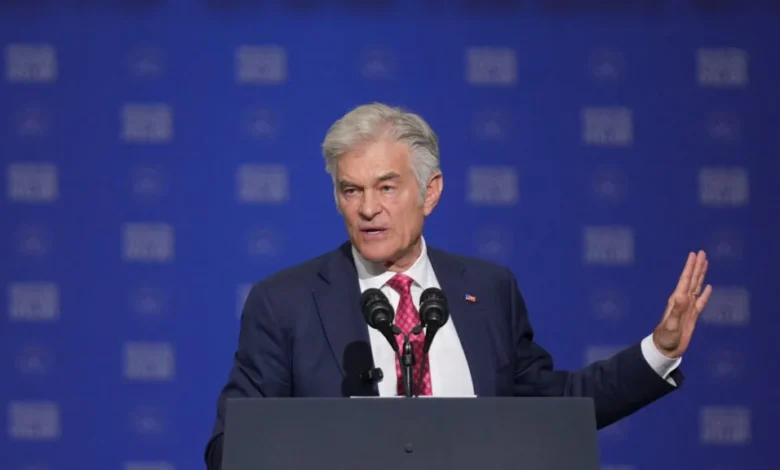
CMS Administrator Dr. Mehmet Oz, while not providing specific examples of fraud in California and Minnesota during the announcement, did highlight certain billing patterns that the agency found questionable. These included providers billing for four or more patients concurrently and submitting claims for services rendered after a Medicaid beneficiary’s death. Dr. Oz also pointed to the rapid growth of California’s home care program as a cause for concern. However, California officials have contested this interpretation, explaining that the expansion of their home care services is a deliberate strategy to keep individuals out of more costly nursing home facilities, thereby potentially saving taxpayer money in the long run.
Pathways to Restoring Funding: The Role of Documentation
Both Secretary Kennedy and Administrator Oz emphasized that the flow of federal funding could be restored to California and Minnesota if the states provide sufficient documentation to substantiate the legitimacy of the payments in question. This conditional offer suggests that the deferrals are intended as leverage to compel greater transparency and accountability from state Medicaid programs.
A representative for California’s Medicaid program had not immediately responded to requests for comment at the time of reporting. However, state officials have previously acknowledged their ongoing efforts to cooperate with the federal government and provide the requested information. This indicates a willingness on California’s part to engage with the federal government’s demands, albeit with reservations about the process.
Regarding Minnesota, Administrator Oz noted that the state had already submitted documentation to the federal government, which was undergoing a "reevaluated very carefully." This suggests that Minnesota has been proactive in responding to federal inquiries and that the process of review is ongoing.
In a broader move to enhance the federal government’s capacity to combat fraud, Secretary Kennedy also indicated his intention to extend the authority to exclude providers from participating in Medicaid, Medicare, and other federal health programs to CMS. Historically, this power has been vested solely with his department’s Office of the Inspector General. HHS Inspector General Thomas March Bell hailed this expansion of authority as a "full force multiplier" that will "create additional momentum, and it’s going to exclude additional bad actors." This move signals a significant strengthening of the federal government’s enforcement capabilities in the fight against healthcare fraud.
Background and Broader Context of Medicaid Fraud Enforcement
Medicaid, a joint federal and state program, provides health coverage to millions of low-income Americans. Its vast scale and complex administration make it a target for fraudulent activities, costing taxpayers billions of dollars annually. Historically, federal and state agencies have collaborated to combat this issue, with varying degrees of success.
The Trump administration’s emphasis on aggressive enforcement and proactive measures represents a shift in strategy. The creation of the anti-fraud task force and the direct deferral of funds are tangible manifestations of this new approach. The administration has publicly stated its commitment to protecting public funds and ensuring that federal healthcare programs serve their intended beneficiaries effectively and efficiently.
The allegations of fraud in Minnesota and California are part of a larger pattern of federal scrutiny on state Medicaid programs. In recent years, CMS has increased its focus on identifying and addressing vulnerabilities within these programs. The sheer volume of transactions within Medicaid—over $600 billion in federal and state spending annually—makes it a challenging environment to police effectively.
The political dimension of these actions cannot be ignored. The midterm elections are a critical juncture for both parties, and issues of fiscal responsibility and healthcare affordability are likely to be central to voters’ decisions. By highlighting its efforts to combat fraud, the administration aims to present itself as a responsible steward of taxpayer money, a message that resonates with a significant portion of the electorate.
The legal framework for addressing Medicaid fraud is robust, encompassing criminal penalties, civil fines, and exclusion from federal healthcare programs. However, the effectiveness of these measures depends on the ability of government agencies to detect, investigate, and prosecute fraudulent activities. The Trump administration’s strategy appears to prioritize preventing fraud before it occurs, a more challenging but potentially more cost-effective approach if successful.
The reactions from state officials, particularly the accusations of political motivation, underscore the inherent tension between federal oversight and state autonomy in the administration of Medicaid. While the federal government provides significant funding, states have considerable discretion in designing and managing their Medicaid programs. Disagreements over policy, program design, and enforcement practices are not uncommon.
The specific concerns raised by CMS, such as providers billing for multiple patients simultaneously or after a beneficiary’s death, are not new. These are common schemes employed by bad actors seeking to exploit the system. The growth of home care services, as noted in California, also presents unique challenges for oversight, as it often involves in-home services that can be more difficult to monitor than facility-based care.
The administration’s decision to defer over $1 billion in Medicaid payments is a significant financial action with potentially far-reaching consequences for healthcare access and delivery in California and Minnesota. The coming months will likely see further developments as states respond to the federal government’s demands for documentation and as the administration continues to pursue its anti-fraud agenda. The outcome of these disputes could set precedents for future federal-state interactions in managing the nation’s critical healthcare safety net.