Florence Pugh Reflects on the Cost of Advocacy and Her Stance on Global Conflict

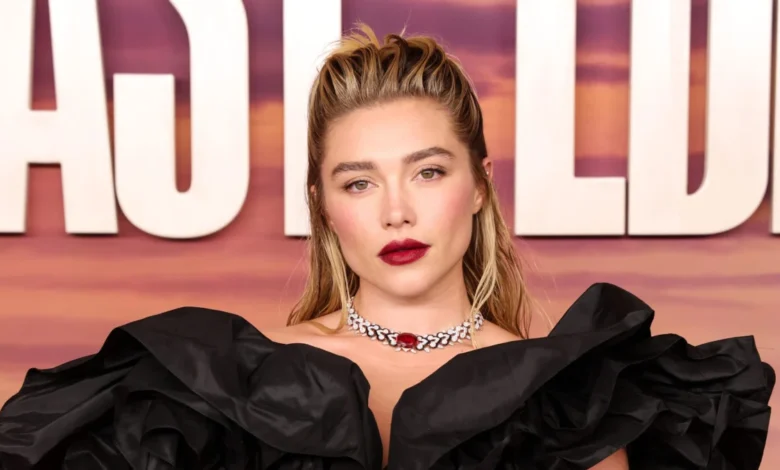
Florence Pugh, one of the most prominent figures in contemporary Hollywood, recently offered a candid perspective on the professional and personal repercussions of her vocal support for Palestine. In a comprehensive cover story for Vanity Fair, the Oscar-nominated star of Dune: Part Two and the upcoming East of Eden adaptation addressed the significant erosion of her social media following that occurred after she publicly aligned herself with the cause. Despite the digital backlash—which saw the loss of hundreds of thousands of followers—Pugh remains steadfast in her convictions, asserting that she never felt intimidated by the potential consequences of her advocacy.
The actress, known for her roles in Midsommar and Little Women, has navigated a complex landscape where celebrity influence intersects with geopolitical crises. Her comments underscore a growing trend in the entertainment industry: the expectation for high-profile talent to leverage their platforms for humanitarian awareness, even when doing so risks alienating portions of their audience.
A Chronology of Advocacy and Public Reaction
The discourse surrounding Pugh’s involvement gained significant momentum in September, when she made a rare public appearance at the "Together for Palestine" event. Standing before an audience, she articulated a clear moral stance, noting, "Silence in the face of such suffering is not neutrality, it is complicity, and empathy should not be this hard and it should have never been this hard."
This moment served as a crystallization of her position. Following the event, social media analytics platforms and observers noted a marked decline in her digital footprint. In the context of modern celebrity management, such a loss is often viewed as a "PR risk," yet Pugh’s interview suggests a deliberate disregard for these metrics in favor of personal integrity.
The timeline of her activism follows the broader trajectory of international response to the conflict in Gaza, which escalated sharply in late 2023. As public sentiment polarized, many Hollywood figures faced intense pressure to either declare a side or remain silent. Pugh’s decision to speak out placed her among a minority of A-list actors who chose to prioritize humanitarian advocacy over the traditional, risk-averse strategies favored by studio publicists.
The Dynamics of Modern Celebrity Activism
The phenomenon of "de-influencing" or losing followers due to political stances is not unique to Pugh, but it highlights the volatility of parasocial relationships in the digital age. When an actor’s professional brand is tied to a massive global audience, expressing views on polarizing international conflicts often triggers a measurable exodus of fans.
However, Pugh’s interview provides insight into why she chose this path. "I don’t know why it took so long for people to start talking and for people to actually feel sympathy," she stated. "But no, I was never scared of it." She further remarked that the pervasive silence from her peers actually served to galvanize her resolve. This "confusion" regarding the industry’s collective reticence suggests that for Pugh, the moral imperative outweighed the professional caution that typically governs the behavior of blockbuster stars.
It is worth noting that Pugh’s management team reportedly did not attempt to stifle her voice. By her account, they were supportive, even facilitating her attendance at the rally despite the logistical hurdles presented by the rigorous production schedule of Marvel’s Avengers: Doomsday. This suggests a shift in how some talent agencies are approaching the intersection of politics and career management, potentially moving away from the "shut up and act" era of Hollywood.
Humanitarian Concerns and the Burden of the Digital Age
Beyond the metrics of her follower count, Pugh’s statements touch upon the existential dissonance inherent in modern celebrity. She articulated the difficulty of maintaining a public-facing career—which necessitates the promotion of high-budget entertainment—while bearing witness to ongoing humanitarian disasters.
"Babies are still dying. Mothers are still in pain," Pugh told the publication. "It’s really horrible to be watching such pain when so much of our lives just seem to be moving forward." This sentiment reflects a broader struggle among public figures to reconcile their everyday lives with the harsh realities documented on social media. The "scroll" has become a psychological minefield; moving from a post about a major blockbuster premiere to a video documenting the loss of life creates a jarring cognitive dissonance that many celebrities are increasingly forced to address.
The Industrial Context: Balancing Advocacy and Blockbuster Expectations
Pugh is currently in a highly visible phase of her career, with multiple high-profile projects set for release. Her schedule includes the Netflix adaptation of John Steinbeck’s East of Eden, premiering on October 1, and the highly anticipated Avengers: Doomsday, scheduled for release on December 18. The fact that the latter shares a release date with Dune: Part Three underscores her status as one of the most bankable stars in the industry.
From a business perspective, the implications of her activism are multifaceted. Studios generally prefer that their talent avoids political controversy to ensure the widest possible international distribution of their films. However, the changing demographics of film audiences—which skew younger and more politically engaged—mean that authentic engagement with global issues can, in some cases, strengthen an actor’s brand loyalty among specific, vocal demographics, even as it alienates others.
Analysis of the Cultural Climate
The reaction to Pugh’s comments highlights a deeper cultural divide. On one side, there is a vocal segment of the public that believes celebrities have a moral responsibility to use their massive reach to influence public discourse. On the other, there is a segment that views the intrusion of political rhetoric into entertainment spaces as a betrayal of the escapism that cinema provides.
Data from recent social media sentiment analyses indicate that when celebrities weigh in on the conflict in the Middle East, the volatility of their follower count often spikes. However, these losses are frequently offset by a rise in engagement levels among those who agree with the stance, suggesting that while the "quantity" of followers might decrease, the "quality" or intensity of the remaining audience’s connection may strengthen.
The Role of the Artist in Global Crises
Historically, the role of the artist during times of geopolitical crisis has been debated. From the anti-war movements of the 1960s to the civil rights struggles of the 20th century, Hollywood has often been a site of tension between art and activism. Pugh’s current situation represents a contemporary evolution of this tension, accelerated by the immediacy of social media.
By refusing to be "scared" into silence, Pugh has positioned herself as an artist who prioritizes her personal conscience over the maintenance of a curated, universally palatable image. Whether this will have a long-term impact on her career remains to be seen, but the industry’s current climate suggests that she is comfortable with the potential trade-offs.
Looking Ahead
As Pugh moves forward with her upcoming slate of films, the attention surrounding her personal views will likely persist, yet it is evident that she has integrated these perspectives into her professional identity. Her willingness to discuss the "complicity" of silence indicates that she views her platform not merely as a tool for promotional purposes, but as a mechanism for expressing the empathy she believes is currently lacking in global discourse.
In an industry often characterized by carefully constructed public personas, Pugh’s transparency provides a rare look at the internal calculus of a modern star. As she continues to bridge the gap between high-stakes Hollywood productions and global humanitarian advocacy, she remains a primary example of how the next generation of actors is redefining the boundaries of fame, influence, and personal responsibility. The path she has chosen—to speak in spite of the professional costs—may well serve as a template for other artists who find themselves at the intersection of global crisis and public life.