Tesla Pledges to Open Source Model S and Model X Following Roadster Precedent Amidst Industry Skepticism

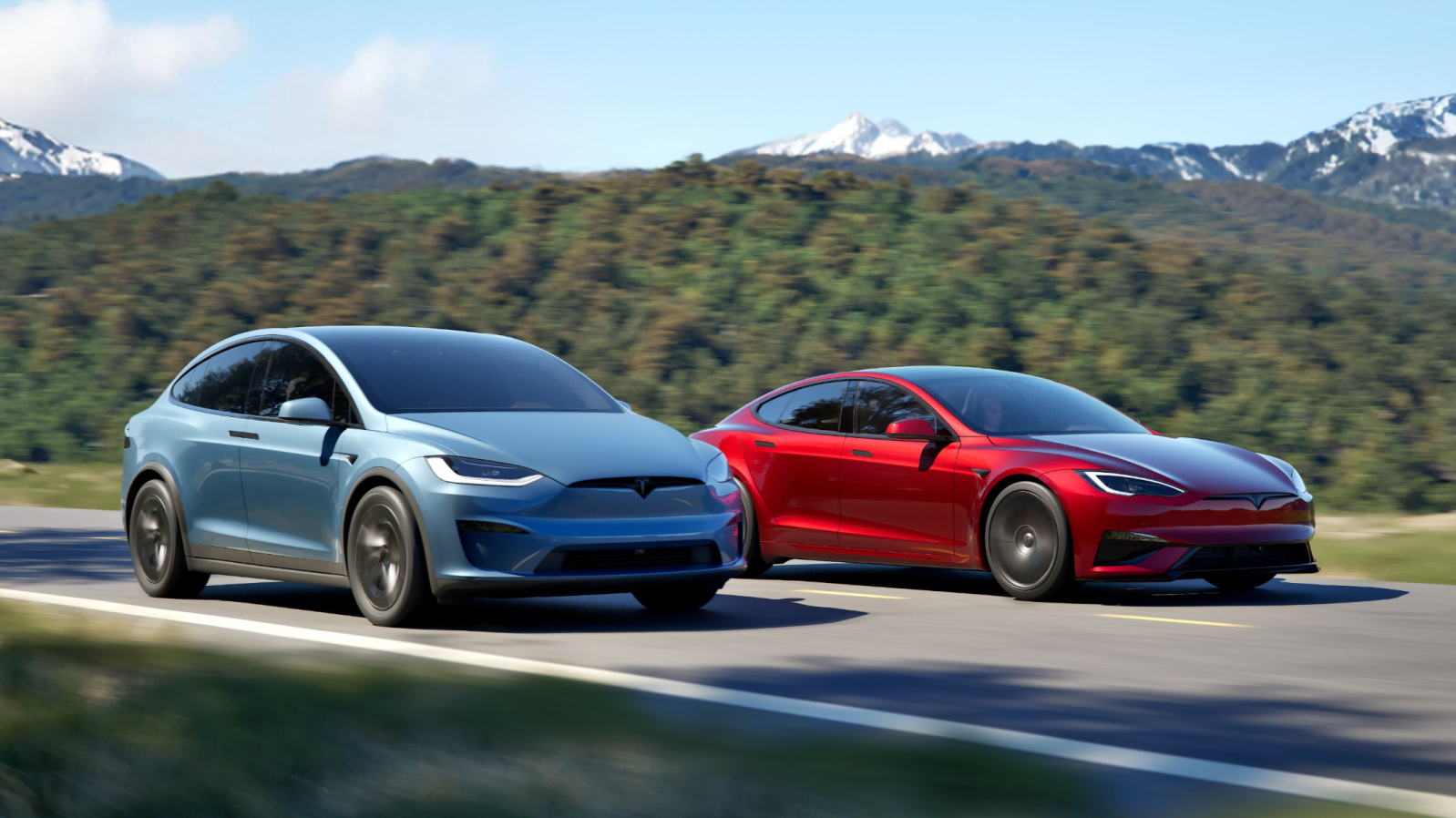
Tesla Chief Executive Officer Elon Musk has announced plans to "open source" the design and engineering specifications for the Model S and Model X, the two flagship vehicles that defined the company’s transition into a high-volume premium automaker. This announcement, made in July 2026, positions the original Tesla Roadster as the operational template for the release. However, the move has immediately drawn scrutiny from the engineering and open-source communities, who point to the historical discrepancy between Tesla’s public rhetoric regarding transparency and the technical reality of its previous "open source" disclosures.
The commitment follows the official cessation of Model S and Model X production in April 2026. The decision to retire these legacy platforms was driven by a strategic pivot to reallocate manufacturing resources toward the development and assembly of "Optimus," Tesla’s humanoid robot project. With the vehicles no longer part of the active production lineup, Musk suggested that the intellectual property behind them would be shared with the public, echoing a similar move made with the original 2008 Roadster.
The Roadster Precedent: Analysis of Previous Disclosures
To understand the implications of the Model S and Model X announcement, analysts point to the November 2023 release of the original Roadster’s documentation. At that time, Musk asserted that "all design and engineering of the original Tesla Roadster is now fully open source," claiming that the public now possessed everything Tesla had regarding the vehicle.
A technical audit of the actual release, however, revealed a more limited scope. The primary repository, hosted on GitHub under the teslamotors/roadster name, contains a minimal set of data. This includes five Controller Area Network (CAN) database files totaling approximately 339 KB, a 309 MB diagnostic software ISO, and two brief PDF quick-start guides. While these files provide utility for diagnostics and bus communication, they represent only a fraction of the data required to manufacture or fully understand the vehicle’s engineering.

The repository’s history indicates a lack of ongoing maintenance or expansion. The CAN database files were uploaded in December 2022, nearly a year before the official announcement, and the diagnostic tools were added in late 2023. Since that time, no further commits or updates have been made, despite the repository garnering over 1,100 stars and 300 forks from interested developers. Additional documentation remains gated behind a login on Tesla’s service website under a section titled "Disclosed Research and Development Documents," which includes packages for the battery monitoring board, vehicle display system, and HVAC controller.
Technical Limitations and Missing Data
The central criticism from the engineering community regarding Tesla’s "open source" claims is the absence of core design files. For a project to be considered open source under standard industry definitions, it must provide the means for others to modify and reproduce the work.
In the case of the Roadster release, and potentially the upcoming Model S and Model X releases, several critical components are absent:
- CAD Files and Mechanical Drawings: No Computer-Aided Design (CAD) files have been released, which are necessary for understanding the physical structure and manufacturing tolerances of the chassis and components.
- Firmware Source Code: While compiled binaries exist within the diagnostic ISO, the human-readable source code for the vehicle’s firmware has not been disclosed.
- Power Electronics and Inverters: Schematics for the Power Electronics Module (PEM)—the critical component that manages the flow of energy between the battery and the motor—remain proprietary.
- Manufacturing vs. Design Files: Engineering firm Antmicro, which attempted to simulate the Roadster’s electronics using the released files, noted that Tesla provided Gerber files and "pick-and-place" data. These are manufacturing outputs used by assembly machines, rather than the original Printed Circuit Board (PCB) source files. Consequently, engineers were forced to manually reconstruct component footprints to perform meaningful simulation work.
Licensing and Legal Frameworks
The most significant hurdle to classifying these releases as "open source" is the lack of a recognized open-source license, such as MIT, Apache 2.0, or the GNU General Public License (GPL). The GitHub README for the Roadster documentation states that materials are released under the terms of "Disclosed Research and Development Documents for Roadster."
Legal analysis of these terms suggests they function primarily as a liability disclaimer rather than a grant of rights. The text explicitly states that the information is not intended as manufacturer reference or repair material and provides no warranties. Crucially, the documents do not grant users the legal right to copy, modify, or redistribute the information for commercial or non-commercial use. Tesla retains all copyright and patent rights, which contradicts the Open Source Definition (OSD) maintained by the Open Source Initiative.
Chronology of Tesla’s Transparency Initiatives
Tesla’s history with transparency has been a series of incremental releases, often prompted by external pressures or the end of a product’s lifecycle.
- June 2014: Tesla announces it will not initiate patent lawsuits against anyone who, in good faith, wants to use its technology. This was marketed as "opening its patents," though the "good faith" clause remained legally ambiguous.
- May 2018: Following years of inquiries from the Software Freedom Conservancy (SFC) regarding violations of the GPL, Tesla begins publishing source code for the Linux kernel and Buildroot used in the Model S and Model X infotainment systems.
- December 2020: Under increasing "Right to Repair" pressure and legislative changes in markets like Massachusetts, Tesla begins offering service manuals and diagnostic tools for free to the public.
- November 2023: Musk announces the "open sourcing" of the original Roadster.
- April 2026: Model S and Model X production officially ends to prioritize the Optimus robotics program.
- July 2026: Musk pledges to apply the Roadster "open source" model to the Model S and Model X.
The Impact on the Model S and Model X Platforms
The Model S and Model X represent fourteen years of iterative electric vehicle (EV) development. Unlike the Roadster, which was a low-volume proof-of-concept car based on a Lotus chassis, the S and X platforms were designed from the ground up by Tesla and produced in significant volume.
If Tesla were to provide a comprehensive open-source release for these vehicles, it would offer the industry an unprecedented look at a mature EV platform. This would include the evolution of the "Plaid" tri-motor powertrain, the integration of large-scale battery packs, and the complex thermal management systems that allow for high-performance driving.
However, if the company follows the Roadster playbook, the release is likely to be restricted to diagnostic software and CAN bus databases. Such a release would be highly beneficial for independent repair shops and enthusiasts looking to keep aging vehicles on the road, but it would fall short of allowing third-party manufacturers to learn from or iterate upon Tesla’s hardware designs.
Official Responses and Industry Reactions
The Software Freedom Conservancy has historically been one of the most vocal critics of Tesla’s approach to open source. While acknowledging the 2018 release of kernel source code, the SFC has maintained that Tesla’s disclosures remain incomplete and do not fully satisfy the requirements of the GPL. A genuine open-source release for the Model S and Model X would require Tesla to provide complete "scripts used to control compilation and installation of the executable," a standard requirement for GPL compliance that the company has struggled to meet in the past.

Independent repair advocates have expressed cautious optimism. For shops specializing in out-of-warranty Tesla repairs, any increase in documentation—even if not strictly "open source"—is a victory. The diagnostic ISO and CAN databases for the Roadster have already proven vital for maintaining the remaining fleet of those vehicles, which are now nearly 18 years old. Applying this to the Model S and Model X would significantly lower the barrier to entry for third-party maintenance of the world’s most recognizable electric sedans and SUVs.
Broader Implications for the EV Industry
The potential "open sourcing" of the Model S and Model X comes at a time when the automotive industry is grappling with the longevity of software-defined vehicles. As manufacturers move toward proprietary, closed-loop systems, the ability for a vehicle to be repaired or repurposed after the manufacturer ceases support becomes a critical environmental and economic issue.
Should Tesla choose to exceed the Roadster precedent by including CAD files, firmware source code, and a legitimate open license, it would set a new global standard for automotive transparency. Such a move would facilitate:
- Educational Advancement: Engineering students and researchers could study a production-grade EV platform in its entirety.
- Secondary Market Stability: Improved repairability would bolster the resale value of used EVs, addressing one of the primary concerns of current buyers.
- Innovation in Battery Recycling: Detailed pack designs would allow recyclers to more safely and efficiently disassemble high-voltage batteries.
While the industry remains skeptical of the "open source" label being applied to what is essentially a documentation release, the forthcoming data for the Model S and Model X will undoubtedly provide a valuable resource for the EV community. Whether it represents a "real contribution" to the industry or a strategic "press release" will depend on the depth of the technical files and the legal rights granted to those who use them.