Metro 2039 Reveal Event and Franchise Sale Mark a Significant Milestone for the Iconic Post-Apocalyptic Series

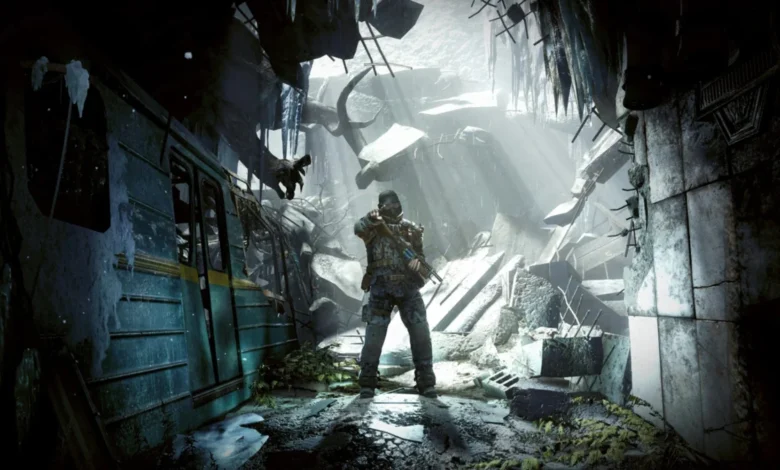
The global gaming community is currently focusing its attention on the acclaimed Metro franchise as developer 4A Games and publisher Deep Silver prepare for the official unveiling of the series’ next chapter, Metro 2039. This highly anticipated announcement, scheduled for an Xbox-hosted reveal event on April 16, comes alongside a massive franchise-wide sale that has seen the entire trilogy discounted to historic lows across multiple platforms. For both long-time enthusiasts and newcomers, this week represents a pivotal moment for a series that has defined the post-apocalyptic first-person shooter genre for over a decade.
The news follows a series of leaks from prominent industry insiders, most notably NateTheHate, who correctly predicted the title and timing of the reveal. Xbox subsequently confirmed these reports, setting the stage for a deep dive into the fourth mainline installment of the franchise. To celebrate the upcoming announcement, the Metro Saga Bundle—which includes the remastered versions of the first two titles and the expansive third entry—is being offered at prices as low as $5.99, providing an accessible entry point for those looking to experience the narrative before the new game’s release.
A Legacy of Atmosphere and Narrative Depth
The Metro franchise, based on the internationally bestselling novels by Russian author Dmitry Glukhovsky, first entered the gaming scene in 2010 with Metro 2033. Developed by 4A Games, a studio founded by former members of the team behind S.T.A.L.K.E.R.: Shadow of Chernobyl, the game was immediately recognized for its oppressive atmosphere, survival-horror elements, and intricate world-building. Set in the ruins of the Moscow Metro following a global nuclear holocaust, the series follows Artyom, a young survivor navigating the warring factions of the underground tunnels and the mutated horrors of the surface.
In 2013, the sequel Metro: Last Light expanded upon these foundations, refining the stealth and combat mechanics while deepening the political intrigue of the Metro’s various "city-states," such as the communist Red Line and the neo-Nazi Fourth Reich. The technical prowess of 4A Games became a hallmark of the series; the studio’s proprietary 4A Engine was frequently used as a benchmark for PC hardware performance, pushing the boundaries of lighting, volumetric fog, and particle effects.
The franchise reached a new peak in 2019 with Metro Exodus. Moving away from the claustrophobic tunnels of Moscow, Exodus introduced a semi-open world structure, following a year-long journey across the Russian wilderness aboard a steam locomotive called the Aurora. This shift in design was met with critical acclaim, as it managed to maintain the series’ signature tension while offering players greater freedom and a more diverse range of environments.

Detailed Breakdown of the Metro Franchise Sale
Ahead of the Metro 2039 reveal, the current sale offers unprecedented value across all major gaming platforms. The distribution of these discounts varies slightly by storefront, reflecting the different pricing structures of digital marketplaces.
On the console front, the Metro Saga Bundle is available on the PlayStation Store and the Xbox Games Store for $5.99. This package is remarkably comprehensive, containing Metro 2033 Redux, Metro: Last Light Redux, and Metro Exodus. Furthermore, the bundle includes both major story expansions for Exodus: "The Two Colonels," which returns to the linear, horror-focused roots of the series, and "Sam’s Story," an open-ended survival mission set in the ruins of Vladivostok.
PC gamers have several options, though prices are slightly higher than on consoles. On Steam, the Metro Saga Bundle is priced at $7.49. Meanwhile, the DRM-free platform GOG offers the bundle for $8.95. For players who already own portions of the series, individual titles are also heavily discounted. On Steam and GOG, the Redux versions of 2033 and Last Light are available for just $1.99 each, representing some of the lowest prices in the history of the franchise. On the Xbox platform, individual copies of the first two games are $3.99 each, with Metro Exodus priced at $4.49.
Chronology and Development Timeline
The path to Metro 2039 has been a long one for fans, as the franchise has historically favored quality and technical polish over frequent releases.
- March 2010: Metro 2033 launches on PC and Xbox 360, establishing the series as a cult classic.
- May 2013: Metro: Last Light is released, significantly improving the gameplay loop and commercial reach of the brand.
- August 2014: Metro Redux is released for PlayStation 4, Xbox One, and PC. This collection featured a complete overhaul of Metro 2033 using the improved Last Light engine, adding new visual effects and gameplay features.
- February 2019: Metro Exodus launches, bringing the series to a global audience and receiving nominations for several "Game of the Year" awards.
- 2020-2021: 4A Games releases the Enhanced Edition of Metro Exodus, a ground-up rebuild of the game that requires ray-tracing capable hardware, setting a new standard for lighting in video games.
- April 16, 2024: The scheduled reveal of Metro 2039.
This timeline highlights a five-year gap between the release of Exodus and the announcement of the new title. During this period, 4A Games underwent significant changes, including being acquired by Saber Interactive (then under the Embracer Group) and navigating the complexities of the geopolitical situation in Eastern Europe, which necessitated the relocation of many staff members from their Kyiv office to their headquarters in Malta.
Technical Expectations and Reveal Anticipation
Industry analysts expect Metro 2039 to be a "true" next-generation experience. Given 4A Games’ history of technical innovation, it is widely anticipated that the new title will utilize the latest advancements in rendering technology. While Metro Exodus was a pioneer in ray-traced global illumination, Metro 2039 is expected to refine these systems further, potentially leveraging Unreal Engine 5 or an even more advanced iteration of the 4A Engine.

The reveal event on April 16 is expected to answer several burning questions regarding the game’s setting and structure. A primary point of speculation is whether the game will return to the linear, "tunnel-shooter" style of the original games or continue the trend toward the open-world exploration seen in Exodus. Furthermore, the title "Metro 2039" suggests a direct chronological progression from the previous games, which took place in 2033, 2034, and 2035-2036, respectively.
Broader Impact on the Horror FPS Genre
The resurgence of the Metro franchise comes at a time when the "Eastern European survival" sub-genre is seeing a massive revival. With the upcoming release of S.T.A.L.K.E.R. 2: Heart of Chornobyl, the market for gritty, atmospheric, and high-difficulty shooters is expanding. Metro’s unique selling point has always been its balance of hardcore survival mechanics—such as manually pumping a flashlight battery or managing air filters in a gas mask—with a deeply personal and philosophical narrative.
The success of the Metro franchise has also had a significant impact on the literary world. Dmitry Glukhovsky’s collaboration with 4A Games helped turn the Metro 2033 book series into a global phenomenon, spawning a "Metro Universe" where other authors contribute stories set in different cities across the world. The announcement of Metro 2039 likely signals a continued partnership between the developers and the source material’s themes, even as the games move beyond the plots of the original books.
Conclusion and Market Outlook
The strategic timing of the Metro Saga sale, occurring just days before the April 16 reveal, is a classic "hype-building" maneuver that has proven successful for major franchises in the past. By lowering the barrier to entry to under six dollars, the publishers are ensuring that the player base is as large as possible when the marketing campaign for Metro 2039 begins in earnest.
As the industry prepares for the Xbox reveal event, the sentiment among the gaming public is one of cautious optimism. 4A Games has maintained a reputation for delivering complete, high-quality experiences without the predatory monetization schemes that have plagued other modern shooters. If Metro 2039 continues this tradition while pushing the technical boundaries of current-generation consoles and PC hardware, it is poised to be one of the most significant releases of the coming year.
For now, the Metro Saga Bundle remains one of the most cost-effective ways to experience nearly 40 hours of high-quality narrative content. As the clock ticks down to the April 16 event, the tunnels of the Moscow Metro are once again calling to a new generation of Spartans.