The shift toward home-based fitness has evolved from a temporary necessity during the global health crises of the early 2020s into a permanent fixture of modern lifestyle infrastructure. According to recent market analysis from the fitness equipment sector, the home gym industry is projected to maintain a compound annual growth rate (CAGR) of over 7% through 2030, driven by increased consumer demand for flexible workout environments. Establishing a functional home training space requires a systematic approach to procurement, prioritizing versatility and spatial efficiency to ensure long-term utility.
The Strategic Foundation: Equipment Selection and Spatial Planning
Designing a home gym necessitates a careful assessment of available square footage versus specific training objectives. Whether utilizing a dedicated garage or a repurposed corner of a living area, the primary goal for any fitness enthusiast is to minimize the "cost-per-use" of equipment. This involves investing in items that offer the highest degree of multi-functionality.
For those in the early stages of development, the priority should remain on free weights, which provide greater mechanical demand on stabilizer muscles compared to fixed-path cable machines. The integration of adjustable equipment is a critical strategy for space-constrained environments. By opting for weight systems that can be calibrated to various resistance levels, users can avoid the accumulation of redundant individual weights, thereby optimizing the utility of their limited footprint.
Chronology of Home Gym Evolution
The landscape of home fitness has undergone three distinct phases over the past decade:
- The Pre-2020 Era: Home gyms were largely viewed as luxury add-ons for high-income households, typically consisting of treadmill cardio units and basic dumbbell sets.
- The Pandemic Acceleration (2020–2022): Supply chain disruptions and lockdowns forced a mass adoption of home fitness equipment. During this period, the industry saw an unprecedented surge in demand for power racks, Olympic barbells, and heavy-duty plates as traditional fitness centers remained shuttered.
- The Hybrid Normal (2023–Present): Consumers have moved toward a refined model, seeking "prosumer" grade equipment that rivals the durability of commercial gym gear while remaining aesthetically compatible with home interiors.
Core Equipment Hierarchy: A Data-Driven Approach
To maximize efficacy, experts recommend a prioritized procurement strategy.
Resistance Foundations:
Kettlebells remain the gold standard for compact strength training. Research indicates that kettlebell training effectively combines cardiovascular conditioning with resistance training, offering a high return on investment for the average trainee. Adjustable competition-style kettlebells are increasingly preferred by fitness professionals due to their consistent dimensions, which allow for uniform movement mechanics across varying loads.
The Role of Dumbbells and Pull-Up Mechanics:
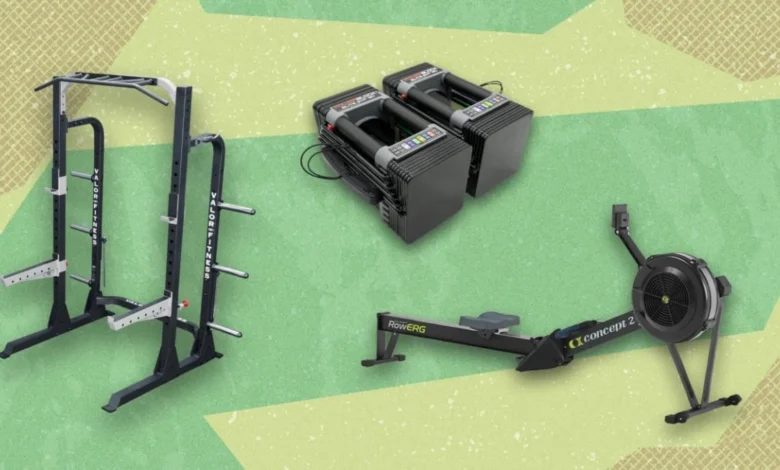
Dumbbells offer the most extensive range of motion for accessory work. While rubber hex dumbbells provide durability, adjustable "PowerBlock" or dial-based systems remain the most efficient solution for urban living spaces. When considering upper-body development, the pull-up bar serves as the most effective "gravity-based" tool. Data shows that bodyweight pulling exercises are essential for mitigating the common postural imbalances associated with sedentary office work.
Cardiovascular Integration:
While treadmills remain popular, the rowing machine and the spin bike offer superior utility for high-intensity interval training (HIIT). The Concept 2 rower, in particular, has become a benchmark in the fitness industry due to its air-resistance technology and data-tracking capabilities, which provide objective metrics for progress—a key driver in long-term adherence.

Advanced Procurement and Specialized Training
Once the baseline requirements—racks, bars, and plates—are satisfied, the focus typically shifts toward specialization. This is where the home gym begins to mirror the capabilities of a boutique performance center.
Barbell Variations and Specialty Steel:
The standard 20kg (45lb) Olympic barbell is the workhorse of any serious strength program. However, as lifters progress, the addition of specialty bars—such as the safety squat bar (SSB) or the trap bar—can significantly reduce joint strain while allowing for increased load intensity. These tools are particularly valuable for athletes who train without a spotter, as the mechanics of these bars inherently improve safety during heavy lifts.
Plyometrics and Dynamic Resistance:
The inclusion of plyometric boxes and resistance bands introduces a dynamic element to training. Plyo boxes allow for explosive movement patterns that are difficult to replicate with traditional weight machines. Simultaneously, resistance bands serve a dual purpose: they can be used for assisted calisthenics or layered onto barbells to implement "accommodating resistance," a technique used to overcome sticking points in major compound lifts.
Industry Implications and Market Responses
The rapid expansion of the home gym market has prompted a notable response from manufacturers. In previous years, high-quality steel was often gated behind commercial gym memberships or professional suppliers. Today, companies are tailoring their direct-to-consumer catalogs to meet these specific demands.
Industry analysts suggest that the rise of "smart" fitness—technology that integrates real-time coaching and performance tracking—has added another layer to this market. While the hardware remains fundamental, the software layer is increasingly becoming a value-add. Users are now prioritizing equipment that features seamless connectivity with training applications, allowing for a structured, data-informed approach that was previously available only through personal trainers.
Economic and Practical Considerations
From a financial perspective, the initial capital expenditure for a high-quality home gym can be significant. However, when measured against the long-term cost of monthly gym memberships, commuting time, and the depreciation of unused equipment, a well-planned home gym often achieves a break-even point within 18 to 24 months.
Experts advise against the "buy cheap, buy twice" philosophy. When investing in critical infrastructure—such as squat racks, barbells, and plates—prioritizing reputable brands ensures safety and longevity. For smaller accessories like bands or sandbags, budget-friendly options often suffice.
Conclusion: Sustaining the Training Habit
Ultimately, the success of a home gym is defined not by the quantity of the equipment, but by the consistency of its use. By focusing on a minimalist setup that prioritizes multi-joint movements and functional strength, homeowners can cultivate a training environment that supports both immediate physical goals and long-term health. The current market availability, combined with a wealth of online instructional resources, makes it an optimal time for individuals to transition from passive fitness participation to active, autonomous training within their own walls. Whether the objective is powerlifting, endurance, or general wellness, the modern home gym has firmly established itself as a vital component of a resilient, health-conscious lifestyle.
Related posts: