President Trump Delivers Unconventional Speech at Rescheduled White House Correspondents’ Association Dinner

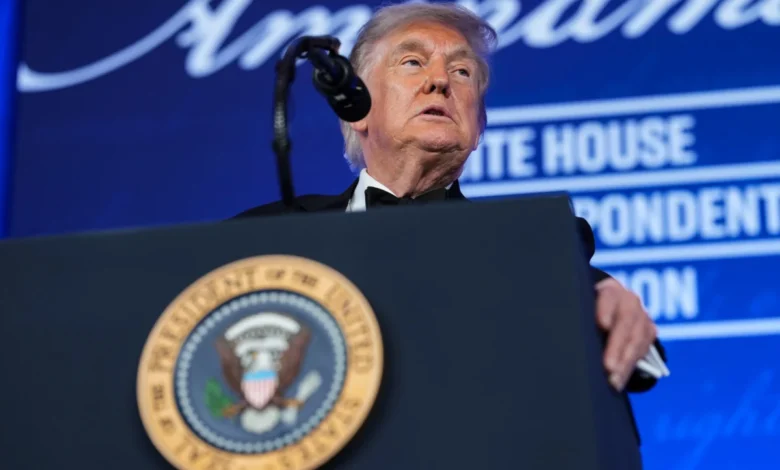
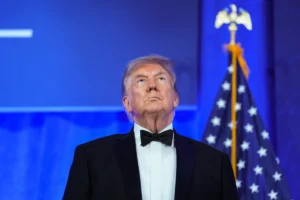
Speaking at the rescheduled White House Correspondents’ Association Dinner on Friday, Donald Trump delivered an hour-long address that blended familiar campaign rhetoric with a series of attempts at humor that largely failed to resonate with the audience. This marked the President’s first appearance at the annual event, which had been postponed from its traditional April date due to a security incident where an individual attempted to breach the ballroom and was subsequently apprehended by the Secret Service. While presidents have historically used this platform to engage in lighthearted banter and gentle ribbing of the press, President Trump’s remarks leaned heavily into his signature rally style, punctuated by personal critiques of journalists, occasionally referencing their physical appearance.
A Speech That Fell Flat
The hour-long address, delivered at the Waldorf-Astoria ballroom, was characterized by a noticeable lack of audience engagement. Trump’s efforts at humor were met with sparse laughter, often described as "crickets" by observers. At one point, after a joke about an elderly U.S. senator’s personal life failed to elicit a significant reaction, the President himself expressed surprise and disappointment, stating, "Does anybody get that? I thought that was actually great. That was actually the only thing I thought was good in this whole frickin’ stupid speech. It was the only good one, and that went down with not exactly great laughter." This self-deprecating commentary underscored the perceived disconnect between the President’s comedic aspirations and the audience’s reception.
Throughout the meandering speech, which saw the President pivot between various topics in a stream-of-consciousness manner, it became evident that many of his intended jokes were not landing. The prevailing atmosphere in the ballroom was one of polite endurance, with attendees exhibiting signs of fidgeting and discomfort rather than amusement. The event’s delayed rescheduling and the President’s unconventional approach created an unusual dynamic, distinct from the typical celebratory tone of the dinner.
A Nod to Future Events and a Venue with History
Toward the end of his remarks, President Trump alluded to the possibility of his future attendance, suggesting, "Tonight’s event is even crazier than the last time. It’s so successful that I’ve been informed by CBS News’ David Ellison that next year, they’re going to call it the Trump White House Correspondents’ Dinner." He added that changing the name "is the only way you’re going to get me back here," a statement that, while delivered with a hint of jest, highlighted the complex relationship between the President and the press corps.
The choice of the Waldorf-Astoria, a venue with a historical connection to the Trump Organization, added another layer to the evening. The ballroom, noted as being smaller than the Hilton where the original April event was scheduled, saw the presence of several Trump administration officials, including Chief Legal Officer Makan Delrahim, who was attending just hours after the news of Paramount’s merger with Warner Bros. Discovery being delayed due to antitrust challenges. Also present were cabinet members Pete Hegseth and presidential advisor Stephen Miller, along with his wife Katie Miller. Other notable attendees included Secretary of Health and Human Services Robert Kennedy Jr. and his wife Cheryl Himes, Commerce Secretary Howard Lutnick, Department of Homeland Security Secretary Markwayne Mullin, and Acting Attorney General Todd Blanche.
Awards and Accusations: A Tense Precedent
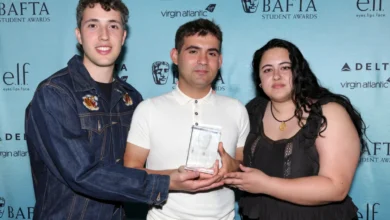
The evening’s proceedings were not without their own moments of tension, even before the President took the stage. The presentation of annual awards, which recognized journalists for their investigative work, created an atmosphere of underlying friction. Notably, when reporters from The Wall Street Journal accepted an award for their reporting on the Jeffrey Epstein story, President Trump, after shaking their hands, visibly expressed his displeasure. Wolf Blitzer, presenting the award, pointedly reminded the audience that President Trump had previously sued The Wall Street Journal for $20 billion over the same story.
This pre-existing animosity between the President and certain media outlets set a somber backdrop for the dinner. Throughout his presidency, President Trump has frequently engaged in sharp criticism of news organizations, often labeling unfavorable reporting as "fake news." His administration has also taken measures such as threatening to revoke broadcast licenses and, in some instances, pursuing legal avenues against journalists and publications.
Personal Attacks and Unresponsive Audiences
Upon taking the lectern, President Trump directly addressed Josh Dawsey, one of the Wall Street Journal award recipients, and CNN host Kaitlan Collins, launching into highly personal barbs. However, these attempts at a roast-like segment were met with near silence from the audience, underscoring the lack of receptiveness to such attacks. Weijia Jiang, the outgoing president of the White House Correspondents’ Association, maintained a stoic demeanor throughout these digressions.
In response to the personal attacks, CNN released a statement during the speech, publicly defending its journalists. This action signaled a growing assertiveness from media organizations in the face of presidential criticism.
Despite appearing to have a prepared script, President Trump frequently deviated from his notes, with various topics seemingly triggering personal anecdotes or political attacks. His speech meandered through familiar political grievances, including commentary on the appearance of figures like Adam Schiff, and extended reflections on his visions for a White House ballroom. He even pointed to the chandeliers at the Waldorf-Astoria, remarking on his own role in their construction and his prior ownership of the hotel. While some of his criticisms of the press were notably less severe than in past instances, this was likely attributable to the sheer length of his address and the broad range of subjects he covered.
The Shadow of Security Concerns
The rescheduled date and venue were a direct consequence of the security incident that had disrupted the original April event. The gunman’s attempt to breach the ballroom at the Washington Hilton, though ultimately unsuccessful, sent a palpable wave of fear through the attendees and necessitated the swift evacuation of the President and Vice President. The incident, which occurred just outside the ballroom, had echoes that could be heard by guests inside, underscoring the gravity of the situation.
The White House Correspondents’ Association’s decision to reschedule, at President Trump’s urging, aimed to allow the event to proceed. However, the shift to the Waldorf-Astoria and the implementation of enhanced security measures served as constant reminders of the near-tragedy. The attention surrounding the event was amplified not only by President Trump’s participation but also by the ongoing tensions between his administration and the press.
Broader Implications for Press-Government Relations
President Trump’s decision to attend this year’s dinner, after skipping the event in previous years and sometimes holding counter-programming, placed him at the center of an occasion meant to celebrate the very journalists he has often criticized. The fact that several award recipients were recognized for reporting on sensitive matters, including the aforementioned Epstein story, highlighted the complex and often adversarial relationship between the presidency and the Fourth Estate.
The President’s past actions, including threats to revoke broadcast licenses and his administration’s use of subpoenas against reporters to uncover sources, have created an environment of apprehension within the journalistic community. The recent withdrawal of subpoenas issued to New York Times reporters by the Department of Justice, following a federal judge’s criticism of the process, represents a small but significant development in the ongoing legal battles between the government and the press.
When mentalist Oz Pearlman took the stage after President Trump’s remarks, he lightheartedly remarked on the President’s announcement of future attendance, quipping, "I thought he was going to be speaking until next year, actually." This observation, delivered with a touch of humor, subtly underscored the unusually long and unconventional nature of the President’s address. The evening, therefore, served not only as a platform for the President to address the nation’s media but also as a stark illustration of the ongoing dialogue, and at times, the deep-seated friction, between the White House and the press corps. The event’s history, punctuated by both tradition and unforeseen crises, ultimately framed a night where presidential rhetoric met journalistic scrutiny in a uniquely charged atmosphere.