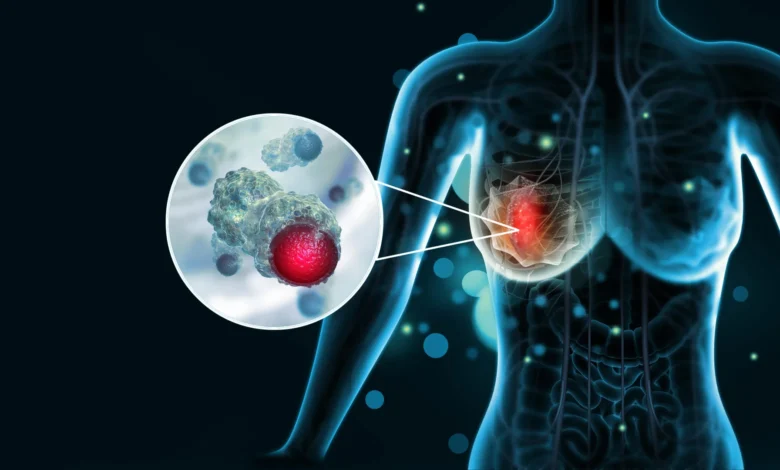
A comprehensive new scientific investigation conducted by researchers at the National Institutes of Health has established a troubling statistical correlation between elevated blood concentrations of legacy "forever chemicals" and an increased risk of developing estrogen receptor-negative breast cancer, a particularly aggressive and difficult-to-treat variant of the disease. The study, published in the peer-reviewed Journal of Clinical Oncology, focuses on two ubiquitous per- and polyfluoroalkyl substances known as PFOA and PFOS. While the findings do not prove a direct causal mechanism, they add substantial weight to the mounting body of scientific literature connecting long-term environmental toxic exposures to severe human health outcomes.
The research arrives at a critical juncture for federal health policy and environmental regulation. As public health officials grapple with the ubiquitous nature of these synthetic compounds in consumer goods, drinking water supplies, and human bloodstreams, the identification of a specific high-risk cancer pathway underscores the urgent need for targeted intervention. By examining historical blood samples and tracking subsequent health diagnoses over a multi-year period, the research team has provided a clearer picture of how persistent environmental pollutants may silently contribute to malignancies that historically have lacked clear, identifiable risk factors.
Understanding the Scope and Anatomy of ER-Negative Breast Cancer
To fully grasp the significance of the NIH findings, one must examine the distinct clinical characteristics of estrogen receptor-negative, or ER-negative, breast cancer. Unlike hormone receptor-positive breast cancers—which rely on estrogen or progesterone to fuel their growth and can often be managed with targeted hormone-blocking therapies—ER-negative tumors do not respond to these hormonal stimuli. Consequently, standard endocrine therapies are ineffective against them, leaving oncologists with fewer treatment modalities.
ER-negative cancers are biologically characterized by more rapid cellular division, a higher histological grade, and a greater propensity for metastasis early in the disease progression. Patients diagnosed with this form of the disease typically experience poorer long-term prognoses and higher recurrence rates compared to those with hormone-responsive tumors. Furthermore, medical science has struggled to pinpoint the exact environmental, genetic, or lifestyle triggers responsible for inciting ER-negative mutations. While family history and certain genetic mutations, such as BRCA1, are established contributors, a significant portion of ER-negative cases occur in women with no known hereditary predisposition. This gap in clinical understanding makes the newly identified correlation with per- and polyfluoroalkyl substances a vital breakthrough for epidemiological research.
A Legacy of Chemical Persistence: The PFOA and PFOS Problem
Per- and polyfluoroalkyl substances represent a massive family of synthetic chemicals engineered since the mid-20th century for their unique ability to repel water, oil, grease, and heat. Because of their carbon-fluorine bonds—one of the strongest chemical linkages in organic chemistry—these compounds refuse to break down naturally in the ecosystem. This extreme chemical stability has earned them the moniker "forever chemicals."
Over the decades, PFOA (perfluorooctanoic acid) and PFOS (perfluorooctanesulfonic acid) found their way into an astonishing array of commercial and industrial applications. They were utilized in the manufacture of non-stick cookware, stain-resistant carpets, waterproof apparel, fast-food wrappers, and specialized firefighting foams used extensively at military bases and commercial airports. As these products degraded or were manufactured, the chemicals leached into municipal water supplies, agricultural soils, and the atmosphere.
Biologically, these substances possess a high affinity for human serum proteins. Once ingested through contaminated water, food, or dust, they bypass rapid excretion and accumulate within the human body, where their biological half-lives can span several years. Consequently, biomonitoring surveys conducted by federal health agencies routinely detect measurable concentrations of legacy PFAS in the bloodstreams of the vast majority of the U.S. population. Even though major American manufacturers voluntarily phased out the production of PFOA and PFOS under pressure from environmental regulators in the late 2000s, the profound chemical persistence of these substances ensures that human exposure remains a continuous background reality.
Chronology of the Research: From the Sister Study to the Journal of Clinical Oncology
The journey toward these findings began decades ago with the conceptualization of the Sister Study, a monumental epidemiological undertaking sponsored by the National Institute of Environmental Health Sciences, a division of the NIH. Launched to investigate the interplay between environmental factors and genetic predispositions in breast cancer development, the Sister Study recruited a robust cohort of 50,884 women across the United States and Puerto Rico between the years 2003 and 2009.
Crucially, every participant enrolled in the project was free of breast cancer at baseline, though each woman had at least one full or half-sister who had previously been diagnosed with the disease, placing the cohort at an elevated familial risk. Over the ensuing years, researchers maintained rigorous tracking of health outcomes, lifestyle factors, and environmental exposures through repeated questionnaires and biological sample collections.
To conduct the specific investigation into per- and polyfluoroalkyl substances, NIH researchers and their academic collaborators utilized a nested case-control design. They analyzed archived blood samples that had been drawn from participants at the time of their enrollment—years before any breast cancer diagnosis occurred. The analytical chemistry team measured baseline concentrations of 17 distinct PFAS compounds in the blood serum of 1,609 women who subsequently developed breast cancer, comparing them against a control group of 2,269 healthy participants from the same cohort.
The empirical results of this laboratory and statistical analysis revealed striking disparities when categorized by exposure quartiles. Women falling into the highest exposure category for PFOA demonstrated a 67% higher rate of developing ER-negative breast cancer compared to those in the lowest exposure group. The statistical association was even more pronounced for PFOS; participants with the highest serum concentrations exhibited a 93% elevation in the rate of ER-negative breast cancer—nearly doubling the risk profile of the lowest exposure tier. To ensure the robustness of these observational findings, the research team conducted a comprehensive meta-analysis incorporating prior epidemiological studies, which corroborated the positive association between legacy PFAS exposure and aggressive tumor phenotypes. The completed study was formally accepted and published in the Journal of Clinical Oncology, cementing its place in modern oncological literature.
Official Responses and Institutional Perspectives
The publication of the NIH study has drawn immediate attention from federal health leadership, reflecting an intensifying governmental focus on environmental determinants of chronic illness.
"Women deserve clear answers about how chemicals in their environment may affect their health," stated HHS Secretary Robert F. Kennedy, Jr. "This NIH study links two forever chemicals to a higher risk of ER-negative breast cancer and demands further investigation. Under President Trump’s leadership, we will pursue the evidence, confront environmental health risks, and give women the information they need to protect their health."
The institutional commitment to advancing this line of inquiry was echoed by the study’s lead author, Dr. Alexandra White, an Stadtman Investigator at the NIEHS. "Our findings, which we confirmed using a meta-analysis of prior research, indicate that certain legacy PFAS, including PFOA and PFOS, are associated with a higher risk of ER-negative breast cancer, a more aggressive tumor type with few known risk factors," Dr. White explained. She emphasized that while the observational nature of the study precludes definitive statements of direct causality, the strength and consistency of the statistical signals warrant urgent follow-up studies focusing on vulnerable populations and heavily contaminated geographic areas.
Dr. Che-Jung Chang, the study’s first author and a researcher at DLH who previously served as an NIH research fellow, highlighted the potential for risk mitigation despite the persistent nature of the chemicals. "These findings matter for women’s health broadly," Dr. Chang noted. "Although PFAS are persistent in the environment and in our bodies, exposure to them is still potentially modifiable, meaning people can take steps to reduce their exposure, and these findings could open new avenues for prevention."
Biological Mechanisms and Unanswered Scientific Questions
While the epidemiological connection between high blood serum levels of PFOA and PFOS and the incidence of ER-negative breast cancer is now statistically documented, the underlying biological pathways remain an active frontier for toxicological research. Because the strongest associations observed in the Sister Study data were localized specifically to tumors lacking estrogen receptors, scientists hypothesize that these chemical compounds may promote carcinogenesis through non-hormonal cellular mechanisms.
One prominent hypothesis centers on endocrine disruption operating independently of classical estrogen receptor pathways, such as the modulation of alternative nuclear receptors or the induction of chronic, low-grade systemic inflammation. Other researchers are investigating whether persistent exposure to legacy per- and polyfluoroalkyl substances can alter gene expression profiles through epigenetic modifications or impair immune surveillance mechanisms that would otherwise detect and destroy nascent malignant cells. Because the Sister Study analysis was designed primarily to evaluate exposure and disease incidence rather than intracellular mechanics, these potential explanations remain theoretical and underscore the necessity of targeted laboratory research.
Furthermore, the scientific community faces a pressing knowledge gap regarding the next generation of industrial chemicals introduced to replace PFOA and PFOS. As regulatory scrutiny forced manufacturers to discontinue legacy compounds, chemical companies substituted them with newer, short-chain PFAS alternatives—such as GenX and various ether-based compounds. Industry proponents argued these newer formulations would clear the human body more rapidly and pose fewer environmental hazards. However, toxicological data on these replacement chemicals remain sparse. Public health officials and independent scientists have raised urgent concerns that replacement PFAS may share similar toxicity profiles and chronic health risks with their predecessors, a hypothesis that currently lacks comprehensive longitudinal evaluation.
Broader Public Health Implications and Future Directions
The implications of the NIH investigation extend far beyond academic toxicology laboratories, presenting complex challenges for municipal water authorities, environmental regulators, and public health practitioners. As communities nationwide discover detectable levels of forever chemicals in their local drinking water supplies—often tracing back to industrial manufacturing facilities, military installations, or wastewater treatment plants—the demand for advanced filtration infrastructure has surged. Environmental protection agencies at both state and federal levels are currently implementing stricter maximum contaminant levels for PFOA and PFOS in public water systems, aiming to drive baseline exposure concentrations down as close to zero as technologically feasible.
For individual patients and clinicians, the findings reinforce the importance of proactive environmental health evaluations. While eliminating historical internal body burdens of PFOA and PFOS is biologically difficult due to their slow clearance rates, individuals can take practical steps to minimize ongoing daily exposure. Recommendations from environmental health experts frequently include utilizing certified reverse osmosis or granulated activated carbon water filtration systems, avoiding grease-resistant food packaging materials, minimizing the use of non-stick cookware showing signs of wear, and reducing dust accumulation in residential living spaces where consumer product residues often settle.
Looking forward, the research team at the National Institutes of Health plans to expand upon these findings by evaluating whether populations residing in known contamination hotspots experience heightened incidences of aggressive breast cancers. Additionally, future research initiatives will prioritize toxicological assays designed to test replacement PFAS compounds, ensuring that regulatory bodies possess the empirical evidence required to prevent industrial substitution from replicating historical public health failures.
The study’s financial and institutional backing—supported through targeted NIEHS grants including Z01ES044005, Z1AES103332, and R01ES032831—signals that federal investment in environmental oncology will remain robust. As regulatory frameworks tighten and scientific inquiry delves deeper into the cellular mechanics of environmental carcinogenesis, studies like this one serve as a critical catalyst for bridging the gap between industrial chemical manufacturing and human health preservation.