
Automotive World Magazine November 2026 Explores the Accelerated Transition Toward Software-Defined Vehicles and Autonomous Mobility Ecosystems

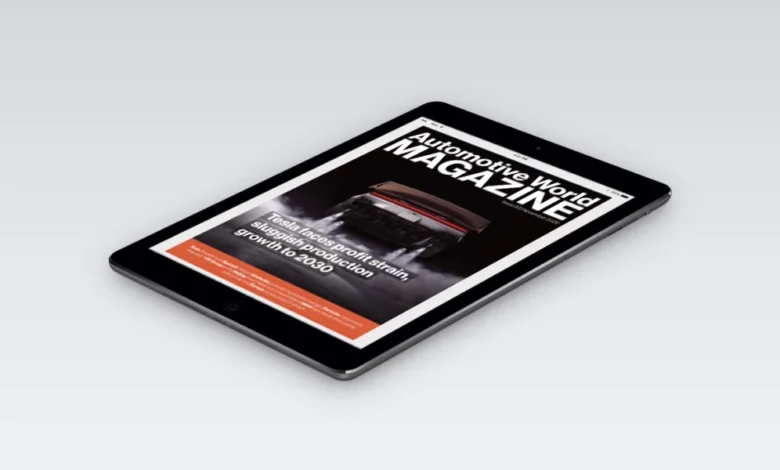
The global automotive landscape is undergoing its most profound structural transformation since the invention of the assembly line, driven by the convergence of electrification, advanced artificial intelligence, and the radical reimagining of vehicle architecture. The November 2026 edition of Automotive World Magazine arrives at a critical juncture for the international mobility sector, capturing an industry in transition from traditional hardware manufacturing to holistic, software-defined ecosystems. As legacy automakers and agile new market entrants alike grapple with compressed profit margins, shifting regulatory frameworks, and rapidly evolving consumer expectations, the imperative to innovate has never been more urgent. This comprehensive overview examines the primary forces shaping the future of mobility, synthesizing key developments across financial markets, strategic corporate maneuvers, E-Mobility advancements, autonomous vehicle deployments, and the revolutionary paradigm of the software-defined vehicle (SDV).
The Financial Realities of the Modern Mobility Transition
The economic architecture underpinning the automotive sector is experiencing unprecedented volatility and restructuring. As capital expenditure requirements for research and development reach historic highs, financial markets are increasingly demanding clear paths to profitability from both established original equipment manufacturers (OEMs) and pure-play electric vehicle (EV) startups.
Throughout the fiscal year leading up to November 2026, venture capital deployment into early-stage mobility technologies has experienced a distinct maturation phase. Investors are no longer funding speculative hardware concepts without proven scalability; instead, capital is aggressively flowing toward software infrastructure, cybersecurity frameworks, and advanced battery recycling technologies. Concurrently, traditional automotive suppliers are restructuring their debt profiles, divesting non-core combustion engine portfolios, and forging strategic joint ventures to share the immense financial burdens of next-generation platform development.
Market analysts note that valuation metrics for automakers are increasingly tied to recurring revenue potential rather than sheer vehicle sales volume. Features delivered via over-the-air (OTA) updates, subscription-based autonomous driving suites, and connected vehicle services are rapidly becoming the primary barometers of financial health. This shift has forced legacy finance departments to adopt SaaS-style accounting models, altering how long-term investments are projected and evaluated by institutional shareholders.
Strategic Realignment: Partnerships, Mergers, and Supply Chain Resilience
In response to geopolitical trade complexities, raw material scarcities, and the high cost of technological integration, corporate strategy across the automotive sector has pivoted toward deep collaboration. The era of the vertically integrated, self-reliant automaker is giving way to complex, cross-industry ecosystems.
Automotive executives are increasingly partnering with technology giants, semiconductor manufacturers, and specialized artificial intelligence firms to secure access to critical intellectual property. These alliances are designed to mitigate the risks associated with in-house software development, a domain where traditional manufacturers have historically faced cultural and operational hurdles. By pooling resources, companies are attempting to standardize baseline electronic architectures across multiple vehicle segments, thereby reducing development cycles and engineering overhead.
Simultaneously, supply chain resilience remains a dominant board-level priority. The vulnerabilities exposed by historical semiconductor shortages and logistics bottlenecks have catalyzed a permanent shift toward regionalized sourcing and dual-sourcing strategies. Automakers are establishing direct, long-term contractual relationships with lithium, cobalt, and rare-earth element refiners, bypassing traditional tier-one supplier intermediaries to lock in predictable pricing and ethical sourcing compliance.
E-Mobility: Overcoming Infrastructure Hurdles and Scaling Next-Gen Chemistries
Electric mobility continues to anchor the operational roadmaps of the global automotive industry, yet the sector faces a complex matrix of consumer adoption curves, charging infrastructure deficits, and raw material dynamics. While sales volumes continue their upward trajectory in key markets across North America, Europe, and Asia, the rate of growth has prompted strategic recalibration among major manufacturers who initially projected an unmitigated, rapid transition to 100% battery-electric portfolios.
Technological advancements in battery chemistry remain the primary catalyst for overcoming range anxiety and cost parity barriers. Solid-state battery development has transitioned from laboratory research to early-stage pilot manufacturing, promising significantly higher energy densities, faster charging times, and enhanced thermal safety profiles compared to conventional liquid-electrolyte lithium-ion cells. Concurrently, the proliferation of 800-volt electrical architectures across mainstream EV platforms has dramatically reduced charging times, bringing long-distance electric travel closer to the convenience benchmark of internal combustion engine vehicles.
However, the expansion of public charging infrastructure continues to lag behind vehicle deployment rates in many regions, creating friction in consumer adoption. In response, major automotive conglomerates have formed consortiums to deploy high-speed charging corridors, while also investing heavily in vehicle-to-grid (V2G) technology. V2G integration transforms parked electric vehicles into distributed energy storage assets, allowing owners to supply power back to the local grid during peak demand periods, thereby altering the financial equation of EV ownership.
Autonomous Mobility: Navigating Regulatory Landscapes and Operational Realities
The commercialization of autonomous mobility has entered a phase of pragmatic consolidation. The unbridled optimism of the mid-2010s—which promised fully autonomous passenger vehicles in widespread deployment by the decade’s end—has been replaced by rigorous safety validation, phased operational design domains (ODDs), and stringent regulatory scrutiny.
Despite these hurdles, commercial robotaxi services and automated freight logistics continue to expand within carefully mapped urban environments and controlled highway corridors. The deployment of advanced driver-assistance systems (ADAS), particularly Level 2+ and Level 3 conditional automation features, is becoming a standard differentiator in premium vehicle segments. These systems rely on sophisticated sensor suites combining LiDAR, radar, high-resolution cameras, and ultra-dense mapping data to manage complex traffic scenarios under specific conditions.
Regulatory bodies globally are adapting their legal frameworks to accommodate autonomous operations. Harmonizing safety standards across international borders remains a formidable challenge, prompting industry working groups to collaborate closely with transportation authorities. The emphasis has shifted decisively toward proving statistical safety equivalence—demonstrating that automated driving systems outperform human drivers across billions of simulation miles and real-world operational testing.
The Software-Defined Vehicle Paradigm: Architecture and Monetization
Perhaps the most disruptive force examined in the November 2026 issue of Automotive World Magazine is the maturation of the software-defined vehicle (SDV). Historically, automotive engineering was defined by mechanical and discrete electronic control units (ECUs)—often numbering over a hundred per vehicle—each running proprietary, siloed software provided by different tier-one suppliers.
The SDV paradigm consolidates this fragmented architecture into centralized, high-performance domain controllers powered by unified operating systems. This architectural overhaul mirrors the evolution of the smartphone industry, decoupling hardware lifecycles from software update frequencies. For consumers, this means vehicles can continuously improve, acquire new capabilities, and receive security patches over the air long after rolling off the showroom floor.
For automakers, the financial implications are profound. Software-defined architectures enable the creation of app stores, subscription services, and customizable feature packages that generate continuous revenue streams throughout the operational life of the vehicle. However, managing millions of lines of complex code requires an entirely new organizational culture. Traditional mechanical engineering firms are rapidly transforming into software enterprises, recruiting heavily from Silicon Valley and establishing dedicated software hubs to compete effectively in this new domain.
Manufacturing Innovations: Digital Twins, AI, and Sustainable Production
The physical realization of these advanced vehicles demands a parallel revolution on the factory floor. Modern automotive manufacturing is increasingly defined by smart factory initiatives, leveraging artificial intelligence, machine learning, and the comprehensive deployment of digital twins.
A digital twin—a virtual replica of a physical production line or vehicle component—allows engineers to simulate assembly processes, predict equipment failures before they occur, and optimize plant layouts with unprecedented precision. This capability drastically reduces time-to-market and minimizes physical waste during the prototyping phase.
Furthermore, sustainability has transitioned from a public relations initiative to an urgent operational requirement. Regulatory mandates regarding carbon neutrality across the entire lifecycle of a vehicle are forcing manufacturing plants to transition entirely to renewable energy sources, adopt closed-loop water systems, and maximize the use of recycled aluminum, steel, and bio-based polymers. Advanced casting techniques, such as mega-casting, are also being widely adopted to reduce the number of individual stamped parts in a vehicle body, simplifying assembly processes and structurally reducing vehicle weight to maximize electric driving range.
Industry Implications and Looking Ahead
The synthesis of data, strategy, and technological innovation documented in the November 2026 edition of Automotive World Magazine illustrates an industry successfully navigating a period of immense turbulence. The transition from industrial manufacturing to technology-driven mobility is fraught with financial risk and operational complexity, yet it offers extraordinary opportunities for those companies capable of executing with agility and vision.
As the automotive sector looks toward the remainder of the decade, success will depend on the delicate balance between technological ambition and pragmatic financial management. Companies that master the integration of software-defined architectures, establish resilient and sustainable supply chains, and build trusted relationships with consumers in an increasingly connected digital ecosystem will define the future of global mobility. The roadmap ahead requires not only engineering excellence but a fundamental reimagining of what a vehicle is, what it can do, and how it serves society.