President Donald Trump Escalates Rhetoric Against Pope Leo XIV Over Foreign Policy, Crime, and Papal Election.

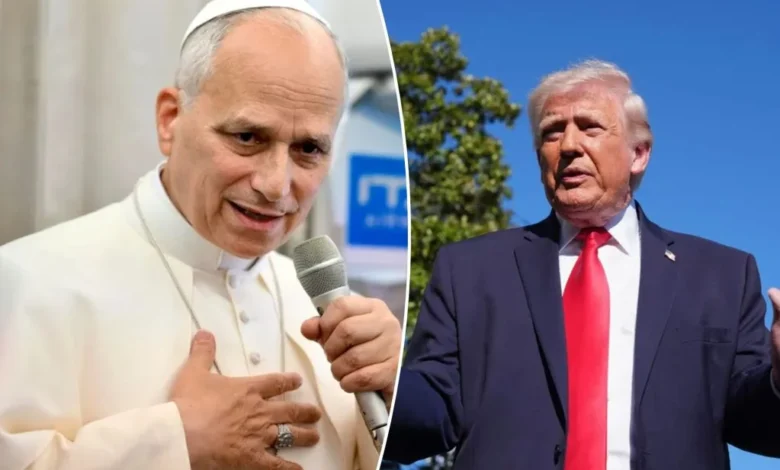
The geopolitical landscape witnessed an extraordinary escalation of tensions on Sunday as President Donald Trump launched a scathing critique against Pope Leo XIV, assailing the pontiff’s stances on international policy, crime, and even questioning the circumstances of his election. The unprecedented public rebuke came in a series of direct remarks, first via a post on his Truth Social platform, and later reiterated to reporters at Joint Base Andrews following his return from Florida. The President’s comments underscore a growing chasm between the White House and the Vatican, particularly concerning the ongoing war in Iran and a controversial military operation in Venezuela.
Chronology of a Papal-Presidential Clash
The latest volley in this high-stakes diplomatic and religious dispute began on Saturday, April 11, 2026, when Pope Leo XIV delivered a powerful homily at the Vatican. During the prayer service, the pontiff explicitly spoke out against the burgeoning conflict in Iran, using stark language to condemn what he termed "the demonic cycle of evil." In a subsequent post on X (formerly Twitter) that same day, Pope Leo elaborated on his vision for a "Kingdom of God," a realm "in which there is no sword, no drone, no vengeance, no trivialization of evil, no unjust profit, but only dignity, understanding and forgiveness." This clear reference to modern military technology, particularly drones, was widely interpreted as a direct criticism of the U.S. military’s involvement in Iran.
President Trump’s response materialized on Sunday, April 13, 2026. His initial salvo came in a lengthy Truth Social post, where he declared, "Pope Leo is WEAK on Crime, and terrible for Foreign Policy." He further accused the Pope of focusing on "fear" of the Trump Administration while ignoring the "FEAR that the Catholic Church, and all other Christian Organizations, had during COVID when they were arresting priests, ministers, and everybody else, for holding Church Services, even when going outside, and being ten and even twenty feet apart." The President controversially added a personal dimension, stating, "I like his brother Louis much better than I like him, because Louis is all MAGA. He gets it, and Leo doesn’t!"
Hours later, upon his arrival at Joint Base Andrews, after a flight from Florida, President Trump reiterated and expanded upon his criticisms to a waiting pool of reporters. The consistent nature and tone of his remarks across both platforms signaled a deliberate and calculated effort to challenge the pontiff’s authority and moral standing on issues central to the Trump administration’s agenda.
President Trump’s Core Grievances
President Trump’s criticisms of Pope Leo XIV were multifaceted, touching upon domestic policy, international relations, and even the internal workings of the Catholic Church.
- "Weak on Crime": A cornerstone of Trump’s domestic platform, the "law and order" mantra, was invoked directly against the Pope. While the pontiff’s statements typically focus on social justice, compassion, and the root causes of crime, Trump interpreted these as a lack of resolve against criminal elements. This aligns with the President’s broader narrative that liberal policies foster an environment conducive to rising crime rates in American cities, a claim often met with statistical debate among criminologists and urban planners.
- Foreign Policy and Iran’s Nuclear Ambitions: Trump unequivocally stated, "I don’t want a Pope who thinks it’s OK for Iran to have a Nuclear Weapon." This position reflects the Trump administration’s hardline stance against Iranian nuclear proliferation, contrasting sharply with the Pope’s calls for diplomatic solutions and de-escalation in the region. The President’s assertion suggests that the Pope’s peace advocacy could inadvertently embolden adversaries seeking weapons of mass destruction, a view strongly supported by many hawkish foreign policy strategists in Washington.
- Venezuela Intervention: Another significant point of contention was the U.S. military operation to remove former Venezuelan dictator Nicolas Maduro. Trump defended the intervention, arguing, "I don’t want a Pope who thinks it’s terrible that America attacked Venezuela, a Country that was sending massive amounts of Drugs into the United States and, even worse, emptying their prisons, including murderers, drug dealers, and killers, into our Country." The Venezuelan intervention, which occurred several months prior, had been met with mixed international reactions, with some nations condemning it as a violation of sovereignty and others supporting the U.S. efforts to restore democracy and counter illicit activities. Pope Leo XIV, in line with traditional Vatican diplomacy, had previously expressed concern over the use of force and the humanitarian consequences for the Venezuelan populace.
- COVID-19 Restrictions and Religious Freedom: President Trump revived a contentious issue from the COVID-19 pandemic, criticizing Pope Leo for not addressing the "FEAR that the Catholic Church, and all other Christian Organizations, had during COVID when they were arresting priests, ministers, and everybody else, for holding Church Services." This refers to the early days of the pandemic when many governments, including in the United States, imposed strict lockdowns and restrictions on public gatherings, including religious services, to curb the spread of the virus. Conservative and religious freedom advocates often viewed these measures as an overreach of governmental power and an infringement on fundamental rights. Trump’s remarks suggest a belief that the Pope should have been a more vocal champion against such restrictions.
- Papal Election and Political Motivations: In a truly extraordinary claim, President Trump asserted that Pope Leo XIV, formerly Cardinal Robert Francis Prevost, was elected pontiff not on merit alone, but due to political considerations related to his own presidency. "He wasn’t on any list to be Pope, and was only put there by the Church because he was an American, and they thought that would be the best way to deal with President Donald J. Trump. If I wasn’t in the White House, Leo wouldn’t be in the Vatican." This highly speculative claim, implying a political manipulation of the papal election process, is unprecedented in modern U.S.-Vatican relations and has been widely dismissed by Vatican observers as lacking any factual basis.
- Meeting with David Axelrod: Trump also took issue with Pope Leo’s meeting with David Axelrod, a prominent Democratic strategist and former senior advisor to President Barack Obama. Trump labeled Axelrod a "LOSER from the Left, who is one of those who wanted churchgoers and clerics to be arrested." This criticism underscores Trump’s partisan view of the pontiff’s engagements, suggesting that any interaction with figures associated with the political left is inherently problematic.
Pope Leo XIV’s Vision for Peace
Pope Leo XIV’s recent remarks, which sparked the President’s ire, are consistent with the long-standing tradition of papal calls for peace, dialogue, and humanitarian concern in global conflicts. His condemnation of "the demonic cycle of evil" and envisioning a "Kingdom in which there is no sword, no drone, no vengeance," reflects the Catholic Church’s consistent opposition to war as a primary instrument of policy, advocating instead for diplomatic solutions and the protection of innocent lives.
His X post further elaborated: "Prayer teaches us how to act. In prayer, our limited human possibilities are joined to the infinite possibilities of God. Thoughts, words and deeds then break the demonic cycle of evil and are placed at the service of the Kingdom of God. A Kingdom in which there is no sword, no drone, no vengeance, no trivialization of evil, no unjust profit, but only dignity, understanding and forgiveness." This theological framework emphasizes moral imperatives over geopolitical expediency, often placing the Vatican at odds with the realpolitik of global powers.
Historical Context and Diplomatic Precedents
Direct public criticism of a sitting Pope by a U.S. President is rare, though not entirely without precedent in its broader sense of political leaders clashing with religious figures. Historically, relations between the U.S. and the Holy See have often navigated complex political landscapes, with Popes frequently commenting on global issues that intersect with U.S. foreign policy. For instance, Popes during the Cold War often spoke out against nuclear proliferation, sometimes implicitly challenging the policies of both superpowers. Pope John Paul II’s role in the fall of communism in Eastern Europe, while not a direct criticism of a U.S. president, showcased the potent influence of the papacy on global affairs.
However, the direct, personal, and highly partisan nature of President Trump’s remarks against Pope Leo XIV marks a significant departure from typical diplomatic decorum. U.S. presidents have traditionally maintained a respectful distance, even when disagreeing with papal pronouncements, acknowledging the Pope’s status as a global religious leader with moral authority for over a billion Catholics worldwide. The inclusion of personal attacks, questioning the Pope’s character ("liberal person") and even the legitimacy of his election, introduces a level of animosity rarely seen.
Reactions and Implications
The immediate aftermath of President Trump’s statements saw a flurry of reactions, both domestically and internationally.
- Vatican Response: As of Monday morning, Vatican officials maintained a measured silence. A spokesperson for the Holy See declined to comment directly on President Trump’s remarks, stating only that "the Holy Father’s message of peace and human dignity is clear and consistent for all to hear." This cautious approach is typical of Vatican diplomacy, which often prefers to respond through official channels or carefully worded statements rather than engaging in public tit-for-tat exchanges.
- Political Analysts: Political commentators across the spectrum immediately highlighted the unprecedented nature of the President’s critique. Dr. Evelyn Reed, a professor of international relations at Georgetown University, noted, "This is not merely a policy disagreement; it’s a fundamental challenge to the moral authority of one of the world’s most influential religious leaders. The President’s assertion that the Pope was elected to ‘deal with Trump’ is particularly destabilizing, casting a shadow of political opportunism over the spiritual process of papal election." Others suggested the remarks were aimed at energizing Trump’s conservative base, which often views the Catholic Church’s social justice leanings with suspicion, and reinforcing his image as an unconventional leader willing to challenge any institution.
- Religious Leaders: While official statements from major U.S. Catholic organizations were pending, informal reactions from clergy and theologians indicated discomfort. Many expressed concern over the politicization of the papacy and the potential for increased division among American Catholics. Some evangelical leaders, however, offered tacit support for Trump’s stance on issues like religious freedom during COVID-19, highlighting a broader ecumenical divide.
- David Axelrod’s Stance: While David Axelrod himself had not yet publicly responded to being labeled a "LOSER from the Left" by President Trump, sources close to the former Obama advisor indicated that he views the President’s comments as an attempt to distract from policy failures and would likely reiterate his long-held positions on civil liberties and the importance of open dialogue, even with religious leaders.
- Public Opinion: Early, albeit unofficial, public opinion indicators suggested a polarized reaction within the United States. Initial social media trends showed strong support for Trump among his ardent followers, who lauded his directness and perceived defense of American interests. Conversely, many moderate and religiously observant Americans, including a significant portion of the Catholic population, expressed dismay and concern over the disrespectful tone directed at the pontiff. Preliminary polling data from various media outlets indicated a slight dip in Trump’s approval among Catholic voters, a demographic he has historically courted, though more comprehensive surveys would be needed to confirm a sustained shift.
Broader Impact and Future Implications
The fallout from President Trump’s sharp rebuke of Pope Leo XIV is likely to have significant and far-reaching implications. Diplomatically, it could strain relations between the U.S. and the Holy See, potentially complicating future cooperative efforts on humanitarian aid, peace initiatives, and interfaith dialogue. The Vatican, a unique global actor, often plays a crucial role as a moral voice and a mediator in international conflicts, a role that could be undermined by such public antagonism.
Domestically, the controversy risks deepening political and religious divides within the United States. By attacking the Pope, President Trump has implicitly challenged a fundamental institution for millions of American citizens, potentially alienating a segment of the electorate. It also reignites debates about the role of religious leaders in political discourse and the separation of church and state, particularly concerning issues of war and peace, and social justice.
Furthermore, the President’s unprecedented claim regarding the Pope’s election could set a dangerous precedent, inviting further speculation and undermining the credibility of revered institutions. As the world navigates complex geopolitical challenges, the ongoing tension between these two powerful figures — one a secular head of state, the other a spiritual leader of global consequence — will undoubtedly remain a focal point of international attention. The coming days and weeks will reveal whether this extraordinary clash represents a temporary diplomatic spat or signals a more profound and enduring rupture in U.S.-Vatican relations.