The landscape of reality television has long been dominated by surgically enhanced influencers, aspiring pop stars, and seasoned veterans of the franchise circuit. However, the latest iteration of Peacock’s breakout hit reality competition series, The Traitors: New Blood, introduced an entirely different archetype to the Scottish Highlands: the everyday civilian. Among the roster of ordinary citizens airdropped into a centuries-old Scottish castle to play a high-stakes game of deception under the watchful, feather-clad gaze of host Alan Cumming, one contestant quickly eclipsed his peers. Joseph Vanella, a 44-year-old Long Island funeral director, emerged not merely as a central player in the game, but as an unlikely pop culture phenomenon, inspiring viral internet memes, Halloween costumes, and widespread audience fascination.
Vanella’s journey from a regional funeral home to international television screens represents an anomalous trajectory in contemporary media. Unlike many of his costars, Vanella entered the production without prior social media followings, public relations representation, or ambitions for long-term celebrity. His ascent offers a compelling case study in how authenticity—coupled with unexpected strategic aptitude and a distinct regional persona—can captivate modern audiences saturated by hyper-curated digital identities.
The Path to the Scottish Highlands
The genesis of Vanella’s television career stems from routine domestic viewing habits. Alongside his wife, Meg, Vanella became an ardent consumer of Peacock’s The Traitors following its inaugural season. What began as a nightly ritual involving post-put-to-bed television viewing and local ice cream eventually intersected with the production’s casting strategy. Following the conclusion of the fourth season, producers announced an open casting call inviting everyday individuals to compete alongside or in place of traditional public figures.
Encouraged by his sister-in-law, Erin, and motivated by a self-deprecating assessment of his own athletic conditioning—jokingly noting that the psychological nature of the show offered a reprieve from the physical prowess required by other formats—Vanella submitted an audition tape. Within weeks, the funeral director found himself boarding a transatlantic flight to Scotland.
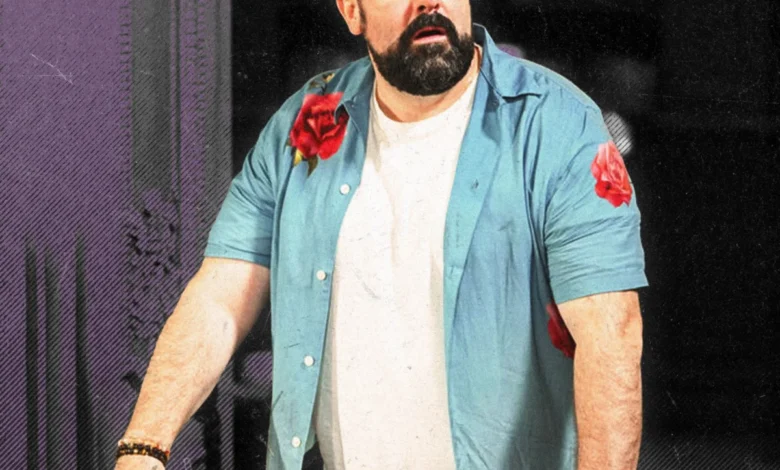
Dressed in his characteristic wardrobe of Hawaiian shirts, Hanes t-shirts, and American Eagle denim—a stark contrast to the designer labels often favored by returning reality veterans—Vanella integrated into the castle dynamic as a designated "Traitor." Tasked with covertly "murdering" his fellow civilians while feigning innocence, Vanella balanced tactical deception with a jovial, approachable demeanor that disarmed both his castmates and the viewing public.

Memeification and Cultural Resonance
As the season progressed, Vanella’s presence transcended standard television viewership, cementing his status as a dominant fixture in digital meme culture. His journey was punctuated by several viral milestones, beginning with a direct-to-camera wink in the series premiere and culminating in what fans and commentators dubbed "Fruitgate."
As a Traitor, Vanella was tasked with executing a covert elimination by tossing an apple to a fellow contestant—a tactic that ultimately drew the suspicion of analytical player Victor. The resulting interrogation forced Vanella to repeatedly invoke the nutritional necessity of "roughage" to explain his sudden preoccupation with fruit consumption. The surreal juxtaposition of high-stakes psychological warfare and a grown man defending his apple intake resonated with viewers on platforms like X (formerly Twitter) and TikTok.
Beyond the digital sphere, Vanella’s cultural footprint expanded into physical spaces. During the Halloween season preceding the finale, multiple fans shared images of themselves dressed in Vanella’s signature aesthetic. For Vanella, who maintained his day job overseeing funeral services throughout the broadcast schedule, the transition from obscurity to public recognition proved surreal. He reported instances of mourners recognizing him outside funeral homes, briefly setting aside their grief to request photographs with the reality star before entering funeral limousines.
Demographic Representation and Regional Pride
A significant element of Vanella’s narrative arc involved his role as an unvarnished representative of Long Island culture. Sporting a thick regional accent, a penchant for local sports franchises, and a transparent pride in his roots, Vanella consciously sought to counter the prevailing media stereotypes depicting suburban New Yorkers as abrasive or unrefined.
This cultural positioning intersected with emotional narrative beats within the castle. Notably, Vanella formed a close alliance with a contestant named Michael, a gay man who later shared that growing up around men matching Vanella’s demographic profile had frequently left him feeling unsupported and alienated during his youth. Vanella’s unwavering support for Michael at the round table—driven purely by personal loyalty rather than game strategy—yielded one of the season’s most critically acclaimed emotional moments. The authenticity of the interaction resonated deeply with audiences, earning Vanella praise from viewers who appreciated the genuine empathy displayed amid an environment engineered for deceit.

Analysis of the Everyday Star Phenomenon
The breakout success of contestants like Vanella highlights a shifting viewer appetite within the reality television ecosystem. As audiences increasingly experience fatigue with pre-packaged influencers and strategic contestants transparently playing for camera time, individuals who retain their pre-existing identities generate higher levels of viewer trust.
Industry analysts note that civilian casting formats provide a vital bridge between elite entertainment productions and the demographic majority of viewers. By casting individuals rooted in traditional, blue-collar, or localized professions—such as funeral direction—networks tap into a reservoir of relatability that polished public figures struggle to replicate. Vanella’s ability to navigate the complex social dynamics of a televised social experiment without compromising his core persona underscores the enduring market value of genuine character over calculated branding.
Conclusion and Future Outlook
Despite his strategic maneuvers and eventual cornering by analytical adversaries within the castle walls, Vanella’s legacy on The Traitors: New Blood remains secure. He successfully completed his tenure without courting controversy, preserving his reputation both within the industry and among his local community in Long Island.
Reflecting on his brief yet impactful tenure in the public eye, Vanella maintains a pragmatic perspective, returning immediately to his family commitments, his professional responsibilities as a funeral director, and local fantasy sports leagues. Whether the entertainment industry attempts to capitalize further on his accidental stardom remains to be seen, but for Vanella, the primary victory lies in having temporarily stepped inside his favorite television show—and leaving behind a cultural footprint that few career influencers manage to achieve.