Samsung Odyssey OLED G8 32-inch gaming monitor hits record-low price of 999.99 dollars

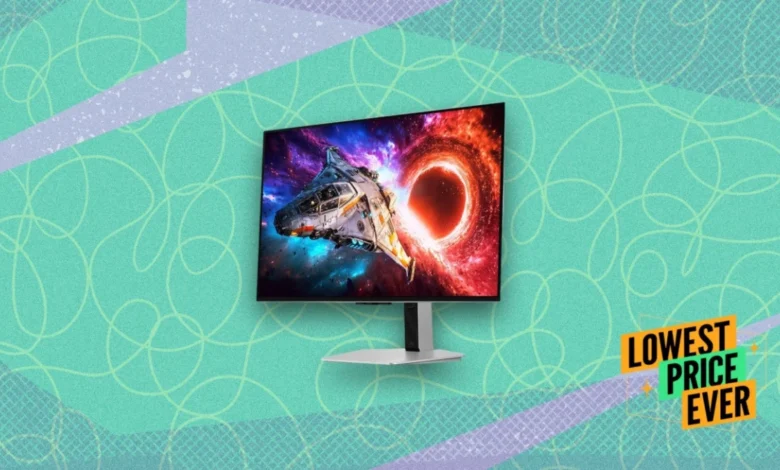
The high-end display market witnessed a significant price adjustment this week as Amazon announced a substantial discount on the Samsung Odyssey OLED G8 (G80SH), bringing the premium 32-inch monitor down to $999.99. This $300 reduction from its standard retail price of $1,299.99 marks the lowest point for the display since its release, positioning it as a highly competitive option for professional gamers, content creators, and enthusiasts seeking a high-fidelity visual experience.
Understanding the Hardware Context
The Samsung Odyssey OLED G8 (G80SH) represents a pivot toward a more versatile form factor in the high-refresh-rate monitor space. Unlike the company’s previous iterations, such as the G80HS—a 6K resolution IPS panel intended for creative professional use—the G80SH is purpose-built for the intersection of high-end gaming and standard desktop productivity.
The monitor features a 32-inch 4K QD-OLED (Quantum Dot OLED) panel. QD-OLED technology is widely considered the industry standard for color accuracy and contrast ratios, as each pixel serves as its own light source, allowing for "perfect" blacks and infinite contrast. This specific model boasts a 240Hz refresh rate, a specification that has recently become the benchmark for competitive gaming monitors. By combining 4K resolution with such a high refresh rate, the G80SH addresses a long-standing compromise where users previously had to choose between visual fidelity (4K) or motion clarity (high refresh rates).
Chronology of the Display Market
The trajectory of the gaming monitor market over the last three years has been defined by the rapid adoption of OLED technology. Throughout 2024 and 2025, manufacturers struggled to balance the high manufacturing costs of OLED panels with consumer demand for larger, high-resolution screens.
When the G80SH was initially introduced to the market, it carried a premium price tag that reflected both its cutting-edge panel technology and the inclusion of advanced connectivity standards like DisplayPort 2.1. Throughout the first three quarters of 2026, the price remained relatively stagnant, fluctuating only during major retail holidays. This October 2026 discount suggests that supply chain efficiencies and increased production yields of 32-inch 4K panels have finally allowed for more aggressive consumer pricing. Industry analysts have noted that as 4K 240Hz monitors become more common, price competition among major manufacturers—including Samsung, LG, and Alienware—is expected to intensify through the end of the year.
Technical Specifications and Connectivity
The G80SH is designed to future-proof the user’s workstation. A primary selling point of this unit is its robust connectivity suite. The inclusion of DisplayPort 2.1 is particularly notable; this standard provides the massive bandwidth required to push 4K images at 240Hz without the heavy compression often required by older standards like DisplayPort 1.4 or even early implementations of HDMI 2.1.
Furthermore, the monitor features USB-C connectivity with 98W power delivery. This is a crucial feature for hybrid workers who utilize a laptop as their primary computing device. By using a single cable, a user can output high-resolution video to the monitor while simultaneously charging the laptop, effectively decluttering a desk environment. For gamers, the inclusion of FreeSync Premium Pro and G-SYNC compatibility ensures that the monitor communicates seamlessly with both AMD and NVIDIA graphics cards, mitigating screen tearing and stuttering during high-intensity gaming sessions.

Managing OLED Performance Characteristics
While the current price drop makes the monitor more accessible, potential buyers are encouraged to consider the inherent characteristics of QD-OLED technology. Unlike traditional LCD or IPS monitors, OLED panels are susceptible to burn-in—the permanent retention of static images—if left on screen for extended periods.
Samsung has addressed this through a multi-layered approach to longevity. The G80SH utilizes an active cooling system designed to manage heat, which is the primary catalyst for pixel degradation. Additionally, the monitor includes built-in software protections, such as pixel shifting and automatic brightness limiting (ABL), which monitor static elements and adjust luminance accordingly. Samsung’s warranty coverage for burn-in under normal usage conditions provides a safety net for early adopters, though users are still advised to employ standard screen-protection habits, such as hiding the taskbar and using dynamic wallpapers.
Another phenomenon users may encounter is the “purplish tint” often observed on QD-OLED screens in brightly lit rooms. Because the panel lacks an external polarizer to keep the room’s ambient light from reflecting off the sub-pixels, the blacks can appear slightly washed out or tinted when light hits the screen directly. For the best experience, the G80SH is best suited for environments where lighting can be controlled, such as home offices or dedicated gaming rooms.
Implications for the Competitive Gaming Sector
The reduction in price to just under $1,000 serves as a signal that high-end gaming hardware is becoming more accessible to a broader demographic of enthusiasts. Historically, a monitor with these specifications would have cost upwards of $1,500. This price point puts significant pressure on competitors offering 1440p OLEDs, as consumers may now be more inclined to invest in a 4K display for a relatively small price difference.
For the competitive gaming sector, the 240Hz threshold is significant. Professional players and streamers rely on low input lag and high frame rates to maintain a competitive edge. By offering this at a 32-inch screen size, Samsung is targeting a "sweet spot" that is large enough for immersive cinematic gaming but small enough to remain pixel-dense and sharp for text-heavy work tasks.
Market Outlook and Consumer Advice
As we approach the final months of 2026, the retail environment for tech hardware is expected to remain volatile. While this $999.99 price point is a record low, shoppers should monitor price-tracking tools to determine if further reductions might occur during late-year sales events like Black Friday or Cyber Monday.
However, given the current stock levels and the popularity of the G80SH, it is equally possible that retailers will maintain this price point to clear inventory for early 2027 product refreshes. For those currently utilizing aging 1080p or 1440p displays, the upgrade to a 4K OLED represents one of the most significant visual improvements a user can make to their computing experience.
The Samsung Odyssey OLED G8 remains a highly specialized tool. Those who do not play at high frame rates or do not engage in color-critical work may find that a high-quality IPS panel provides better value. Conversely, for the user who possesses the high-end graphics hardware—such as an RTX 40-series or 50-series card—to drive 4K at high refresh rates, this monitor is currently one of the most compelling options on the market. By integrating advanced connectivity, industry-leading contrast, and a modern refresh rate, the G80SH effectively bridges the gap between a high-performance gaming rig and a professional-grade workstation.