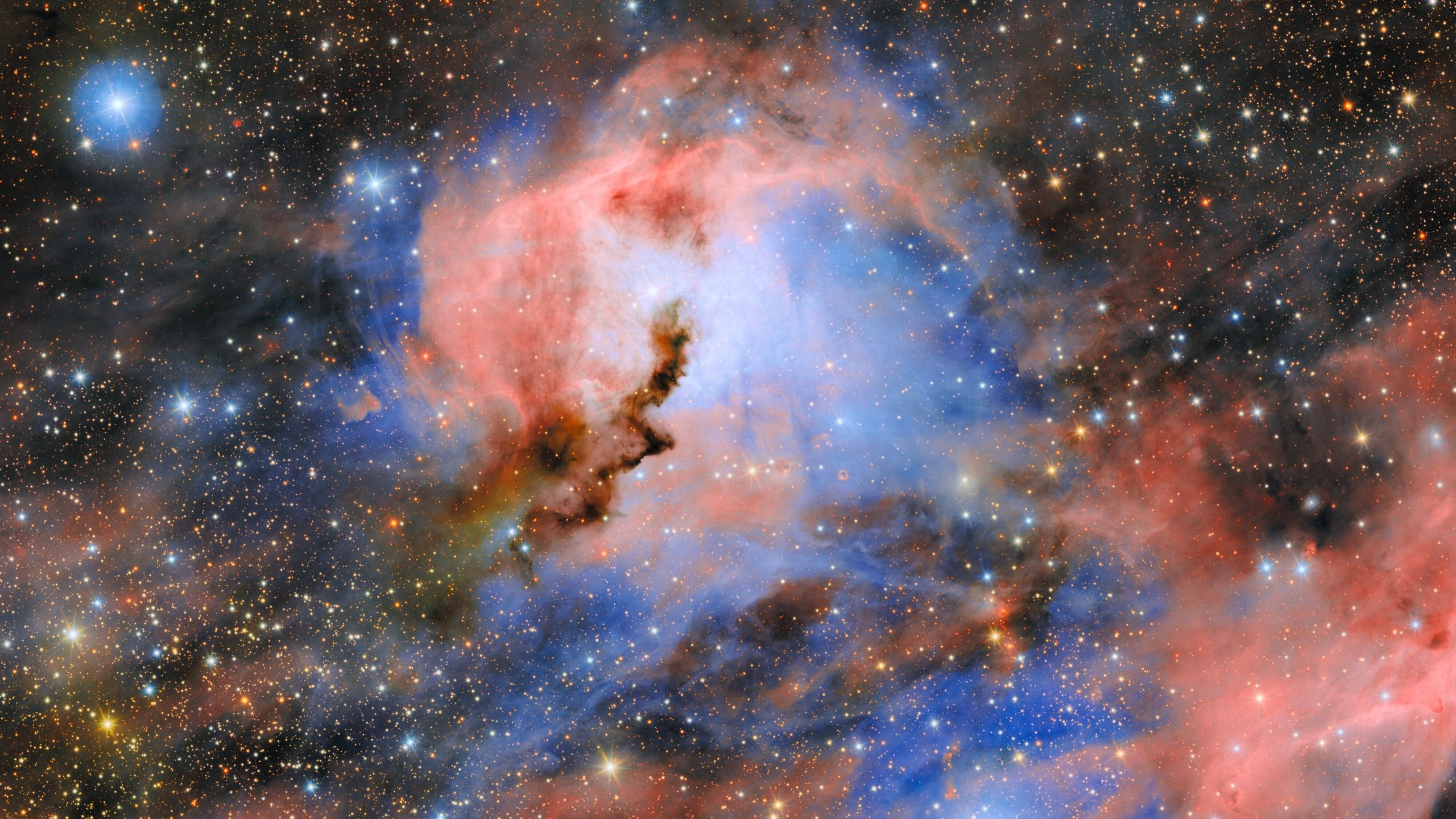
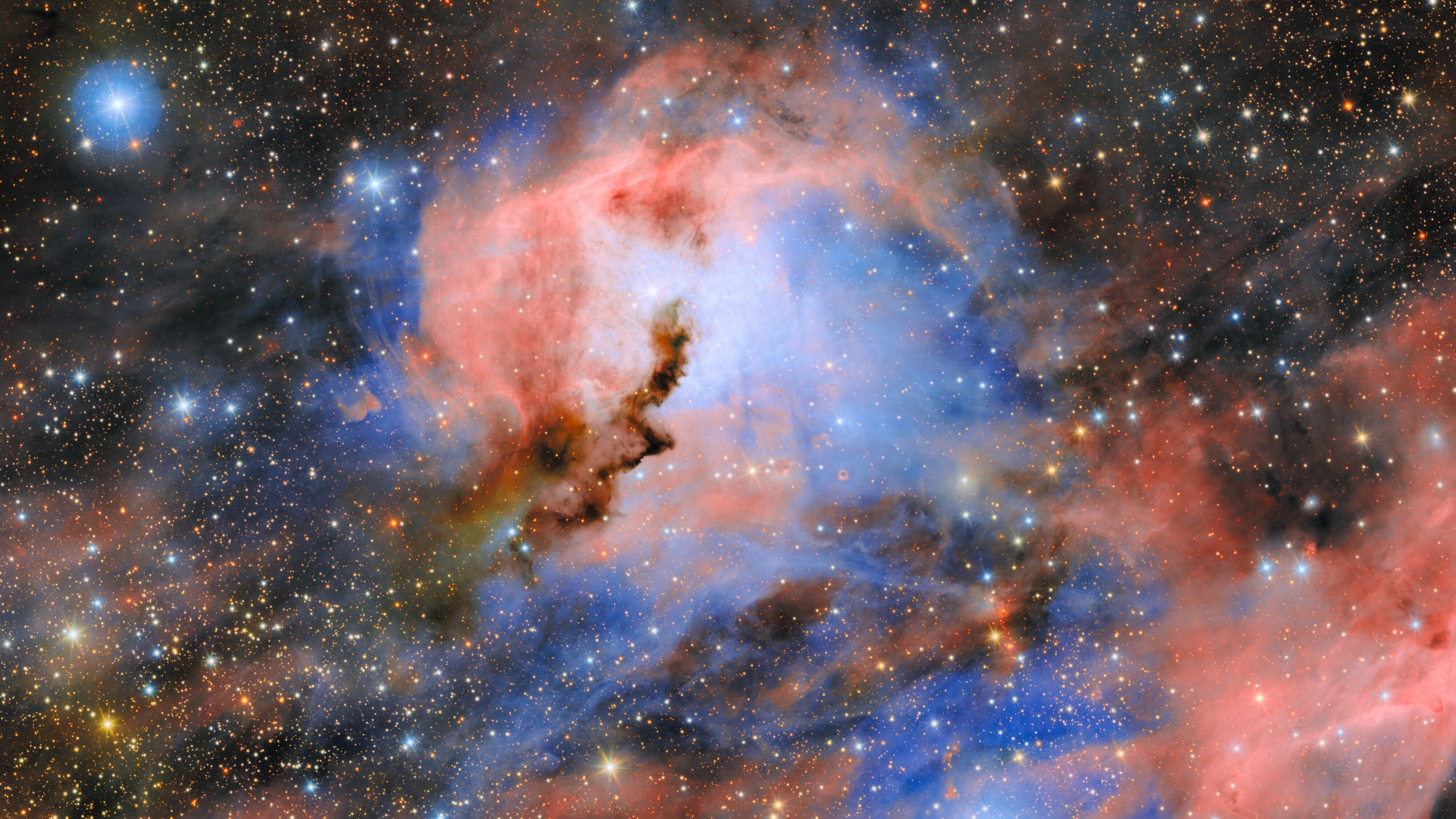
The Blue Eye of the Seagull Nebula Shines in this Vera C. Rubin Observatory Test Image

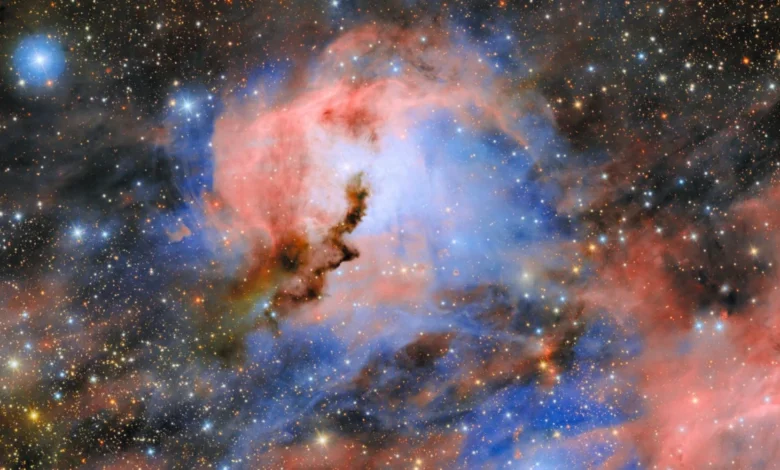
The Vera C. Rubin Observatory has provided a striking glimpse into the celestial depths with a newly released test image capturing the "head" of the Seagull Nebula, formally cataloged as IC 2177. This high-resolution capture, released on October 22, 2026, represents a significant milestone in the calibration phase of one of the most ambitious astronomical projects in history. While the image serves as a technical validation of the observatory’s early instrumentation, it also offers a vivid look at the complex stellar nurseries located approximately 3,700 light-years from Earth, situated along the border of the Monoceros and Canis Major constellations.
A Milestone in Astronomical Engineering
The Vera C. Rubin Observatory, located on the Cerro Pachón ridge in north-central Chile, is designed to conduct the Legacy Survey of Space and Time (LSST). This ten-year project aims to map the entire visible southern sky every few nights, providing an unprecedented "movie" of the changing universe. The recent image of the Seagull Nebula was produced during the observatory’s commissioning phase—a critical period where engineers and astronomers calibrate the massive 8.4-meter Simonyi Survey Telescope and its accompanying 3,200-megapixel camera.
The image showcases the intricate gas and dust structures that define the Seagull Nebula. Specifically, it highlights the region often referred to as the nebula’s "eye," a dense, luminous pocket of interstellar material where star formation is actively occurring. For the scientific community, this image is more than a photograph; it is a diagnostic tool used to assess the optical performance, focus, and alignment of the telescope’s complex mirror system.
Technical Evolution: Scaling Up the Field of View
A notable detail regarding this test image is that it was captured using an earlier configuration of the observatory’s imaging hardware. Since the capture of this specific frame, the Rubin Observatory team has transitioned to a more advanced camera array. The current configuration boasts a field of view 20 times larger than that used during the initial test runs.
This increase in capacity is fundamental to the observatory’s primary objective: the LSST. By capturing massive swaths of the night sky in a single exposure, the Rubin Observatory will be able to detect transient events—such as supernovae, near-Earth asteroids, and variable stars—with a frequency and depth that current terrestrial observatories cannot match. The shift from the test hardware to the operational camera marks the transition from "first light" validation to active data collection.
Contextualizing the Seagull Nebula (IC 2177)
IC 2177, colloquially known as the Seagull Nebula, is a vast region of ionized gas and dust spanning roughly 100 light-years in diameter. It is classified as an H II region, meaning it is a massive cloud of partially ionized gas where star formation is prevalent. The "blue eye" visible in the Rubin Observatory’s test image is a localized pocket of intense activity, fueled by the radiation of nearby massive, young stars.
The nebula’s unique morphology, which resembles a bird in flight when viewed from a wider perspective, has long made it a favorite subject for amateur and professional astronomers alike. Its distance of 3,700 light-years places it within the Milky Way’s Orion-Cygnus Arm, the same galactic spiral arm that contains our own solar system. Studying IC 2177 provides researchers with valuable data regarding the lifecycle of stars and the chemical enrichment of the interstellar medium, as the radiation from young, hot stars eventually disperses the surrounding gas clouds.
The Role of the NSF and DOE
The Vera C. Rubin Observatory is a joint initiative primarily funded by the National Science Foundation (NSF) and the U.S. Department of Energy (DOE). The project represents a monumental feat of international cooperation, involving AURA (Association of Universities for Research in Astronomy) and NOIRLab.
The involvement of the DOE is particularly significant, as the observatory’s camera was developed at the SLAC National Accelerator Laboratory. The camera itself is the largest digital camera ever constructed for ground-based astronomy. Its ability to capture light across a wide spectrum with high sensitivity is intended to help researchers address some of the most pressing questions in physics, including the nature of dark matter and dark energy. The release of the Seagull Nebula test image serves as a public demonstration of the successful integration between the telescope’s optics and the digital sensor technology developed by the DOE.
Implications for the Legacy Survey of Space and Time
The broader implications of these test images extend far beyond the beauty of the nebula itself. As the Rubin Observatory prepares for its full-scale operational survey, the data gathered during the commissioning phase will form the baseline for the most comprehensive catalog of the southern sky in human history.
The observatory is expected to:
- Catalog billions of objects: The survey will track roughly 20 billion galaxies and 17 billion stars, creating a vast, searchable database for the global scientific community.
- Monitor transient phenomena: By imaging the same areas of the sky repeatedly, the observatory will detect moving or changing objects, facilitating the study of potentially hazardous asteroids and high-energy cosmic events.
- Map dark matter: By observing how light from distant galaxies is distorted by the gravity of massive structures—a process known as gravitational lensing—the observatory will provide clues to the distribution of dark matter across the cosmos.
Challenges and Future Expectations
While the recent images are a cause for celebration, the team at the Rubin Observatory continues to face the logistical challenges of operating in a remote, high-altitude environment. Maintenance of the telescope’s mirrors, the cooling systems for the massive digital camera, and the management of the petabytes of data that will be generated daily remain the primary focus of the engineering staff.
Furthermore, the scientific community is eagerly anticipating the "Data Release 1" (DR1), which will be the first public output of the actual survey data. Until then, test images like the Seagull Nebula offer a vital look at the observatory’s progress. These images validate the rigorous calibration processes required to ensure that the telescope’s output is scientifically accurate and free of noise or distortions.
Conclusion
The release of the Seagull Nebula image serves as a testament to the decades of planning and construction that have culminated in the Vera C. Rubin Observatory. As the facility moves toward full operational status, the scientific world stands on the precipice of a new era in observational astronomy. The ability to capture such high-fidelity detail in a test run is a promising indicator of the discoveries to come.
Whether it is identifying new near-Earth objects or mapping the expansion history of the universe, the Rubin Observatory is poised to fundamentally reshape our understanding of the cosmos. The "blue eye" of the Seagull Nebula is, in effect, the first of many such windows that will soon be opened to the mysteries of the deep sky, providing a clearer, sharper, and more dynamic view of our universe than ever before. As the observatory continues its mission, the data provided by its 3,200-megapixel eye will undoubtedly serve as the cornerstone of astrophysical research for the next generation of scientists.
Related posts: