New International Research Challenges Decades of Assumptions Regarding Mammography Overdiagnosis and Points to Risk Below Five Percent

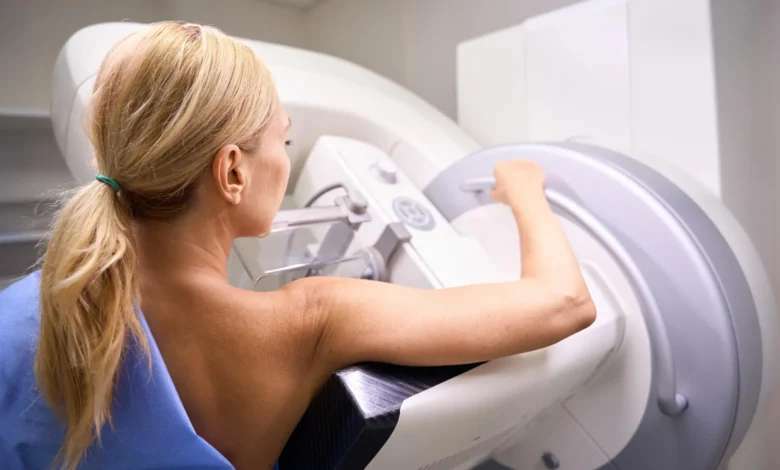
For decades, the global medical community has grappled with a complex paradox at the heart of preventative medicine: the very tools designed to save lives can sometimes detect abnormalities that pose no actual threat to a patient’s well-being. This phenomenon, known as medical overdiagnosis, has long been cited as a primary drawback of population-based breast cancer screening programs. When a mammogram identifies a slow-growing lesion or a non-invasive cellular anomaly that would never have progressed to cause symptoms, clinical distress, or mortality during a patient’s lifetime, the individual may be subjected to unnecessary treatments such as surgery, radiation, or pharmaceutical interventions.
Historically, highly influential randomized controlled trials estimated that the rate of breast cancer overdiagnosis could range anywhere from 30% to a staggering 50%. These figures have heavily factored into international health policy debates, clinical guidelines, and the personalized counseling provided to women weighing the risks and benefits of routine mammography. However, a major new comprehensive reanalysis of historical trial data, conducted by an international team of researchers from Denmark, the United Kingdom, and other institutions, suggests that these alarming estimates may be deeply flawed. By accounting for long-term temporal dynamics, changes in screening exposure, and follow-up maturation, the new study concludes that the true rate of breast cancer overdiagnosis in structured screening programs is likely below 5%.
The findings, which harmonize historical randomized trial data with real-world registry evidence from Denmark, promise to reshape public health messaging and offer renewed reassurance to millions of women navigating decisions regarding routine cancer screenings.
Reevaluating the Historical Evidence on Mammography
To understand why previous estimates varied so wildly, the research team looked back at the foundational building blocks of modern screening policy. For over forty years, randomized controlled trials have served as the gold standard for measuring the efficacy and potential harms of mammography. Landmark studies such as the New York Health Insurance Plan trial, the Swedish Malmö and Two-County trials, the Edinburgh trial, the Canadian National Breast Screening Study, the Stockholm and Gothenburg trials, and the UK Age trial formed the empirical backbone of global screening recommendations.
However, interpreting the data from these monumental trials has always been fraught with methodological challenges. When a population-based screening program is first introduced, a predictable statistical wave occurs: the number of diagnosed breast cancer cases spikes dramatically. This surge happens simply because cancers are being detected years before they would have presented clinically through symptoms like palpable lumps.
Ideally, this initial surge should be followed by a distinct compensatory drop in diagnoses later on, as the pool of hidden, pre-clinical cancers is cleared out. If a research study is terminated too early—before this long-term deficit has time to materialize—researchers can easily mistake the initial surge of early-detected cases for permanent overdiagnosis. Furthermore, many historical trials suffered from contamination, where women assigned to the control groups eventually sought out mammography on their own, further muddying the statistical waters.
"When screening is introduced, the number of breast cancer diagnoses initially rises because cancers are detected earlier than they would have been without screening," explains Elsebeth Lynge, professor emerita at the Department of Public Health at the University of Copenhagen. "Over time, this should be followed by a drop, as some of these cancers would otherwise have been diagnosed later. This pattern can also be affected if women in either group continue to undergo screening after the trials had ended, which was common. If researchers do not take these factors into account, the initial increase can be mistaken for overdiagnosis."
The Danish Real-World Reference Model
To cut through these historical distortions, the research team utilized Denmark as a robust real-world epidemiological reference laboratory. Denmark offered a unique natural experiment because organized, population-based breast cancer screening was rolled out regionally at staggered intervals, with some areas initiating programs up to 17 years earlier than others.
This staggered implementation allowed epidemiologists to track how breast cancer incidence rates shifted immediately following the introduction of screening, and crucially, how those trends evolved over decades of continuous follow-up. By comparing these longitudinal patterns against the trajectories recorded in the original randomized controlled trials at matching chronological points, the researchers could test whether the historical trials reflected true overdiagnosis or merely immature data capture.
The results of this comparative analysis were striking. The additional breast cancer cases detected in the historical randomized trials closely mirrored the long-term patterns observed in Denmark’s contemporary registry data, where the rate of screening-associated overdiagnosis is calculated to be firmly below 5%.
"Taken together, we believe some previous high estimates of overdiagnosis, which influenced screening guidelines and communication, were based on evidence before trial data had fully matured," notes Matejka Rebolj, Senior Epidemiologist at Queen Mary University of London, whose work on the project was supported by Cancer Research UK. "When interpreted in their full temporal context, randomized trial data are consistent with overdiagnosis of less than five percent, rather than with estimates nearing 50%."
Sisse Helle Njor, a professor at the University of Southern Denmark and Lillebælt Hospital who led the investigative effort, emphasizes that the scientific consensus surrounding trial interpretation needed a rigorous update.
"The aim of our study was to bring together the evidence from all randomized controlled trials to get a clearer picture of the extent of overdiagnosis in breast cancer screening," Njor states. "Randomized trials have often been cited as evidence that overdiagnosis is a substantial problem. Our study shows that this interpretation is not as straightforward as it may seem."
Defining Overdiagnosis and Its Clinical Spectrum
To fully appreciate the significance of the new findings, public health officials emphasize the need for precision regarding what constitutes overdiagnosis. Clinically, overdiagnosis refers specifically to the detection of malignant lesions—including invasive breast cancers and ductal carcinoma in situ (DCIS)—that possess such indolent biological characteristics that they would never progress to cause clinical illness, impairment, or death during the patient’s natural lifespan.
A secondary category of overdiagnosis encompasses cases where a woman is diagnosed with a breast cancer that is genuinely progressive, but she unfortunately passes away from an unrelated cause—such as cardiovascular disease, neurodegenerative conditions, or trauma—shortly after the cancer diagnosis. In these scenarios, the presence of the cancer played no role in her mortality, meaning the screening offered no tangible health benefit because her limited life expectancy precluded any practical advantage from early treatment.
Historically, critics of mass screening argued that the anxiety, morbidity, and healthcare costs associated with identifying these harmless or inconsequential anomalies outweighed the benefits of catching aggressive tumors early. The high 30% to 50% estimates fueled intense bioethical debates, leading some health advocacy groups to question whether routine mammography for average-risk women was a net positive for public health. By demonstrating that the true rate is under 5%, the new research fundamentally alters this risk-benefit calculation.
Implications for Clinical Practice and Patient Communication
The ramifications of this study extend far beyond academic journals and epidemiological modeling; they directly impact the daily conversations between clinicians and patients. Deciding whether to undergo regular mammography screening is a personal choice that requires clear, accurate communication of both advantages and potential harms.
When women are informed that up to half of all detected cancers might be harmless overdiagnoses, some understandably choose to forgo screening out of fear of unnecessary medical trauma. The new findings provide a powerful counterweight to that apprehension.
"Most women will not develop breast cancer, but with this study we can now be reassured that the benefits of detecting breast cancer early and preventing premature death will outweigh the small risk of unnecessary treatment," Professor Njor asserts, highlighting the public health reassurance embedded in the data. "With this in mind, we hope this study will provide a framework for a more realistic interpretation of the evidence and help us better inform women when they are invited for screening."
Medical professionals note that early detection remains one of the single most effective defenses against breast cancer mortality. While modern treatments for advanced breast cancer have improved significantly, catching malignant cells before they metastasize dramatically reduces the need for aggressive chemotherapy regimens, extensive surgeries, and long-term palliative care. If the risk of overdiagnosis is indeed constrained to a minor fraction of cases, the rationale for maintaining robust, population-wide screening initiatives becomes considerably stronger.
Methodological Rigor and Financial Support
The scope of the new evaluation reflects an exhaustive re-examination of decades of oncological research. By synthesizing all eight major randomized mammography trials conducted globally—incorporating data from North America, the United Kingdom, and Scandinavia—and cross-referencing them against millions of patient-years of Danish registry data, the research team established a new benchmark for epidemiological synthesis.
The study also accounted for both invasive malignancies and non-invasive conditions like ductal carcinoma in situ (DCIS), an abnormality inside the milk ducts that has frequently been at the center of the overdiagnosis debate due to its unpredictable biological trajectory.
Financial backing for the study was provided by prominent scientific foundations dedicated to advancing cancer research and public health. Casper Urth Pedersen received support from the Novo Nordisk Foundation under reference number NNF22OC0076184, while Matejka Rebolj’s contributions were funded by Cancer Research UK under reference number C8162/A29083. Their collaborative effort demonstrates the vital importance of international partnerships in resolving decades-old medical controversies through modern, methodologically sound re-analyses.
Looking Ahead: The Future of Breast Cancer Screening
As healthcare systems worldwide continuously update their screening guidelines to incorporate the latest technological advancements—such as 3D mammography (tomosynthesis) and artificial intelligence-assisted reading tools—ensuring the accuracy of baseline data is more critical than ever.
Public health agencies and national screening boards are expected to review the findings closely as they draft updated informational brochures and consensus statements for patients. By laying to rest the inflated fears of widespread overdiagnosis, this international study clears the path for a more confident, evidence-based approach to women’s healthcare, ensuring that fear of the screening process itself no longer deters patients from accessing life-saving preventative care.
Related posts: