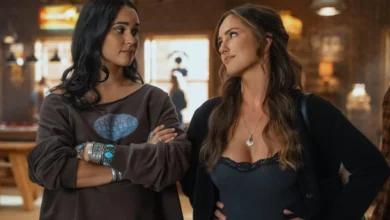
Mikayla Matthews Announces Shock Departure From The Secret Lives Of Mormon Wives Amid Ongoing MomTok Controversy


The landscape of reality television and influencer culture has long been intertwined with high-stakes personal drama, but the fractures within the viral phenomenon known as "MomTok" have officially reached a critical breaking point. Mikayla Matthews, a breakout star of Hulu’s hit docuseries The Secret Lives of Mormon Wives, has officially announced her departure from the program. The resignation comes at a tumultuous time for the cast, who were recently spotted filming in Italy for what is slated to be the show’s sixth season. Matthews’ exit highlights a growing ethical dilemma within modern unscripted television: where reality entertainment crosses the line into enabling toxic behavior and compromising personal morals for financial gain.
Matthews took to Instagram to break the news to her followers, issuing a candid and impassioned statement regarding her reasons for walking away from the lucrative platform. Her departure follows a cascade of off-screen controversies involving fellow cast members, most notably Taylor Frankie Paul, whose personal life and legal battles have consistently dominated headlines and disrupted production schedules. By stepping down, Matthews is walking away from the primary source of income that helped support her family, prioritizing her personal boundaries, mental health, and past trauma over a paycheck.
The Breaking Point: A Stand Against Enabling Toxic Behavior
In her detailed social media announcement, Matthews made it clear that her decision was not made lightly, but rather stemmed from deep-seated moral convictions that could no longer be reconciled with her participation in the series.
"I made my decision over a week ago, after hearing some news, that I will not be continuing the show at this moment," Matthews wrote on Instagram. "I’ve said from the beginning of this that I’m not comfortable being a part of something that continues to platform behavior I don’t agree with, especially given my own experience growing up in a home with multiple forms of abuse."
Matthews elaborated on the internal conflict she faced as a public figure directly profiting from a platform that she believes normalizes and rewards dysfunction. She emphasized that no amount of financial compensation was worth compromising her integrity or acting as a passive enabler to destructive actions.
"There’s no amount of money worth going against my morals or changing the stance I’ve had since I first saw and heard the things that made me feel this strongly," she continued. "And for me personally, continuing to directly profit from this behavior feels wrong and unethical. It feels like a disservice to the children, everyone’s healing, and the millions of people watching."
While Matthews did not explicitly name every individual involved, her statements are widely understood by followers and media analysts to be directed at Taylor Frankie Paul, whose turbulent life has been a cornerstone of the show’s narrative arc since its inception. Matthews underscored the collateral damage of these ongoing controversies, pointing out that the children involved ultimately bear the brunt of public exposure and the normalization of toxic environments.
Background Context: The Rise, Fall, and Turbulence of MomTok
To understand the weight of Matthews’ departure, one must examine the meteoric and chaotic rise of MomTok. Originally a loose-knit collective of Utah-based TikTok influencers sharing content about motherhood, lifestyle, and their shared religious heritage within the LDS Church, the group exploded into mainstream pop-culture consciousness following a series of public scandals.
The initial catalyst for the group’s notoriety involved relationship revelations and swinging allegations that captivated social media feeds across the globe. This viral momentum eventually translated into mainstream television success when Hulu greenlit The Secret Lives of Mormon Wives, offering viewers a front-row seat to the dramatic, glamorous, and often hyper-judgmental world of Utah’s elite content creators.
However, the transition from viral TikTok videos to a heavily produced streaming docuseries brought intense pressure, rapid fame, and magnified personal flaws. The friction within the cast was immediate, as the women attempted to balance their real-life families, religious backgrounds, and burgeoning digital empires. For Matthews, who has been vocal about her past experiences with domestic trauma, the increasing normalization of high-conflict behavior on the show proved to be a bridge too far.
A Timeline of Escalating Conflict and Production Interruptions
The friction behind the scenes of The Secret Lives of Mormon Wives has been a poorly kept secret, marked by significant disruptions to the production timeline.
The instability of the cast’s environment became glaringly obvious when production for Season 5 was abruptly brought to a halt. The shutdown was triggered by severe domestic violence allegations involving Taylor Frankie Paul and her ex-partner, Dakota Mortensen, with whom she shares a child. The situation escalated beyond the typical boundaries of reality television drama, resulting in active legal proceedings and a high-stakes custody battle.
Complications intensified further when archival footage resurfaced publicly, showing Paul physically assaulting Mortensen. The timing of the video’s release—coinciding with the rollout of promotional cycles for related major network programming—forced corporate entities to navigate public relations nightmares. Notably, the controversy prompted ABC to cancel the planned premiere of a related high-profile broadcast, illustrating the far-reaching consequences of the cast’s off-screen actions.
Within the ecosystem of the show itself, cracks were visibly forming between the cast members. During the most recent broadcast season of the series, Matthews and Paul openly clashed. The root of their disagreement centered on Paul’s apparent aversion to facing criticism or accountability regarding her lifestyle choices and public actions. Although the two women managed to present a united front and mended fences on camera for the sake of the narrative, the reconciliation failed to translate into a healthy working dynamic off-screen.
By the time the cast traveled to Italy to film scenes for Season 6, the underlying tensions had reached a boiling point, ultimately culminating in Matthews’ resignation.
Official Responses and Industry Silence
As of press time, representatives for Hulu and the production companies behind The Secret Lives of Mormon Wives have not issued a formal public statement addressing Matthews’ sudden departure or the specific allegations she leveled regarding the platforming of toxic behavior.
Industry analysts suggest that streaming networks frequently walk a fine line between capitalizing on authentic, high-drama reality personalities and maintaining corporate social responsibility standards. Platforms like Hulu rely heavily on the organic engagement generated by polarizing figures, but departures driven by moral stances from popular cast members can create significant public relations hurdles.
While Hulu is widely expected to continue its working relationship with Taylor Frankie Paul and push forward with the production of Season 6, Matthews’ public critique raises uncomfortable questions about the ethics of casting individuals with histories of abusive or unstable behavior under the guise of entertainment.
Broader Impact and Implications for Reality Television
Mikayla Matthews’ exit from The Secret Lives of Mormon Wives is part of a broader, ongoing cultural conversation regarding the responsibilities of media networks and the mental health of reality television stars. In the age of social media, where influencers monetize their personal lives 24 hours a day, the boundary between authentic trauma and manufactured entertainment has become dangerously blurred.
Matthews’ statement explicitly rejected the cultural tendency to excuse harmful actions in the name of relatability or television ratings.
"Supporting an adult doesn’t mean constantly making excuses for toxic behavior while giving unconditional sympathy and grace with zero accountability or change," Matthews noted. "I was in that enabling cycle for years, and I’m not going to be a part of that again!"
Her decision sets a precedent for how creators can reclaim agency over their narratives. By walking away from a steady income stream to safeguard her mental health and honor her personal history with abuse, Matthews has reframed the conversation around what audiences should demand from unscripted programming.
Despite stepping away from the series, Matthews reassured her supporters that her digital presence and advocacy work will continue. She expressed deep appreciation for the opportunities the show provided in helping her establish financial independence and support her family, but made it clear that her future will not be built on the foundation of televised toxicity.
As production on Season 6 presses forward amidst ongoing controversy, the departure of Mikayla Matthews serves as a stark reminder that the true cost of viral fame often involves personal integrity—a price tag that, for some cast members, has finally become too high to pay.
Related posts: