President Donald Trump Announces Removal of Tariffs on Irish Whiskey During Irish Open Trophy Ceremony

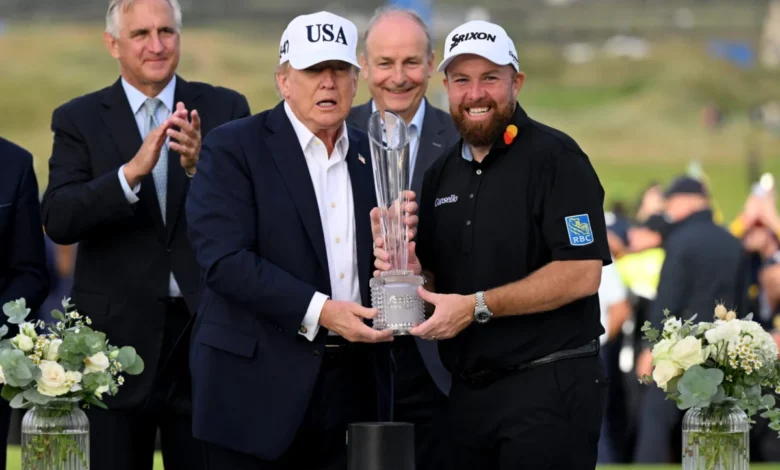
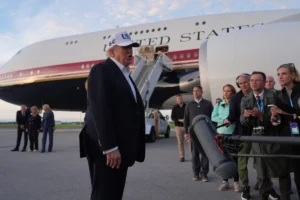
In a move that has sent ripples of optimism through the global spirits industry, President Donald Trump announced on Sunday that his administration intends to eliminate the 10 percent tariff currently levied on Irish whiskey imports to the United States. The declaration was made in an impromptu fashion during the closing trophy ceremony of the Irish Open golf tournament, an event that drew significant international attention and a boisterous crowd of spectators. The decision marks a notable pivot in trade policy, potentially signaling a thaw in tensions surrounding transatlantic beverage exports.
The announcement came after persistent pressure from various stakeholders, including professional golfers and industry representatives, who have long argued that the tariffs were disproportionately impacting a cherished product of Irish heritage. As the President stood before the crowd, he noted the frequency with which the topic had been raised during his visit. "Everybody’s been bugging me," Trump remarked during the ceremony. "And I said, ‘On behalf of the United States of America, I am going to take the tariffs off.’"
A Chronology of Trade Tensions and Adjustments
The current tariff structure on Irish whiskey is part of a broader, complex framework of trade disputes between the United States and the European Union. For several years, these disputes have led to a fluctuating landscape of import duties on various luxury goods and agricultural products.
In July, the tariff rate applied to Irish whiskey was adjusted downward from 15 percent to 10 percent, a change that provided some modest relief to importers but did not satisfy industry leaders who sought a complete removal. The path toward this recent development has been marked by several key milestones:
- April 2024: President Trump publicly acknowledged the role of diplomatic relations in trade, noting that he had granted the United Kingdom a tariff exemption on whiskey following a state visit by King Charles III and Queen Camilla. The President credited the royal couple with achieving a diplomatic breakthrough, stating that they convinced him to take action "without hardly even asking."
- May 2024: Building on the momentum of the U.K. exemption, the Irish Whiskey Association formally petitioned the U.S. government to extend similar relief to Irish spirits. The organization emphasized that Irish whiskey is a distinct product and that the ongoing tariffs were creating unnecessary market volatility.
- July 24, 2024: The Scotch Whisky Association confirmed that a zero-tariff policy for U.K.-produced spirits had officially come into effect, effectively ending the trade friction for Scotch and spirits distilled in Northern Ireland.
- Present Day: The President’s announcement at the Irish Open serves as the final chapter in this sequence, promising to align the treatment of Irish whiskey with that of its U.K. counterparts.
Industry Perspectives and Economic Implications
The reaction from the Irish spirits sector has been one of cautious celebration. For years, companies operating in the U.S. market—many of which maintain portfolios containing diverse international spirits—have faced significant headwinds. The Irish Whiskey Association has consistently maintained that the removal of these tariffs is not merely a benefit to Irish distillers, but also a strategic move for American companies that import and distribute these products.
According to industry data, the United States is the largest export market for Irish whiskey, accounting for a substantial portion of global sales. The tariffs, while intended as leverage in broader trade negotiations, have effectively functioned as an additional tax on U.S. consumers and retailers. By removing the 10 percent surcharge, the administration is effectively reducing the cost of entry for these goods, which industry analysts suggest could lead to increased market penetration and sustained growth for craft distilleries in Ireland.
Furthermore, the uncertainty generated by shifting tariff rates has historically caused supply chain disruptions. Retailers and distributors often struggle to forecast pricing models when import duties remain in flux. By providing clarity on the removal of these tariffs, the administration is expected to stabilize the supply chain, allowing for more predictable inventory management and consumer pricing.
The Diplomatic Context of Trade Policy
The President’s decision to link trade policy with high-profile events, such as the Irish Open and royal state visits, reflects a personalistic approach to international negotiations. By framing the decision as a response to direct requests from "everyone," including those in the sporting world, the President has bypassed traditional, lengthy bureaucratic trade negotiations in favor of executive announcements.
However, the implications of these exemptions extend beyond the spirits industry. Trade experts note that the removal of tariffs on whiskey is often viewed as a "goodwill gesture" within the context of larger U.S.-E.U. trade dialogues. By demonstrating a willingness to offer concessions on specific consumer goods, the U.S. government may be attempting to foster a more favorable environment for negotiations on more contentious issues, such as aerospace subsidies, data privacy, and digital services taxes.
Challenges in Implementation and Future Outlook
While the President’s statement was met with loud cheers and whistling from the gallery, legal and administrative experts caution that the transition from a verbal announcement to a codified change in trade law requires procedural steps. As of the time of the announcement, the White House had not provided a specific timeline for when the 10 percent tariff would officially be rescinded or what formal documentation would be required to enact the change.
Historically, tariff changes require the involvement of the Office of the United States Trade Representative (USTR) and the Department of the Treasury. These agencies must publish formal notices in the Federal Register to modify the Harmonized Tariff Schedule of the United States. Until such administrative actions are completed, importers will likely continue to pay the existing duties.
Furthermore, the broader trade environment remains volatile. While whiskey has received a reprieve, other sectors—ranging from steel and aluminum to automotive components—remain subject to various trade measures. The decision to remove the tariff on Irish whiskey may be viewed as a surgical strike, aimed at resolving a specific point of contention without necessarily signaling a retreat from the broader "America First" trade strategy.
Conclusion
The commitment to lift tariffs on Irish whiskey represents a significant shift in the competitive landscape for international spirits. For the distillers in Ireland, the move provides a much-needed boost to their most critical export market. For the U.S. consumer, it promises a return to more stable pricing. As the global economy continues to navigate the complexities of international trade, the events at the Irish Open serve as a reminder of how high-level diplomatic interactions and public pressure continue to play a pivotal role in shaping the economic reality for businesses and consumers alike.
The industry now waits for the formal details from the administration, with many hopeful that the announcement marks the beginning of a more predictable period for transatlantic commerce. While the President’s remarks were made in a relaxed, sporting atmosphere, the impact of his decision will be felt throughout the global market, solidifying the importance of whiskey as a key commodity in the ongoing evolution of U.S. trade policy.