The Geopolitical Crucible: Trump’s Midterm Gamble Amidst Escalating Iran Tensions and Domestic Economic Pressures

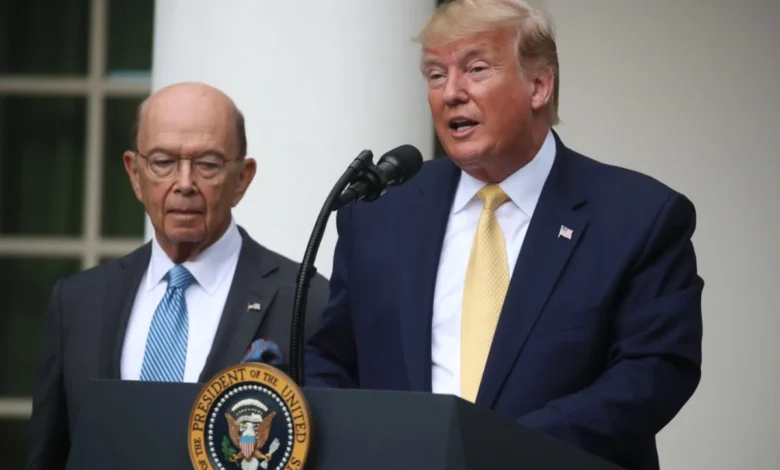
The political landscape for the current administration is fraught with peril, a delicate balance of risks that could define the upcoming midterm elections and the president’s political future. This is the stark assessment from Wilbur Ross, former Commerce Secretary during the first Trump administration, who, in an exclusive interview with Fortune, underscored the president’s unenviable dilemma: either confront the wrath of voters over persistently high oil prices exacerbated by the ongoing Iran conflict, or withdraw from the region and risk being politically undermined by accusations of weakness and an unresolved crisis.
The Intertwined Threads of Foreign Policy and Domestic Economics
The current state of play highlights an undeniable truth in modern American politics: foreign policy decisions in volatile regions like the Middle East have immediate and tangible repercussions on the domestic economy, directly influencing voter sentiment. While other issues, such as immigration, remain potent forces shaping public perception, Ross explicitly identifies "affordability" as a dominant political lightning rod. This issue, particularly concerning energy costs, was a cornerstone of the president’s initial election campaign promises, making the current surge in oil prices a particularly damaging development.
The conflict with Iran, while relatively short-lived in the grand historical scheme of wars, has undeniably "dragged on" in the eyes of both Wall Street and the American electorate. This perception is significantly amplified by the president’s initial rhetoric, which optimistically predicted a resolution within "a matter of weeks." The discrepancy between expectation and reality has created a fertile ground for political discontent, particularly as the nation approaches critical midterm elections.
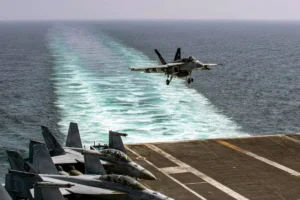
Ross articulated the unique political dynamic at play, noting, "We’re about to go into the midterm elections, and so there’s an unusual political factor which I’m sure both sides are aware of. The Iranians seem to be betting that they can outlast the president, and that has been a characteristic theory of their prior discussions." He further elaborated on the military aspect, stating, "The war itself, in a kind of technical sense, is over. Iran has no air force, they have no real navy, they have no air defense, so in that sense, it’s over. The question is, can we win the peace? And that’s what Hormuz is about." This distinction between military victory and achieving lasting stability underscores the complexity of the challenge.
The Strategic Chokepoints: Hormuz and Bab al-Mandab
The re-escalation of tensions in the Middle East has had a direct and punitive impact on American consumers. The geographical proximity of Iran to the Strait of Hormuz, a critical maritime chokepoint, is central to this economic fallout. This narrow waterway, connecting the Persian Gulf to the open ocean, is an indispensable conduit for a substantial portion of the world’s oil exports. Approximately one-fifth of the world’s total petroleum liquids consumption and one-third of the world’s seaborne oil trade transit through the Strait of Hormuz daily, amounting to over 20 million barrels per day. The sheer volume makes it exceptionally vulnerable to geopolitical instability.
Despite repeated assurances from the Trump administration that the Strait is controlled by the U.S. and its allies, the perceived risk of navigating this waterway has significantly increased. Shipping companies, wary of potential attacks, disruptions, or prohibitive insurance premiums, have become increasingly reluctant to traverse the Strait without heightened security measures. This reluctance has created an artificial bottleneck, stalling the supply of oil to global markets even as demand remains constant, thereby driving prices upward.
Adding another layer of complexity and danger, recent developments have seen the Houthis, a Yemen-based terror group widely recognized as acting on Iran’s behalf, initiate attacks on shipping in the Bab al-Mandab Strait. Located on the opposite side of the Arabian Peninsula, this strategic waterway connects the Red Sea to the Gulf of Aden and the Indian Ocean, serving as another vital chokepoint for global maritime trade, particularly for oil and natural gas shipments heading to Europe and North America via the Suez Canal. The expansion of hostilities to this second critical strait amplifies the threat to global energy supplies and significantly broadens the scope of regional instability. The attacks signal an audacious strategy by Iran and its proxies to exert pressure on international shipping across a wider maritime front, further unsettling global markets and increasing the premium on crude oil.
The Midterm Stakes: Oil Prices and Impeachment Threats
The specter of rising gasoline prices looms large over the upcoming midterm elections. Ross unequivocally states that "If oil gets back up to $5 a gallon at the pump, that’s gonna make the midterms very, very difficult." Such a scenario would undoubtedly ignite widespread public anger, directly impacting the incumbent party’s electoral prospects. The consequences of a significant loss in the midterms are severe, with Ross cautioning, "And, if he loses both houses in the midterms, he will be impeached."
Even a split outcome, such as Democrats gaining control of the House while Republicans retain the Senate, would significantly alter the balance of power. In such a scenario, the president’s executive prerogative, particularly concerning the conduct of war and foreign policy, could face substantial restrictions, potentially leading to legislative gridlock and a constrained ability to act decisively on the international stage. Historical precedents suggest that divided government often leads to heightened oversight and challenges to presidential authority, particularly in matters of military engagement and resource allocation.
The notion that the president might simply withdraw from the conflict before the midterms to alleviate pressure on oil prices is not as straightforward as it might seem. Ross is skeptical of such a move leading to immediate relief, stating, "If he pulled out without this being resolved, and [Iran] do impose some huge fines or what have you on Hormuz, then the Democrats have a very nice storyline: ‘What was the war all about? Look what we got for it: We’ve got the high oil prices, and we don’t have peace.’ People saying ‘Oh, he’s gonna have to pull out before the midterms,’ I’m not so sure that’s true."
Furthermore, a unilateral withdrawal would not guarantee a de-escalation from Iran. Ross elaborated, "I can’t imagine if he pulled out the Iranians, suddenly saying, ‘Well, we’ve decided to play nice, then there won’t be any constraints on Hormuz.’ That’s not gonna happen." This suggests that the Iranians might perceive a withdrawal as a victory, emboldening them to further exploit their strategic position and maintain pressure on shipping, thereby keeping oil prices artificially inflated. Ross concludes that while the midterms are undoubtedly a factor, their influence might be "influencing the Iranians more than it is the Americans," suggesting Iran’s strategy is designed to outlast the current administration and its electoral cycle.
The "Big Oil" Option: A Domestic Scapegoat?
In a parallel strategy to address the affordability crisis, President Trump has also initiated a public confrontation with "Big Oil," former allies within the corporate world. In a recent post on Truth Social, the president expressed his frustration, asserting that despite crude oil prices "dropping like a rock," major oil companies were "not dropping their price at the pump commensurate with the sharply lower prices they are paying for oil."
The president’s accusation of consumers being "gouged" led to a swift directive: "I have instructed the DOJ to immediately start looking into this. Gasoline prices better start going down a lot faster than what I’m seeing!" This move signals a willingness to employ executive power to intervene in market dynamics, aiming to force down prices at the consumer level.
Ross supported the president’s scrutiny, highlighting the immediate jump in pump prices following any military action, which he deemed unjustified given the lag in supply chain dynamics. "The pump price isn’t really justified to go up the same day because the oil hasn’t found its way through," Ross explained. He anticipates continued pressure from the president on oil companies to achieve two primary objectives: "One, not to expand the margins of the gas stations themselves, and two, to produce more. They’ve been relatively constrained in the amount of increase in their production."
Data from the U.S. Energy Information Administration (EIA) released earlier this month indicates that U.S. crude oil production in 2026 is averaging 13.8 million barrels per day. While this represents a slight increase from 13.6 million barrels per day a year ago, it falls short of the significant ramp-up that some policymakers and the administration might desire to impact global prices meaningfully. The complexities of increasing oil production involve substantial capital investment, long lead times for new projects, regulatory hurdles, and increasing pressure from environmental, social, and governance (ESG) investors, all of which constrain rapid supply expansion.
Broader Economic and Geopolitical Implications
The ongoing conflict in the Middle East and its reverberations through global energy markets carry profound economic implications beyond just gasoline prices. Elevated oil prices contribute to broader inflationary pressures across the economy, impacting transportation costs for goods, manufacturing expenses, and ultimately, the prices of consumer products. This erodes purchasing power and consumer confidence, potentially slowing economic growth. Businesses face increased operational costs, which can lead to reduced investment, hiring freezes, or even layoffs, creating a ripple effect throughout various sectors.
Geopolitically, the sustained tension in the Middle East underscores the fragility of global supply chains and the interconnectedness of international security with economic stability. The credibility of U.S. foreign policy, particularly its ability to ensure the free flow of commerce through critical maritime routes, is under scrutiny. Allies in the region and globally watch closely, assessing the effectiveness of the U.S. approach to deterring aggression and maintaining regional stability. A perceived inability to "win the peace" or secure vital waterways could lead to a reassessment of alliances and a potential shift in global power dynamics.
Domestically, the political fallout from the Iran conflict and its economic consequences will inevitably shape the narrative leading up to the midterms. Beyond the immediate threat of impeachment, a significant electoral setback could severely weaken the president’s mandate, making it exceedingly difficult to push through legislative priorities in the latter half of the term. The outcome of these elections will not only determine the balance of power in Congress but also set the stage for the next presidential election cycle, with "affordability" and national security likely remaining central themes.
The current administration finds itself at a critical juncture, navigating a complex web of international conflict, domestic economic anxieties, and high-stakes political calculations. The decisions made in the coming months regarding the Iran conflict, energy policy, and engagement with the oil industry will undoubtedly have lasting consequences, determining not only the immediate political fortunes of the president but also the economic well-being of American consumers and the geopolitical standing of the United States.