Downturn in the Chinese industry means Automotive World now expects 3.1% fewer cars to be produced globally in 2026

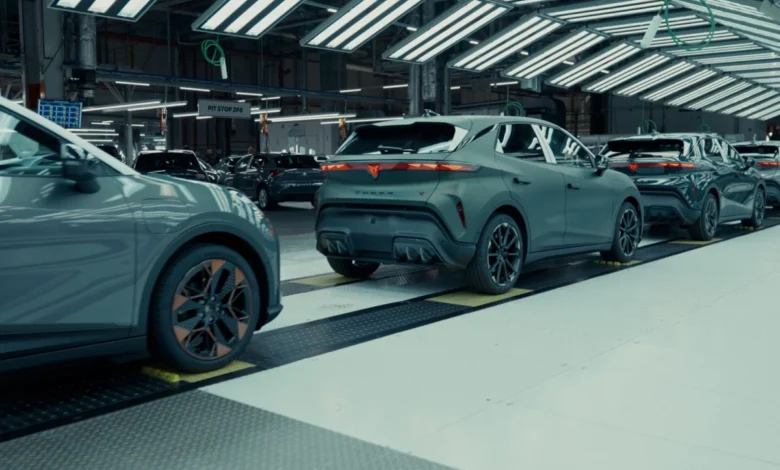
The global automotive manufacturing landscape is facing a significant recalibration as cooling industrial activity in China ripples through international supply chains. According to the latest light vehicle production forecast from Automotive World, the anticipated global output for 2026 has been revised downward to 76.5 million units. This represents a 3.1% decrease from previous estimates, a contraction that equates to approximately 2.5 million fewer vehicles rolling off assembly lines worldwide. Notably, the data suggests that this shortfall is not a distributed global decline but is almost entirely localized within the borders of the world’s largest automotive market: China.
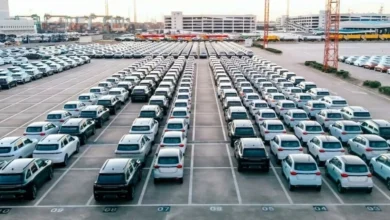
The revised figures indicate a stark shift in expectations for the Chinese manufacturing sector. Initial projections for Chinese light vehicle production have been slashed by 17%, with the total output now expected to top out at 18.7 million units for the 2026 calendar year. This bearish outlook stems from a growing consensus among industry analysts, trade associations, and domestic manufacturers that the Chinese market has reached a point of saturation. After decades of aggressive growth, the rate of production has finally outpaced the capacity of local consumers to absorb new inventory, leading to a structural imbalance that threatens the profitability of major domestic players.
The Chinese Production Crisis and Market Saturation
The 17% reduction in Chinese production targets marks one of the most significant downward revisions in recent industrial history. For years, China has served as the primary engine of global automotive growth, fueled by government subsidies, a rapidly expanding middle class, and a massive transition toward New Energy Vehicles (NEVs). However, the current economic climate in China—characterized by a cooling property market, cautious consumer spending, and high youth unemployment—has dampened the enthusiasm for big-ticket purchases like automobiles.
Industry associations within China have begun to signal that the "golden age" of rapid domestic expansion may be transitioning into a period of consolidation. The phenomenon of market saturation is particularly acute in the electric vehicle (EV) sector, where a "price war" that began in early 2023 has forced manufacturers to prioritize volume over margins. Despite these efforts, inventory levels remain high. Automotive World’s analysis suggests that brands such as BYD, Chery, and Geely are among those most likely to be impacted by this production pull-back. While these companies have made significant strides in export markets, their massive domestic manufacturing bases are now facing the reality of diminished local demand.
A Global Divergence: Growth in India, Mexico, and the West
While the downturn in China drags the global aggregate into negative territory, other regions are showing surprising resilience and growth. The revised forecast highlights a significant geographical shift in manufacturing momentum. India, in particular, stands out with an 18% upward revision in its production forecast. This surge is attributed to a combination of rising domestic disposable income, government-led infrastructure projects, and the "Production Linked Incentive" (PLI) schemes designed to transform India into a global manufacturing hub.
In North America, the outlook remains cautiously optimistic. Mexico’s production forecast has been revised upward by 6.1%, largely driven by the "nearshoring" trend. As North American companies seek to reduce their reliance on trans-Pacific supply chains, Mexico has become the primary beneficiary of relocated manufacturing capacity. Similarly, the United States has seen a 4.4% increase in its anticipated 2026 output. The influence of the Inflation Reduction Act (IRA) has played a pivotal role here, incentivizing the domestic assembly of vehicles and the localized production of battery components.
Europe, despite facing high energy costs and a complex transition to zero-emission mandates, has seen a modest upward revision of 0.8%. While this growth is marginal compared to India or Mexico, it suggests a stabilization of the European supply chain following the disruptions caused by the war in Ukraine and the post-pandemic semiconductor shortage. However, the gains in these four regions—India, Mexico, the US, and Europe—are insufficient to fully counteract the massive 17% drop in China, resulting in the overall 3.1% global decline.
Chronology of the Shift: From Post-Pandemic Boom to 2026 Realignment
The path to the current 2026 forecast has been marked by several distinct phases in the global automotive industry. To understand why the 2026 outlook has been downgraded, it is necessary to look at the timeline of events that led to the current state of market saturation in China.
In 2021 and 2022, the industry was defined by scarcity. The global semiconductor shortage forced manufacturers to slash production, creating a massive backlog of demand. During this period, Chinese manufacturers capitalized on their integrated supply chains to gain market share, both at home and abroad. By 2023, as supply chain constraints eased, production surged. In China, this resulted in an oversupply as manufacturers raced to capture a market that was simultaneously beginning to slow down due to broader macroeconomic headwinds.
Throughout 2024, the "price war" in China intensified. Leading manufacturers like BYD lowered prices multiple times to maintain factory utilization rates. However, by late 2024 and early 2025, it became clear that price cuts alone could not solve the problem of a saturated market. The July 2026 update from Automotive World reflects the culmination of these trends: a realization that the previous trajectory of Chinese growth was unsustainable. The industry is now entering a phase of "right-sizing," where production targets are being aligned with a more realistic assessment of long-term demand.
Impact on Major Manufacturers: BYD, Geely, and Chery
The downward revision carries heavy implications for China’s "Big Three" private automakers: BYD, Geely, and Chery. These companies have invested billions in expanding their production footprints, assuming that both domestic and international demand would continue to climb vertically.
BYD, which recently overtook Tesla as the world’s largest producer of electrified vehicles, faces a unique challenge. While its vertical integration allows it to produce vehicles more cheaply than almost any competitor, it is still beholden to the health of the Chinese consumer. A 17% reduction in national output suggests that BYD may have to throttle back its ambitious domestic expansion plans or pivot even more aggressively toward international markets in Southeast Asia, Europe, and Latin America.
Geely and Chery find themselves in similar positions. Geely’s multi-brand strategy (which includes Volvo, Polestar, and Zeekr) provides some insulation through geographic diversification, but its core manufacturing remains heavily concentrated in China. Chery, often referred to as China’s leading vehicle exporter, may find that international growth cannot entirely bridge the gap left by a cooling domestic market. For these brands, the 2026 forecast is a signal to shift focus from "volume at all costs" to "margin preservation and efficiency."
Economic and Geopolitical Implications
The contraction in Chinese automotive production is not occurring in a vacuum. It is deeply intertwined with global trade dynamics and geopolitical friction. In recent months, both the United States and the European Union have moved to protect their domestic industries from an influx of low-cost Chinese vehicles. The US has implemented a 100% tariff on Chinese-made EVs, while the EU has introduced provisional anti-subsidy duties.
These trade barriers complicate the "export escape hatch" that many Chinese automakers were counting on. If Chinese manufacturers cannot sell their excess capacity in the West, and the domestic market is saturated, the only remaining option is to cut production. This is the "bearish conclusion" noted in the Automotive World report. The reduction in output is a defensive measure against a global environment that is becoming increasingly hostile to Chinese industrial overcapacity.
Furthermore, the downturn reflects a broader transition in the Chinese economy. The shift from an investment-led growth model to a consumption-led model has been rocky. As consumers become more concerned about property values and retirement savings, the replacement cycle for vehicles has lengthened. This change in consumer behavior is a fundamental headwind that production forecasts are now finally beginning to price in.
Analysis of the Long-Term Outlook
The downward revision for 2026 should not be viewed as a sign of a dying industry, but rather as a necessary correction. The global automotive sector is undergoing a once-in-a-century transformation from internal combustion engines (ICE) to software-defined electric vehicles. Such transitions are rarely linear.
The growth seen in India and Mexico suggests that the center of gravity for automotive manufacturing is becoming more fragmented. The era of China being the sole driver of global growth is likely coming to an end, replaced by a more regionalized manufacturing model. For global investors and supply chain managers, the takeaway is clear: diversification is paramount. The reliance on Chinese production that defined the 2010s is becoming a liability in the 2020s.
In conclusion, the revised forecast of 76.5 million units for 2026 serves as a wake-up call for the industry. While the 3.1% global decline is a headline-grabbing figure, the real story lies in the 17% retreat of the Chinese industrial machine. As India, Mexico, and the US ramp up their capabilities, the global hierarchy of automotive production is being rewritten. Stakeholders must now navigate a landscape where market saturation in the East meets protectionism and resurgence in the West, all while the industry continues its difficult march toward electrification.