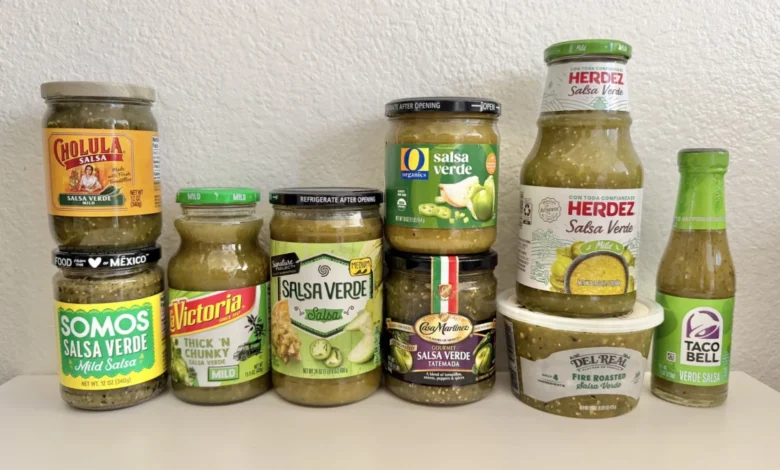
The culinary landscape of consumer packaged goods has seen a significant surge in demand for authentic regional Mexican condiments over the past decade, with salsa verde emerging as a consumer favorite. Characterized by its vibrant green hue, tangy profile, and vegetal foundation of tomatillos, green chiles, cilantro, and aromatics, salsa verde offers a versatile alternative to traditional tomato-based red salsas. While homemade versions remain a staple of traditional family cooking—frequently paired with braised pork, chicken enchiladas, or simple tortilla chips—the commercial market has flooded grocery store shelves with a wide array of jarred, bottled, and refrigerated options.
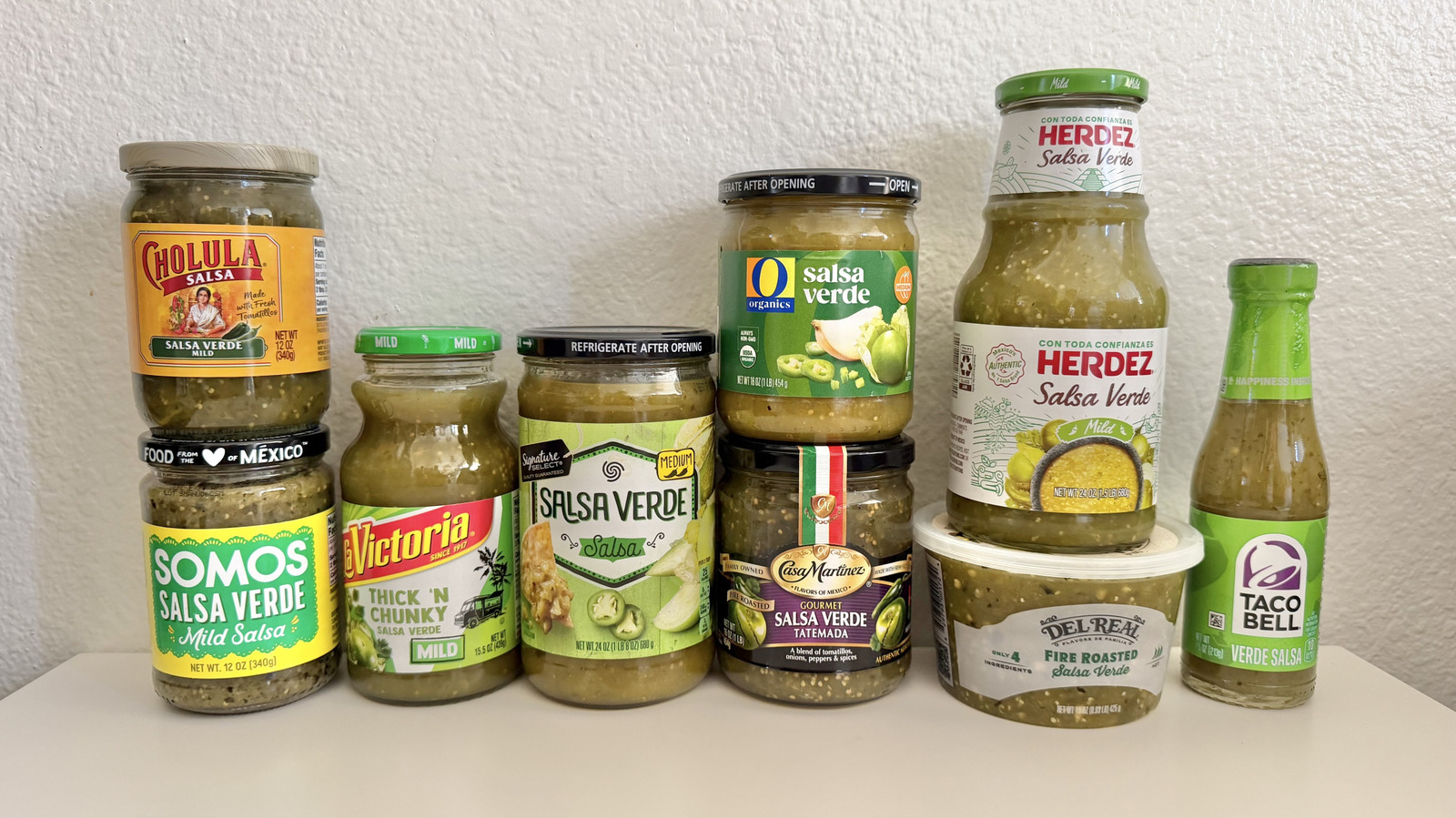
To determine which commercial brand successfully captures the complex balance of acidity, heat, salt, and herbaceous depth, a comprehensive comparative tasting of nine popular store-bought salsa verdes was conducted. Evaluators assessed each product based on flavor complexity, ingredient integrity, viscosity, and overall versatility, ranging from casual chip-dipping applications to functioning as a foundational cooking sauce for proteins.
Methodology and Evaluation Criteria
The selection process encompassed a cross-section of mainstream supermarket brands, private-label lines, and specialty regional products available at major retail grocers. Each salsa was evaluated both independently and paired with neutral tortilla chips to isolate individual flavor profiles.
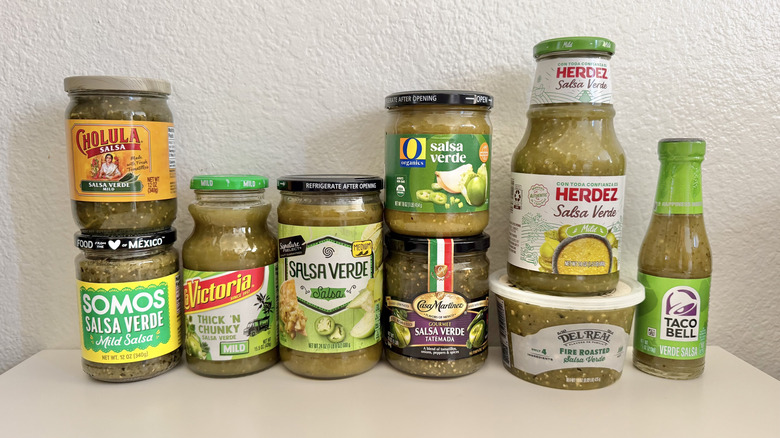
Primary evaluation metrics focused on several key culinary characteristics:
- Flavor Balance: Salsas needed to exhibit a bright, natural tanginess derived primarily from tomatillos and vinegar, supported by adequate saline seasoning without tipping into excessive sweetness or artificial cloyingness.
- Heat and Spiciness: A measured level of capsaicin from jalapeños, serranos, or green chiles was expected to provide warmth rather than burning dominance.
- Texture and Viscosity: Consistency was heavily prioritized. Products that proved overly watery failed to cling effectively to proteins or chips, while chunky, well-suspended formulations offered superior mouthfeel and culinary utility.
- Ingredient Integrity: Preference was given to formulations featuring recognizable, whole-food ingredients over heavy reliance on artificial thickeners, excessive added sugars, or corn syrups.
The Commercial Ranking: From Worst to Best
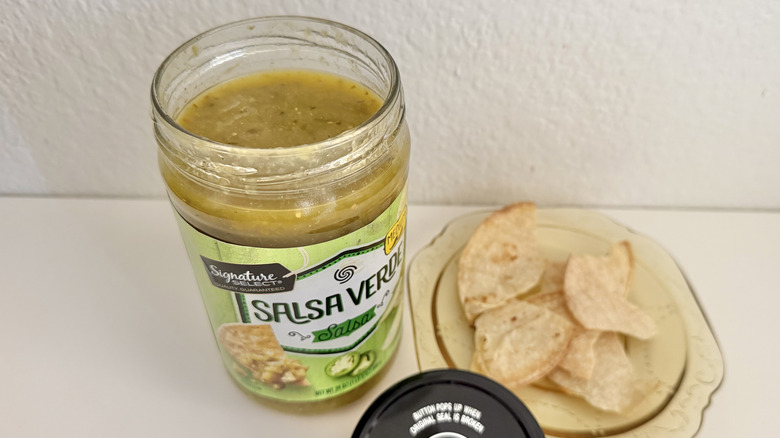
9. Signature Select Medium Salsa Verde
Ranking at the bottom of the evaluation is the store-brand Signature Select Medium Salsa Verde. Despite listing standard components such as tomatillos, green bell peppers, jalapeños, and green chilies, the product’s formulation is severely undermined by the inclusion of corn syrup. Delivering roughly 3 grams of sugar per two-tablespoon serving, the overwhelming sweetness entirely masks the inherent vegetal notes of the green vegetables. Reviewers noted that the intrusive sugary profile makes it unviable for savory pairings, rendering it the least balanced option in the cohort.
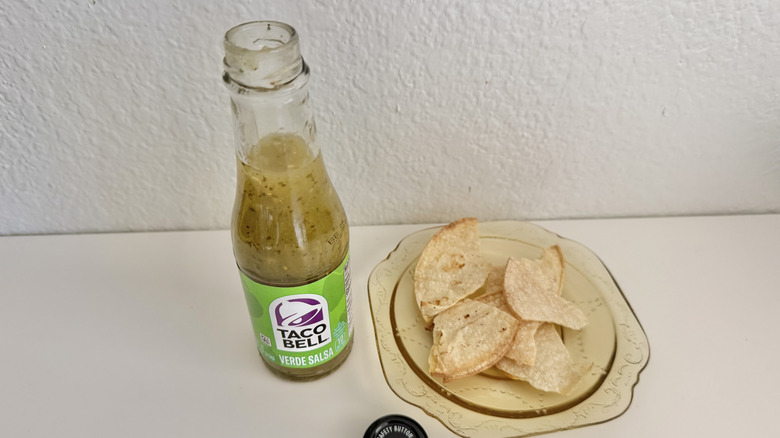
8. Taco Bell Verde Salsa
Positioned as a quick-service condiment rather than a traditional culinary salsa, Taco Bell Verde Salsa utilizes a green chili puree base augmented by vinegar and lime juice. While it introduces a welcome tartness, a residual sweetness persists, though it remains far less cloying than the Signature Select option. Due to its thin, pourable consistency and bottle packaging, it functions well as an ephemeral drizzle for tacos or burritos rather than a robust sauce for family meals. Its limited versatility and mild sweetness restrict its standing in the lower tier.
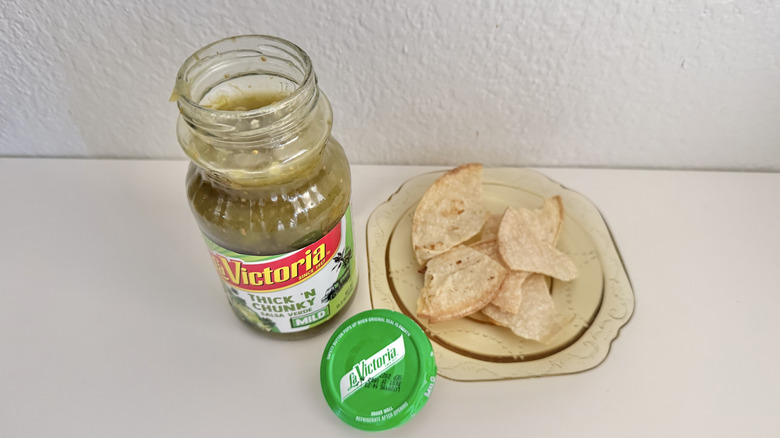
7. La Victoria Thick and Chunky Salsa Verde
La Victoria’s Thick and Chunky Salsa Verde falls short of its namesake description. The product presents a notably runny, watery consistency featuring sparse fragments of bell peppers and jalapeños. This lack of structural viscosity prevents it from adhering properly to chips or coating meats effectively. On the flavor front, while it benefits from the inclusion of Santa Fe peppers and dehydrated cilantro—which add visual appeal and mild herbaceous notes—it ultimately suffers from a deficiency in structural acidity and dimension.
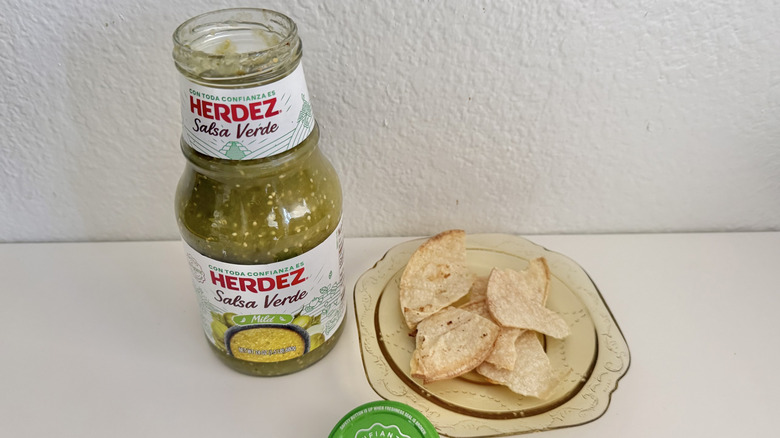
6. Herdez Mild Salsa Verde
As a prominent household name in commercial Mexican condiments, Herdez offers a reliable foundation utilizing classic ingredients like tomatillos, green chile peppers, and onions, alongside subtle hints of cilantro. The product features an even, moderately thick consistency laden with visible tomatillo seeds, lending an authentic textural element. However, the mild iteration ultimately tastes somewhat one-dimensional, lacking the necessary acidic punch from vinegar required to elevate it into the upper echelons of the ranking.
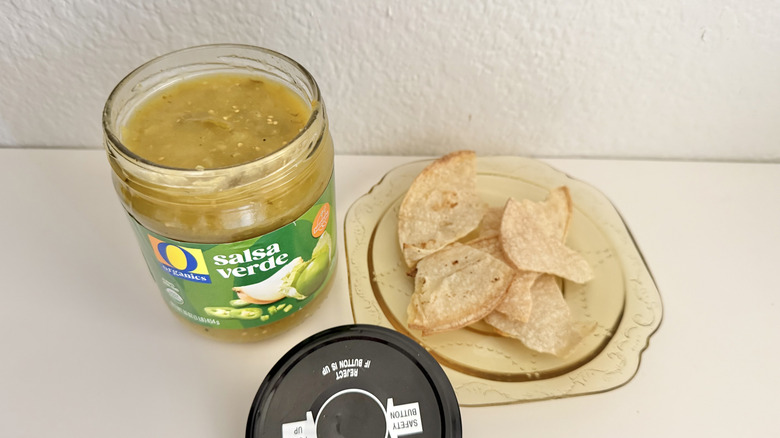
5. O Organics Medium Salsa Verde
Produced as an exclusive private-label brand across Albertsons Companies grocery banners, O Organics delivers a surprisingly competent organic formulation. Featuring a chunky texture rich in organic vegetables, garlic, and spices, it introduces a delayed heat profile that builds progressively after swallowing. While it contains organic cane sugar, the resulting sugar content remains modest (1 gram per serving), serving to round out the flavor profile rather than dominate it. It presents a viable, crowd-pleasing option suitable for chicken verde tacos or general snacking.
4. Somos Mild Salsa Verde
Distinguished by eye-catching packaging and a robust ingredient deck, Somos Mild Salsa Verde stands out for its incorporation of roasted tomatillos, Anaheim peppers, and roasted jalapeños. The roasting process imparts a discernible smokiness and earthy depth, supported by a delightfully thick, non-watery body. While evaluators noted that a minor adjustment in salt and vinegar could enhance the flavor profile even further, its commitment to letting fresh, earthy vegetable notes shine makes it an excellent candidate for green enchiladas or chip-dipping.
3. Cholula Salsa Verde
A notable offshoot of the brand’s popular hot sauce line, Cholula Salsa Verde compensates for the acidity gaps found in lower-ranked competitors. Infused with a prominent, zesty tang driven by vinegar, it successfully cuts through the inherent fattiness of heavy proteins like pork. The inclusion of poblano peppers and dehydrated cilantro introduces added complexity, earthiness, and visual appeal. Its thick consistency and sharp, acidic profile secure its position as a bronze-medal favorite for consumers who favor bright, sharp heat.
2. Del Real Fire Roasted Salsa Verde
Representing a minimalist, traditional approach to commercial salsa production, Del Real closely mirrors authentic homemade preparations. Its streamlined ingredient deck—consisting solely of tomatillos, fire-roasted jalapeños, salt, and water—delivers an authentic, buildable flavor profile. Notably distinct as the only product requiring refrigeration prior to opening, it communicates an elevated sense of freshness. The fire-roasted element imparts a subtle smokiness, yielding a clean, straightforward heat that performs exceptionally well as a foundational base for traditional dishes such as pork chile verde or black bean molletes.
1. Casa Martinez Fire-Roasted Salsa Verde Tatemada
Securing the top position in the evaluation is Casa Martinez Fire-Roasted Salsa Verde Tatemada. Combining a harmonious blend of jalapeño and serrano peppers, fresh cilantro, garlic, onion, and vinegar, the product achieves an ideal equilibrium of spice, tang, and herbaceous complexity. The traditional tatemada (fire-roasted) technique elevates the vegetal foundation of the tomatillos, delivering a rich, smoky depth. Exhibiting a robust, clinging viscosity packed with prominent pieces of peppers, this salsa serves as an exemplary commercial product capable of elevating quick chilaquiles verdes or functioning as a premier standalone dip.
Market Implications
The results of this comparative evaluation underscore a broader trend within the packaged foods sector: consumers increasingly demand commercial condiments that bridge the gap between industrial mass production and authentic, artisanal flavor profiles. As preferences shift away from overly sweetened, artificially stabilized formulations toward transparent ingredient lists and traditional preparation methods like fire-roasting (tatemada), manufacturers are forced to elevate product standards. The success of brands prioritizing structural integrity, natural acidity, and clean heat suggests that the market for premium, regionally inspired salsas will continue to expand in grocery retail channels.