Ford Dealership, Former Owner Accused Of Rolling Back A Bronco’s Mileage By More Than 50% Before Selling It

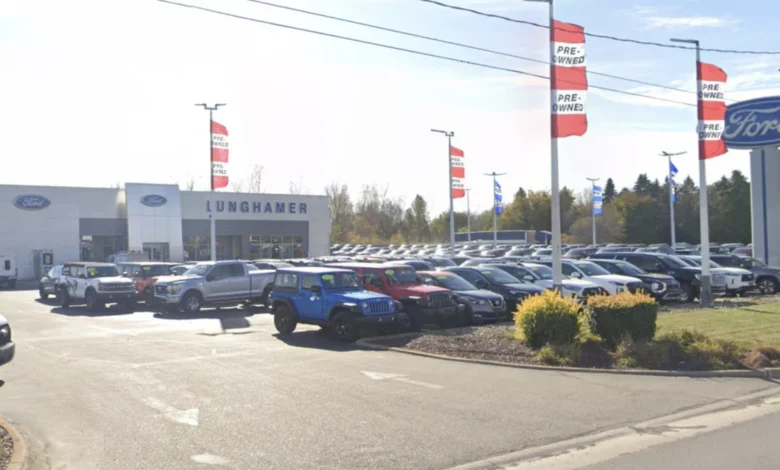
A federal lawsuit filed in Michigan has cast a spotlight on the persistent issue of odometer fraud, as a consumer accuses a prominent Ford dealership and a former lessee of conspiring—either through negligence or intent—to sell a Ford Bronco with a significantly altered mileage history. The plaintiff, Wesley Beckman, alleges that the vehicle he purchased had more than 36,000 miles removed from its digital display, representing a rollback of more than 50 percent of the vehicle’s actual usage. The case, which names Lunghamer Ford of Owosso, the vehicle’s previous lessee, and the financing lender as defendants, raises critical questions regarding dealership accountability and the integrity of certified vehicle histories in the digital age.
The legal complaint, originally reported by Automotive News, details a startling discrepancy between the physical odometer reading at the time of sale and the documented service history maintained within the Ford dealership network and independent repair shops. According to the filing, the Ford Bronco in question was originally leased through Lunghamer Ford, located approximately 90 miles northwest of Detroit, in April 2023. By the time the vehicle was returned to the dealership in September 2025, the odometer was recorded at just 24,042 miles. However, the plaintiff’s legal team asserts that the vehicle’s true mileage was more than double that figure.
A Chronology of Vanishing Mileage
The heart of the lawsuit lies in a detailed timeline of service records that contradict the mileage reported at the time of the lease return. According to the federal court complaint, the Bronco underwent regular maintenance during its lease period, leaving a "paper trail" of digital footprints that the dealership allegedly ignored or failed to verify.
In April 2024, one year into the lease, the vehicle was serviced at a separate Ford dealership or independent shop, where the mileage was recorded at 33,641 miles. By July 2025—just two months before the vehicle was returned to Lunghamer Ford—the Bronco was serviced again. At that time, the odometer reportedly read 60,657 miles. This indicates that the lessee was driving the vehicle at an aggressive rate, averaging roughly 2,500 miles per month.
Despite the July 2025 record showing over 60,000 miles, the vehicle was processed by Lunghamer Ford in September 2025 with an odometer reading of 24,042 miles. When Wesley Beckman purchased the SUV in November 2025, he believed he was buying a relatively low-mileage, late-model vehicle. The lawsuit alleges that at least 36,615 miles had been "rolled back" before the title was transferred to Beckman.
Legal Allegations and the "Lemon Law" Buyback Offer
The lawsuit asserts that the dealership "knew or had reason to know of the inaccuracy of the odometer statement at the time it sold the vehicle." Under the Federal Odometer Act, dealerships are required to provide an accurate written disclosure of a vehicle’s mileage at the time of transfer. If the odometer is known to be inaccurate, the dealer must provide a statement indicating that the actual mileage is unknown.
Beckman’s legal counsel argues that the former lessee is also legally liable, suggesting it is "hard to see how" the individual who drove the vehicle for 60,000 miles would be unaware that the odometer suddenly reflected a number 36,000 miles lower upon return. The complaint includes charges of:
- Violations of the Federal Odometer Act (49 U.S.C. § 32701 et seq.)
- Violations of the Michigan Odometer Statute
- Fraudulent Misrepresentation
- Breach of Contract
- Violations of the Michigan Consumer Protection Act
In a peculiar turn of events, Beckman’s attorney revealed that Ford Motor Company—which is not a named defendant in the lawsuit—offered to buy back the Bronco under "lemon law" terms. However, there was a significant caveat: the buyback agreement required Beckman to sign a document certifying that the odometer reading of 24,042 miles was accurate. Beckman refused the offer. His legal team noted that signing such a document would not only be factually incorrect but could potentially expose Beckman to future litigation or criminal charges if he were to ever transfer the vehicle to another party under those false pretenses.
The Broader Context of Odometer Fraud
While the image of a mechanic physically winding back an analog odometer is a relic of the past, digital odometer fraud is a growing concern for federal authorities. The National Highway Traffic Safety Administration (NHTSA) estimates that more than 450,000 vehicles are sold each year with false odometer readings, costing American consumers more than $1 billion annually.
Modern vehicles store mileage data in the Engine Control Unit (ECU) and other electronic modules. However, specialized "mileage correction" tools, easily purchased online, allow bad actors to bypass these security measures and rewrite the digital display. In many cases, these alterations are only discovered when a diligent buyer cross-references the VIN with national databases like Carfax or AutoCheck, or when the vehicle is taken to a manufacturer-affiliated service center where the internal computer logs reveal a discrepancy.
In the case of the Lunghamer Ford Bronco, the discrepancy was reportedly documented within the very system the dealership had access to. This raises questions about the "Certification" process many dealerships use to command premium prices for used vehicles. If a dealership fails to check its own internal service network records before certifying a vehicle’s mileage, legal experts argue they may be found "willfully blind" to fraud.
Implications for Dealership Liability and Consumer Trust
The outcome of Beckman v. Lunghamer Ford et al. could have significant implications for how dealerships process lease returns and trade-ins. Traditionally, dealerships have relied on the odometer disclosure statement signed by the person surrendering the vehicle. However, as digital tampering becomes more sophisticated, courts are increasingly looking at whether dealerships have an affirmative duty to verify that mileage against available service records.
For the plaintiff, the damages sought are not merely the difference in the vehicle’s market value. Federal law allows for "treble damages"—triple the actual damages—or $10,000, whichever is greater, plus attorney fees. This is intended to act as a deterrent against a practice that is notoriously difficult to detect.
Industry analysts suggest that this case highlights a failure in the "chain of custody" for vehicle data. If a vehicle’s mileage is logged at 60,000 miles in a Ford-authorized service database in July, the fact that the same system accepted a 24,000-mile entry in September without triggering an automatic red flag suggests a systemic vulnerability in dealership management software.
Fact-Based Analysis of the Impact on the Used Car Market
The Ford Bronco remains one of the most sought-after vehicles in the secondary market, often retaining a high percentage of its original MSRP. High demand creates an incentive for fraud, as the price difference between a 24,000-mile Bronco and a 60,000-mile Bronco can amount to several thousand dollars.
For consumers, this case serves as a cautionary tale. Experts recommend several steps to avoid falling victim to similar schemes:
- Request a Comprehensive History Report: Always check Carfax or AutoCheck, but do not rely on them exclusively, as there can be a delay in reporting.
- Examine Physical Wear: A vehicle with 60,000 miles typically shows more wear on the steering wheel, driver’s seat bolsters, and brake pedals than a vehicle with 24,000 miles.
- Check the Tires: Original tires rarely last 60,000 miles. If a "low-mileage" vehicle has brand-new or heavily worn non-original tires, it warrants further investigation.
- Independent Inspection: Have a third-party mechanic plug into the OBD-II port to check for "mileage mismatch" errors between the instrument cluster and the ECU.
As the legal proceedings against Lunghamer Ford and the former lessee continue, the automotive industry will be watching closely. The case underscores a growing tension between the convenience of digital records and the ease with which those records can be manipulated. For Wesley Beckman, the journey to resolve the status of his Bronco remains uphill, as he navigates a legal battle that pits a single consumer against a dealership and a major automotive lender. For now, the Bronco sits as a symbol of a wider struggle for transparency in the multi-billion dollar used car industry.