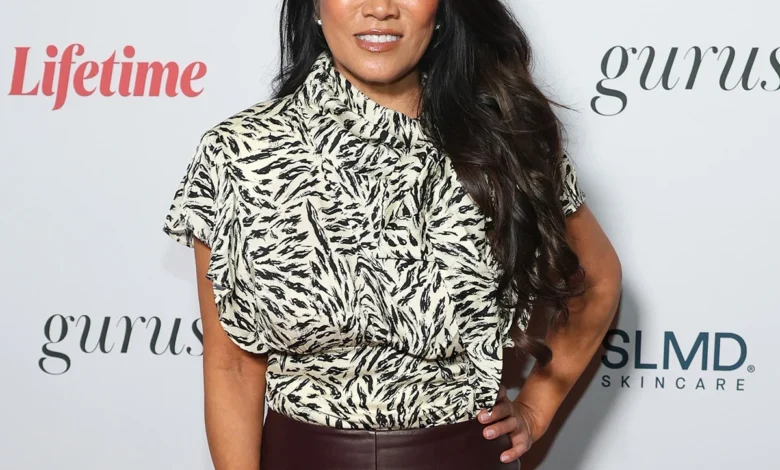
Renowned dermatologist Dr. Sandra Lee, widely recognized as "Dr. Pimple Popper," has revealed a deeply personal and harrowing health ordeal: she suffered a stroke while filming the second season of her popular Lifetime show, Dr. Pimple Popper: Breaking Out. The incident, which occurred at her Upland, California, practice, marked a stark and unexpected turn in her life, prompting a period of recovery and reflection.
Lee, 55, shared the intimate details of her experience in an exclusive interview with People magazine, published on April 14. She recounted the initial symptoms that led to her diagnosis, describing them as a sudden and disorienting experience. "It happened while I was filming the show," Lee stated. "I had what I thought was a hot flash. I got super sweaty and didn’t feel like myself."
The unsettling sensations, however, did not subside after her workday concluded. Upon returning home that evening, Lee experienced a growing sense of unease. She described feeling "very restless" and enduring "shooting pains" in one of her legs. Her mobility also appeared to be compromised, as she noted having "a tough time walking down the stairs."
By the following morning, the left side of her body showed definitive signs of distress. Lee vividly recalled the moment she realized the severity of her condition. "I would hold my hand out, and it would just slowly collapse," she explained. "I noticed that I had a tough time articulating and just enunciating. I thought, ‘Am I having a stroke?’"
Medical Confirmation and the Shock of Diagnosis
Driven by her medical knowledge and the alarming progression of her symptoms, Lee sought immediate medical attention, visiting an Emergency Room. There, an MRI confirmed her worst fears: she had suffered an ischemic stroke. According to the Mayo Clinic, an ischemic stroke occurs when the blood supply to a part of the brain is blocked or significantly reduced, depriving brain tissue of essential oxygen and nutrients.
The diagnosis delivered a profound shock to Lee, especially given her professional background. "It was just a shock," she admitted. "As a physician, I couldn’t deny that I had slurred speech, that I was having weakness on one side, but I was like, ‘Well, this is a dream, right?’" The stark reality of her situation became undeniable. "What essentially happened," she added, "is I had a part of my brain that died."
The stroke’s impact necessitated an immediate halt to filming the show. Lee, who is also a mother to two sons with her husband, Jeffrey Rebish, dedicated the subsequent two months to her recovery. Her primary focus was regaining lost mobility and function.
The Long Road to Recovery and Lingering Effects
The recovery process was challenging, and Lee expressed her frustration with the lingering effects of the stroke. "I don’t like that I don’t have total control of my left hand or the grip wasn’t as strong," she confided. "If I feel like I’m not at my best—it’s very scary."
Beyond the physical challenges, Lee also noted a subtle but persistent alteration in her speech. "I notice it right now that I don’t speak exactly the way I used to," she explained. This mild slur, though perhaps imperceptible to many, was a constant reminder of her stroke and caused her significant self-consciousness. "You’re really embarrassed to speak because you notice it."
Identifying Risk Factors and Embracing a Healthier Path
In retrospect, Lee identified several contributing factors that likely played a role in her stroke. She acknowledged that her "blood pressure and my cholesterol were not under control," and that the inherent "stress in my life, dealing with my patients and the show," likely exacerbated her risk.
Despite the frightening nature of the event, Lee has chosen to view it as a catalyst for positive change. "I want to think about it as a blessing in disguise," she stated. "Because it reminds you to take better care of yourself." This new perspective has led her to prioritize her well-being more than ever before.
While she has made significant progress, Lee remains under medical care, continuing to take blood thinners and engaging in at-home physical therapy. She expressed gratitude for her recovery, stating, "Thankfully I’m pretty much back to normal." The experience has profoundly impacted her outlook on life, reinforcing the fragility and preciousness of existence. "It really makes you realize how precious life is."
Broader Context: Celebrities and Health Scares
Dr. Sandra Lee’s candid sharing of her stroke experience adds to a growing narrative of public figures opening up about their health challenges. In recent years, numerous celebrities have bravely detailed their own medical emergencies, fostering greater awareness and destigmatizing conversations around health.
-
Hailey Bieber, wife of pop superstar Justin Bieber, revealed in March 2022 that she experienced stroke-like symptoms due to a small blood clot in her brain, a Transient Ischemic Attack (TIA). Subsequent investigations revealed she had a patent foramen ovale (PFO), a hole in her heart, through which the clot had traveled. She has since undergone a successful PFO closure procedure.
-
Justin Bieber himself faced a significant health battle in June 2022 when he was diagnosed with Ramsay Hunt syndrome, a viral condition that caused temporary paralysis on one side of his face. This led to the cancellation of the remainder of his Justice World Tour. While the paralysis was a distressing experience, he has since recovered.
-
Jamie Foxx opened up about his alarming hospitalization in April 2023, which he later revealed was caused by a brain bleed that led to a stroke. He described losing memory for 20 days and waking up in a wheelchair, unable to walk. Following intensive rehabilitation, Foxx has been on the path to recovery, emphasizing the importance of prayers and medical intervention.
-
Emilia Clarke, known for her role as Daenerys Targaryen in Game of Thrones, bravely detailed her experiences with two brain aneurysms. The first occurred in 2019, leading to a life-threatening subarachnoid hemorrhage. She underwent surgery and experienced aphasia. A subsequent scan revealed a growth that had doubled in size, necessitating a second, more invasive surgery. Clarke has since stated she is "at a hundred per cent."
-
Cori Broadus, daughter of rapper Snoop Dogg, shared in January 2024 that she suffered a "severe stroke" at the young age of 24. Her family rallied around her during this difficult time. Broadus also managed concurrent health issues, including lupus and kidney failure, which prolonged her hospital stay. She has since recovered, working on regaining motor skills.
-
Amy Schumer addressed public speculation about her appearance in early 2025, revealing she was diagnosed with Cushing syndrome. This condition, potentially linked to steroid injections she received for scars, caused a "puffier" face. The comedian expressed relief that the condition was treatable and that she was healthy.
These public accounts highlight the unpredictable nature of health and the importance of seeking prompt medical attention. They also underscore the resilience of the human spirit in overcoming significant medical challenges. Dr. Lee’s experience serves as a potent reminder, even for medical professionals, that health can be fragile and that prioritizing one’s well-being is paramount. Her journey of recovery and her candid sharing of this personal struggle contribute to a broader conversation about health, vulnerability, and the importance of self-care in the face of life’s unexpected adversities.