Famesick: Lena Dunham Reflects on Complex Relationship with Adam Driver in New Memoir

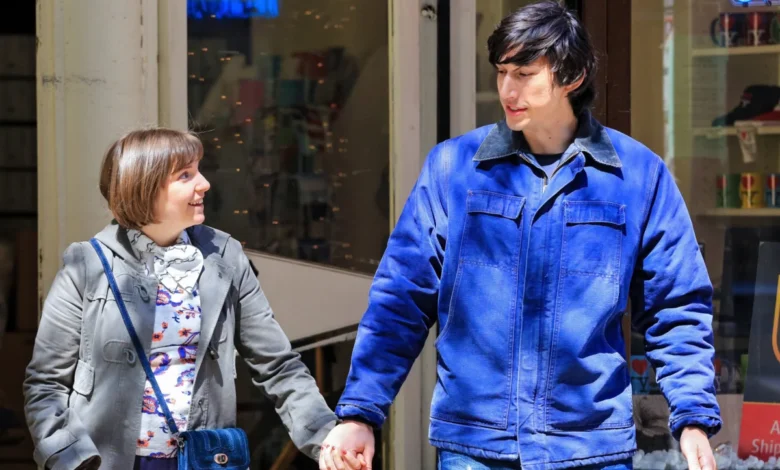
Lena Dunham, the visionary creator behind the groundbreaking HBO series Girls, is offering an unflinching and deeply personal account of her professional and personal entanglements with former co-star Adam Driver in her latest memoir, Famesick. The book delves into the tumultuous dynamic between Dunham and Driver, who portrayed the central, often fraught, romantic pairing of Hannah Horvath and Adam Sackler on the critically acclaimed show that ran from 2012 to 2017. Dunham suggests that the on-screen volatility was a mere shadow of the real-life complexities that defined their working relationship.
Dunham, who not only starred in but also wrote and directed significant portions of Girls, details a pivotal moment during the filming of the couple’s very first sex scene in Season 1. She recounts how "careful blocking went out the window" as Driver, in a moment that clearly disoriented her, "hurled me this way and that." This unexpected physical assertion left Dunham momentarily speechless, grappling with a cascade of professional anxieties. She questioned her directorial control, wondered if the scene had veered off course due to insufficient guidance, and even entertained the possibility of being removed from her position of authority.
In the memoir, Dunham elaborates on the emotional weight of this incident, stating, "It wasn’t that I felt violated—and I also wouldn’t know if I had, as there was little in my sexual life that I hadn’t allowed to happen, and for no pay. But I felt that something intimate, confusing and primal had played out in a scenario I was meant to control." This introspection underscores a broader theme in Famesick: Dunham’s navigation of power dynamics and her early experiences as a young woman in a position of significant creative leadership.
In a recent exclusive interview with People magazine, Dunham provided further context for her decision to include these candid recollections about Driver. She explained, "It was an attempt to capture that [relationship] in an honest way, and also really talk about how much being around this very talented, charismatic, complex, and powerful person affected me in ways that were really positive and in ways that were a bit harder." Dunham emphasized that her intention was not to single out Driver as an anomaly on the show, but rather to illuminate the intricate and often bewildering nature of her initial forays into leadership.
"The goal was never to make Adam seem like he was in any way the outlier of the show, but just to talk about how complex and confusing those first experiences of trying to be a boss were," Dunham told People. She further reflected on the unique pressures faced by Driver during their time on Girls. "For better or worse," she noted, "it was all of our first jobs. I think Adam went on a very specific ride because he had the ride of the show and then also the ride of becoming a major movie star at the same time. So he was on these two tracks, and he’s a very, very serious work-focused private person. So I have a lot of empathy for that."
Dunham, who was just 24 when Girls commenced, paints a vivid picture of Driver’s intense on-set persona. The memoir details instances where Driver’s impatience during rehearsals allegedly escalated to dramatic outbursts. One particularly striking anecdote describes a fight scene rehearsal where Driver, frustrated by Dunham’s perceived hesitation or struggle with her lines, hurled a chain at the wall near where she was standing.
"I remember doing a fight scene with Adam and how scary it was to meet someone so totally present with such absence," Dunham writes in Famesick. She recounts a late-night script read-through in her trailer, where she found herself unable to recall her own written lines. In that moment of creative block, Driver’s frustration boiled over. "Until finally, Adam screamed, ‘FUCKING SAY SOMETHING’ and hurled a chair at the wall next to me. ‘WAKE THE FUCK UP,’ he told me. ‘I’M SICK OF WATCHING YOU JUST STARE.’"
At the time, Dunham admits to rationalizing Driver’s aggressive behavior as a manifestation of actorly temperament, a byproduct of intense creative commitment. She writes, "I reasoned that the intensity of his anger at me, anger that could make him spit and throw things, was proportionate to the intensity of our creative connection." The memoir also recalls a tense encounter in Driver’s dressing room. After Dunham apologized for a perceived slight she couldn’t recall, Driver allegedly leaned in closely and hissed, "Never forget that I know you. I really fucking know you." When Dunham pressed him, he responded with unnerving accuracy, listing personal details: "You don’t go to parties. You love animals. And you hate being whispered about." Dunham acknowledges the profound accuracy of his observations, suggesting a deep, if unsettling, level of insight he possessed into her personality.
Driver is portrayed in the memoir as a figure of dualities: "short-tempered and verbally aggressive, condescending and physically imposing." Dunham recounts an incident where he punched a hole in his dressing room wall due to dissatisfaction with his haircut, illustrating the intensity of his emotional responses. Yet, she also acknowledges his capacity for unexpected tenderness. She describes a period of heightened anxiety for her, during which Driver visited her apartment nightly for a week, offering a protective presence. As romantic possibilities began to emerge during these visits, Driver reportedly warned her before his final evening, "I’m warning you, if I come up, I’m not leaving this time."
Dunham, however, chose not to reciprocate his advance. She describes watching from her window as he prepared to approach her apartment, a moment of profound internal deliberation. "But some part of me knew—some wise part of me, some bold part of me—that if we crossed whatever boundary we were threatening to cross, the return to work would be tinged with humiliation, that I’d be minimizing any authority I still had, and that, however it went, my heart—bruised but improbably not yet broken—would crack." This decision, she suggests, was a crucial act of self-preservation and a testament to her commitment to maintaining professional boundaries.
The emotional fallout of this near-transgression became starkly apparent when Driver later announced his engagement to his now-wife. Dunham admits to experiencing profound heartbreak, a feeling she labels as "absurd" in retrospect. She reflects on the nature of their on-screen connection versus their off-screen reality: "I was his scene partner, sure—and so when we were in a scene, his attention was piercing, his presence all-consuming. But in life? It would never be me who kept him in line. I didn’t have the chops. Even at work, I couldn’t do it, in the one place I was meant to make the rules."
Dunham concludes her detailed account of her relationship with Driver by describing the emotional resonance of their final scene together on Girls. Both reportedly shed tears. Driver is quoted as saying, "I hope you know I’ll always love you." Dunham muses about the possibility of future creative collaborations, envisioning a scenario where they might "write him new parts. We would tell new stories. We would laugh at the way things had been, and smile at the way they were now." However, this hopeful sentiment is met with a poignant and definitive conclusion: "But I never heard from him again."
As of the publication of Dunham’s memoir, Adam Driver has not publicly commented on the revelations contained within Famesick. The book’s release has reignited discussions about the intense creative environments of early career television production and the complex interpersonal dynamics that can arise when talent, ambition, and personal vulnerability intersect. The candid nature of Dunham’s reflections offers a valuable, albeit challenging, insight into the formative years of two prominent figures in contemporary entertainment, highlighting the lasting impact of intense professional relationships. The memoir serves not only as a personal narrative but also as a case study in the evolution of a creator and the profound influence of collaborative partnerships, particularly during the crucial early stages of establishing a career in a highly competitive industry. The narrative implicitly raises questions about the boundaries between artistic expression, personal experience, and public disclosure, particularly as figures like Dunham and Driver have ascended to global stardom.