Rory McIlroy’s Masters Preparations Scrutinized, But Fairness of Augusta Practice Undisputed

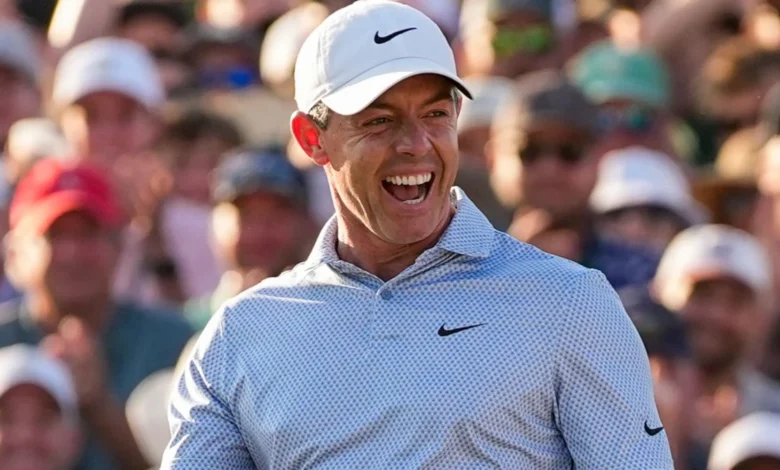
The recent triumph of Rory McIlroy at the Masters, securing his back-to-back victory and fourth player in history to achieve such a feat, has been met with widespread acclaim. However, the Northern Irishman’s meticulous preparations for the prestigious tournament, specifically his extensive practice rounds at Augusta National in the weeks leading up to the event, have ignited a debate surrounding the fairness of his approach. Despite the initial scrutiny, the golfing community and prominent figures within the sport have overwhelmingly defended McIlroy, asserting that his extensive time at Augusta was not an unfair advantage but rather a strategic and earned element of his championship-winning preparation.
McIlroy’s remarkable performance saw him hold off a strong challenge from Scottie Scheffler, winning by a single shot on Sunday. This victory further cemented his legacy, adding a sixth major title to his impressive career haul and completing a career Grand Slam in 2025. His dominance at Augusta has elevated his standing among the sport’s all-time greats, a testament to his consistent excellence on the world stage.
The controversy, if it can be called that, stemmed from McIlroy’s own candid remarks made midway through the tournament. He revealed the significant amount of time he had dedicated to playing the hallowed grounds of Augusta National in the preceding weeks. These comments, shared during his post-round interviews, subsequently became a focal point for discussion on major American sports talk shows and across social media platforms. The central question posed was whether this concentrated period of practice provided McIlroy with an inequitable edge over his competitors.
The Genesis of the Debate: McIlroy’s Intensive Augusta Practice
McIlroy’s Masters defense began with a blistering pace. By the halfway point of the tournament, he had amassed an astonishing 12-under-par score, establishing a record six-shot lead over the field. This exceptional start, he explained in his post-second-round press conference, was significantly influenced by his decision to forgo participation in the three PGA Tour events scheduled between The Players Championship and The Masters. Instead, he opted to dedicate these crucial weeks to intensive practice at Augusta National.
"I’ve been on this golf course so much the last three weeks," McIlroy stated, detailing his strategy. "That’s been a combination of practice and chipping and putting around greens, and then just playing one ball and shooting scores and ending up in weird places that you maybe never find yourself and just trying to figure it out." He further elaborated on his preference for this approach over competing in events like the tournaments in Houston or San Antonio.
His reasoning was rooted in a belief that maximizing his familiarity with Augusta’s unique challenges would be more beneficial than accumulating competitive rounds elsewhere. "I honestly just don’t like the three tournaments leading up to this event," he admitted. "I’d rather come up here." McIlroy described his practice regimen as a series of strategic day trips, balancing his professional commitments with his family life. "I did a couple of days where I dropped [my daughter] Poppy to school, flew up here, played, landed back home and had dinner with her, or had dinner with [my wife] Erica." He concluded, "It wasn’t really about conserving energy, but just I felt the more time I could spend up here, the better."
The Unfolding Discussion: Advantage vs. Unfairness
McIlroy’s candid revelations immediately sparked lively debate. Initially, the intensity of the discussion seemed to be tempered by his performance on the course, particularly during the third round where he relinquished his significant lead. However, once McIlroy orchestrated a masterful comeback on Sunday to secure his victory, the focus returned to his pre-tournament preparations.
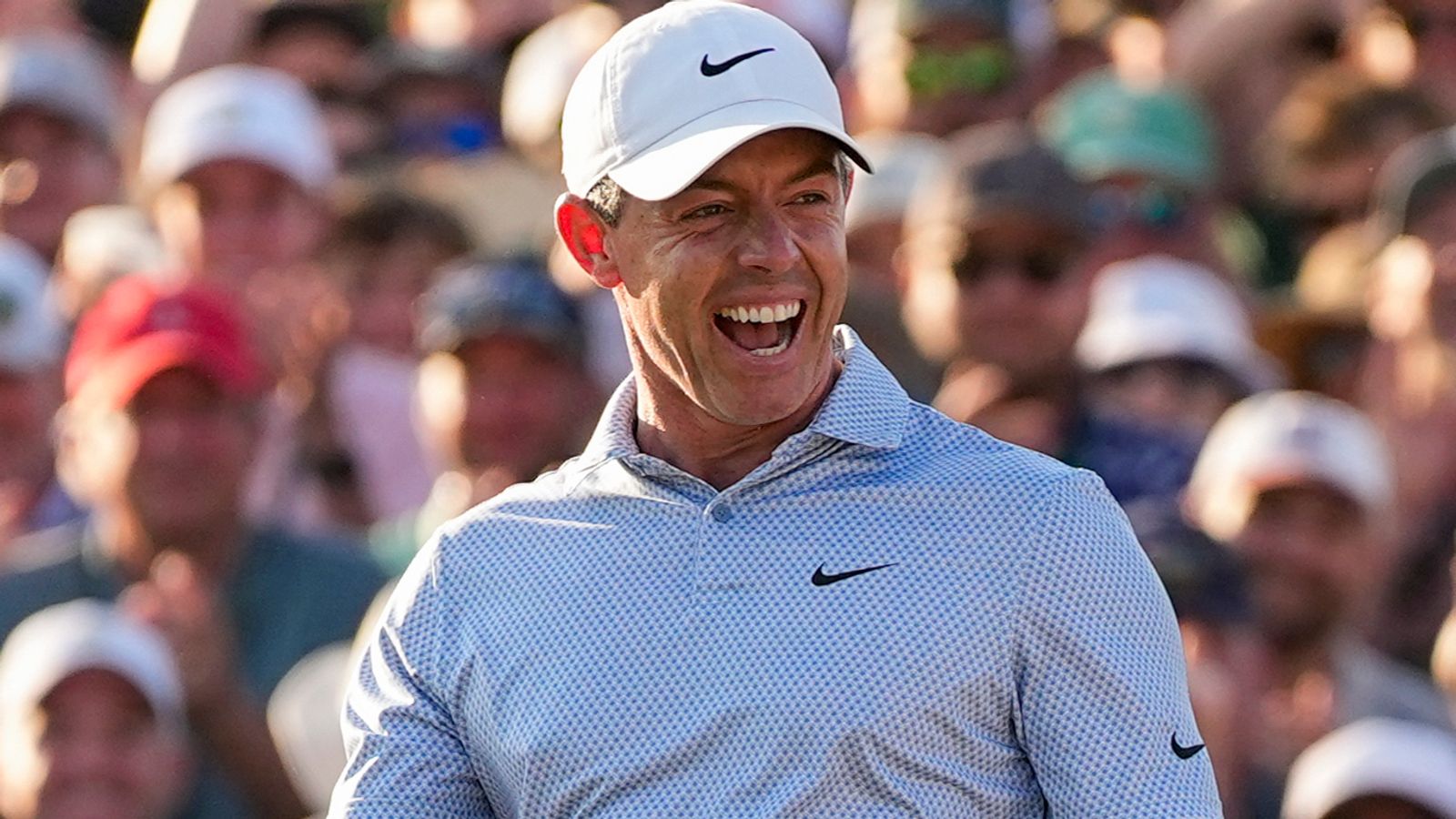
The segment aired on a prominent American sports television program ignited a broader conversation, drawing in a multitude of voices from the golfing world. Social media platforms buzzed with opinions, but the overwhelming sentiment from professional golfers and analysts was a resounding defense of McIlroy’s approach. Notable figures such as American golfers Michael Kim and Kevin Kisner were among those who publicly dismissed any notions of an unfair advantage, emphasizing the strategic nature of McIlroy’s decision.
Voices of Support: Experts Defend McIlroy’s Preparation
Nick Dougherty, a commentator for Sky Sports Golf, was particularly vocal in his defense of McIlroy. He argued that the concept of an "unfair advantage" was misapplied in this context. "It has no sense to it really," Dougherty stated. "I feel like that’s more the people outside of golf not really understanding the process, how it all works and what’s available to the players, probably driving it." He attributed the heightened attention to the Masters’ status as a major sporting event that transcends the sport itself, attracting a wider audience.
Dougherty unequivocally asserted, "It’s definitely not an unfair advantage. You earn that right to be able to go there." He elaborated on the strategic acumen behind McIlroy’s choice. "Was it an advantage that he did it? Yes, but it’s not an unfair one. It’s smart." Dougherty highlighted McIlroy’s status as a player who has earned the privilege of a more selective tournament schedule. "His unfair advantage is he’s so good he doesn’t need to go and play all these tournaments beforehand. But again, he’s earned that, hasn’t he?"
He further explained that top-tier players like McIlroy possess the leverage to curate their schedules. "Rory McIlroy can play a limited schedule because he knows that when he does play, he’s probably going to make them count. And he’s earned the chance to play when he wants to play now. He doesn’t have to turn up just because it’s a big event at a golf course." This contrasts with the career trajectory of less established players, who often need to compete more frequently to build their ranking and reputation.
The Augustian Protocol: Access and Opportunity
Dougherty, who made a single appearance at the Masters in 2008, drew upon his own experience to further dismantle the notion of an unfair advantage. He contended that the treatment he received from Augusta National officials during his preparation indicated that other competitors could have pursued a similar level of practice if they had chosen to do so.
"I came seventh in the 2007 US Open, so I knew from June of 2007 that in April of 2008, I was going to be playing in the Masters," Dougherty recalled. He emphasized the advice he received from golfing legend Sir Nick Faldo: "make sure I went early because if you just turn up on the tournament week, the wow factor, certainly as a first-timer, is just going to blow you away and it’s going to really affect your performance. You need to go and do your homework and take the time, to do exactly what Rory actually did."
Dougherty described the support he received from Augusta National during his practice period. "They gave me a brilliant caddie from Augusta National who showed me all the nuances – you’re not going to get that on tournament week because you have your own caddie – and we spent ages on the course." He highlighted the club’s openness to facilitating thorough preparation. "The club are really forthcoming in allowing you to properly practice while you’re out there on the golf course, hit all different shots, all different pin positions. And so even though it was the first time I knew the place like the back of my hand."
He surmised that while McIlroy might have received a more personalized experience due to his stature, the fundamental opportunity for extensive practice was available to all. "Sure, they’re going to be probably slightly more helpful with Rory, but I still think he’s probably only gone the amount that someone probably could have called up as a first timer to go and play and see the golf course. I doubt he went more than five times or something." Dougherty concluded, "I’m pretty sure the golf club would look after someone wanting to practice and prepare for the Masters if they went through the right protocol of calling up. So, I don’t honestly think that he got anything anyone else wouldn’t have done. People just think it’s unfair because they assume you can’t go there, and because it’s Rory, they’re saying, ‘ok, you can.’ That’s not how it is."
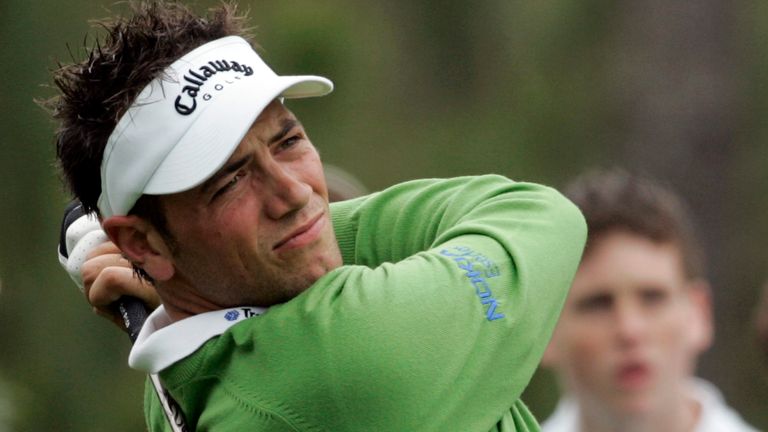
Michael Kim’s Perspective: Availability and Choice
Adding further weight to Dougherty’s assertions, World No. 44 Michael Kim corroborated the idea that ample opportunities to practice at Augusta National were available to all qualified players. Kim, writing on social media, stated that he had "plenty of chances" to play the course in the lead-up to this year’s tournament.
Kim explained the nuances of access: "Yes, there is a number of rounds that ANGC will say no to for me to go by myself and play by myself. That number is prob a little lower for me than a guy like Rory." However, he clarified that personal connections could significantly alter these limitations. "If you find a member to host you every time, there’s no limit."
Kim’s decision not to avail himself of these opportunities was a matter of personal strategic choice. "I had plenty of chances to go to ANGC myself if I wanted to but didn’t go. Better use of my time practicing at home or wherever I am to get my game in better shape for my next tournament." He underscored the accessibility of such preparation: "If I wanted to match the number of rounds at Augusta that Rory got, I easily could have done that." This perspective reinforces the notion that McIlroy’s extensive practice was a product of his strategic decision-making and available resources, rather than an exclusive privilege.
Broader Implications and Future Prospects
McIlroy’s fifth Masters victory, and his second consecutive win, places him in an elite category of golfers. The debate surrounding his practice regimen, while ultimately dismissed by most within the sport, highlights the intense scrutiny that accompanies such a high-profile athlete and a tournament of the Masters’ magnitude. It also underscores the strategic depth involved in professional golf, where preparation and course management are as critical as raw talent.
The fact that McIlroy chose to prioritize practice at Augusta over PGA Tour events in the weeks leading up to the Masters is a testament to his calculated approach to major championships. His success demonstrates the efficacy of this strategy for him, allowing him to peak at the precise moment. This approach is not unique to McIlroy; many top golfers carefully curate their schedules to optimize their performance at the majors. The discussion, therefore, serves as a reminder that such strategic decisions, when executed by a player of McIlroy’s caliber, are often misconstrued by those less familiar with the intricate world of professional golf.
Looking ahead, McIlroy’s continued success at major championships will undoubtedly be a focal point for golf enthusiasts worldwide. His ability to consistently contend and win at the highest level suggests that his strategic planning, including his approach to practice and tournament selection, will remain a key component of his formidable game. As the golfing calendar unfolds, with the PGA Championship, U.S. Open, and The Open Championship on the horizon, all exclusively live on Sky Sports, fans will be keen to observe if McIlroy can maintain his winning momentum. His career trajectory continues to be one of the most compelling narratives in modern golf, with his Masters triumph in 2026 serving as a significant chapter in his ongoing legacy.