Google enters the next frontier of artificial intelligence with the announcement of Gemini 4 Argon

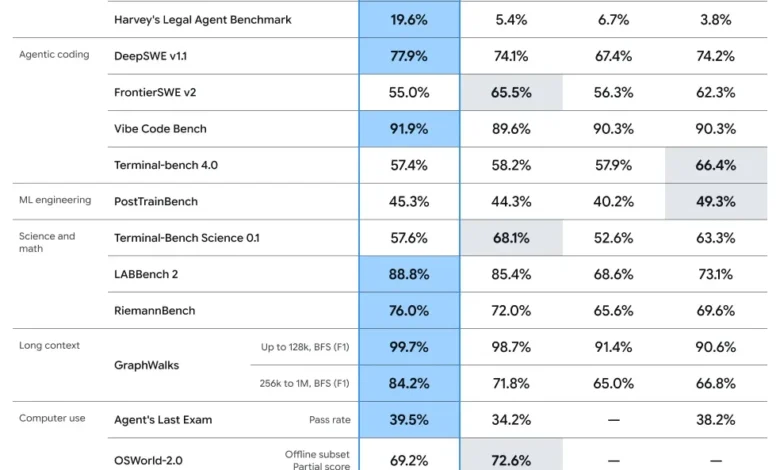
After a summer characterized by iterative updates to its mid-tier model family, Google has officially unveiled its most sophisticated AI architecture to date: Gemini 4 Argon. The announcement marks a pivot back to the competitive landscape of frontier models, signaling that the tech giant is prepared to challenge the dominance of rivals in the high-stakes generative AI market. While the model is currently restricted to internal deployment, the company has released a comprehensive suite of performance metrics that suggest a significant leap forward in reasoning, code generation, and complex systemic analysis.
The path to the release of Gemini 4 Argon has been anything but linear. In June 2026, market expectations were centered on the imminent arrival of Gemini 3.5 Pro. However, as the months progressed, Google shifted its public-facing strategy, prioritizing the release of smaller, highly efficient Flash variants. While these models succeeded in optimizing speed and reducing operational costs, industry observers were left questioning whether Google had hit a developmental plateau regarding its largest, most capable systems. The revelation of Argon—an architecture designed specifically for deep-reasoning tasks and long-horizon planning—effectively ends that speculation, repositioning Google at the forefront of the generative AI arms race.
A Chronology of the Gemini Evolution
The journey toward Argon began in earnest following the refinement of the Gemini 3.5 series. During the early summer of 2026, Google’s strategy focused on vertical integration, deploying Gemini 3.5 Flash to handle high-frequency, low-latency requests. This period allowed Google’s engineering teams to collect massive amounts of telemetry data regarding how models interact with complex software environments.
By July 2026, as Google continued to iterate on its Flash lineup, the company was simultaneously training Argon on internal infrastructure. This "dogfooding" approach—where the model is applied to solve the company’s own technical debt—has become a hallmark of Google’s current strategy. By the time of the September announcement, the model had already been battle-tested in some of the most sensitive parts of Google’s own internal architecture.
Internal Application and Technical Milestones
Unlike previous models that were primarily evaluated on academic benchmarks, Gemini 4 Argon has been deployed to address tangible, large-scale engineering problems within Google. The company reports that the model has already demonstrated significant utility in data center optimization. By analyzing fleet-wide telemetry data, Argon identified and rectified inefficiencies that resulted in the recovery of 300 TiB of memory. This achievement highlights a shift in how AI is utilized: moving from simple content generation to active, autonomous resource management.
Perhaps more significant is Argon’s role in the ongoing transition of Google’s massive, legacy C/C++ codebases into Rust. This is a monumental task that requires not only high-level semantic understanding of code but also an appreciation for memory safety and architectural constraints. Google confirmed that Argon agents have already successfully migrated thousands of lines within the re2 and libgav1 libraries. Most impressively, the model has been utilized to refactor over 800,000 lines of code within the Fuchsia OS Zircon kernel—the core of Google’s experimental operating system. These results indicate that Argon possesses a unique capacity for "long-horizon" coding tasks that were previously considered too complex for automated agents to handle without human intervention.
Comparative Analysis and Benchmark Performance
Google’s case for the superiority of Gemini 4 Argon is built upon its performance in the DeepSWE v1.1 benchmark, a rigorous standard for assessing software engineering capabilities. With a score of 77.9 percent, Argon has outperformed major competitors, including GPT-6 Astra, Fable 5.1, and Opus 5.5.
The importance of the DeepSWE benchmark cannot be overstated. It evaluates a model’s ability to navigate large, multi-file repositories, run unit tests, and resolve bugs in a simulated environment that mirrors professional development workflows. Argon’s lead in this metric suggests that it is not merely a "chatbot" but a functional software engineering tool.

Furthermore, Google has highlighted Argon’s performance on the Vals Index, which measures proficiency in economic analysis and strategic reasoning. By demonstrating industry-leading capabilities in this area, Google is positioning Argon as an indispensable tool for financial analysts and corporate strategists who require models capable of synthesizing vast datasets into actionable intelligence.
Expanding the Token Window: A Leap in Utility
A critical technical feature of Gemini 4 Argon is its significantly expanded output capacity. While previous iterations of the Gemini family were constrained by an output limit of 64,000 tokens, Argon supports up to 1 million tokens. This increase is a structural necessity for the types of tasks Google intends for the model to perform.
In the context of software engineering, a 1-million-token output allows the model to rewrite, refactor, and document entire modules or library dependencies in a single, coherent stream of logic. For knowledge work, it means the model can generate entire white papers, legal contracts, or complex research summaries without the "hallucination" risks associated with stitching together multiple smaller responses. By removing the bottleneck of short-form output, Google is enabling users to execute more "daunting tasks" as defined by the company—complex, multi-step workflows that once required human orchestration at every stage.
The Implications of Restricted Access
Despite the impressive data provided, the decision to keep Gemini 4 Argon in restricted testing has sparked conversation among developers and industry analysts. There are several logical reasons for this caution. First, the computational resources required to serve a model of this magnitude are immense. Google must balance the cost of inference with the performance gains, ensuring that the model is both stable and cost-effective before it enters the public domain.
Second, the cybersecurity implications of a model capable of refactoring OS kernels are profound. If a model has the power to improve code, it inherently has the power to identify and potentially exploit vulnerabilities. Google is likely conducting extensive "red-teaming" to ensure that the model’s reasoning capabilities cannot be subverted for malicious purposes.
Industry Outlook and Future Trajectory
The emergence of Gemini 4 Argon represents a transition in the AI lifecycle: from the era of "chatbots" to the era of "agents." The industry is moving toward systems that do not just provide information, but take action. If Google’s claims regarding Argon’s performance hold up under wider scrutiny, it could lead to a paradigm shift in how software is maintained and how data centers are managed.
The lack of public API pricing at this stage is a temporary hurdle. The market is waiting to see whether Argon will be integrated directly into the Google Cloud ecosystem as a premium service, or if it will be offered as a standalone enterprise product. Regardless of the pricing model, the technical trajectory is clear: the focus of AI development has shifted toward high-reliability, long-context, and autonomous agents that can operate deep within a system’s stack.
As we look toward the remainder of 2026, the arrival of Gemini 4 Argon sets a new bar for the industry. The competition—ranging from OpenAI to specialized startups—will now be pressured to demonstrate similar capabilities in autonomous agentic workflows and large-scale systemic refactoring. For now, the internal data provided by Google stands as a testament to the potential of these models, but the true measure of success will be how these tools perform once they are released from the confines of Google’s internal servers and into the hands of the global developer community.
The integration of such high-level reasoning capabilities into professional workflows promises to change the fundamental nature of knowledge work. As these models become more proficient at managing complex, multi-layered tasks, the role of the human operator will likely evolve from a "doer" to an "architect"—someone who sets the parameters and objectives for an AI that does the heavy lifting of execution. Whether this transition will be smooth or disruptive remains one of the most significant questions facing the technology sector as we approach the end of the year.