The fundamental right of physicians, medical students, nurses, residents, and faculty members to engage as citizens in public discourse – voting, protesting, writing, arguing, and holding strong views on critical issues such as Israel, Gaza, race, immigration, abortion, or climate change – is undeniable. These individuals are citizens first, with the same freedoms and responsibilities as any other member of society. However, the unique and sacrosanct nature of the clinical space, the educational environment where future healers are trained, and the residency programs where careers are shaped, demands a distinct standard of professional conduct and neutrality. These settings are not arenas for political activism, where affiliations can inadvertently dictate evaluations, recommendations, or even a trainee’s perceived moral standing in a political dispute.
The intersection of deeply held political convictions and professional medical practice has brought into sharp focus what many are now identifying as a significant professionalism problem within medicine, exacerbated by a concerning rise in antisemitism. This issue has not escaped the attention of national policymakers, with congressional hearings recently delving into instances of antisemitism within healthcare institutions, professional unions, and medical schools. A recurring theme in these inquiries is the apprehension that medical education might be inadvertently shifting its focus from training competent physicians to cultivating activists, a development that raises profound questions about the core mission of medicine. The titles of these legislative discussions might suggest partisan motives, but the underlying concern – the impact of political ideology permeating the professional bloodstream of medicine – is a bipartisan worry. This concern should resonate deeply with anyone who prioritizes patient welfare and the integrity of the medical profession.
The Bedrock of Professional Neutrality
It is crucial to clarify that this discussion is not an advocacy for gagging doctors or stifling legitimate criticism. Authentic opposition to Israeli government policies, expressions of concern over civilian suffering, or vigorous debate about geopolitical conflicts do not inherently constitute antisemitism. The medical profession should never demand political conformity from individuals across the ideological spectrum. Doctors, like all citizens, have the right to their political views.
The more complex and pressing question, however, arises when legitimate criticism of a state escalates into professional suspicion or hostility towards individuals based on their identity – specifically, towards Jews, Israelis, or those merely perceived to support them. Medicine cannot credibly assert neutrality if it permits identity to transform into an accusation or a basis for differential treatment.
Real-World Implications and Hypotheses
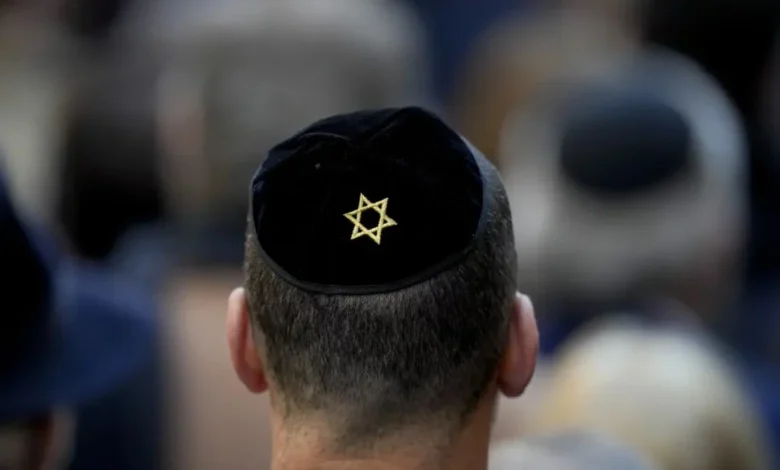
Consider the tangible scenarios that arise from such an environment. A Jewish medical student should not be compelled to articulate her stance on the Israeli government’s actions before being recognized as a fully integrated and respected member of her class. An Israeli physician should not bear personal accountability for the military decisions of a sovereign state. A patient wearing a Star of David should never have to question whether the clinician providing care views them as an individual in need or merely a political symbol. Similarly, a resident should not live in fear that silence on the Israeli-Palestinian conflict will be misconstrued as complicity, while honest expression of their views might label them morally suspect.
These are not far-fetched hypotheticals. The events of October 7th, 2023, and their aftermath, have demonstrably illustrated how rapidly "anti-Zionism" can devolve into a pretext for age-old forms of Jew-hatred in the broader cultural landscape. The medical field is not immune to this risk, particularly when political slogans and divisive rhetoric migrate from public protests into the supposedly neutral confines of classrooms, hospitals, and professional associations. The escalation of rhetoric, often fueled by social media, has created an atmosphere where nuanced discussion is rare, and the line between political critique and identity-based prejudice becomes dangerously blurred.
A History of Professional Boundaries and Inconsistent Application
Medical institutions have historically understood and applied the principle of separating personal identity from professional conduct when other demographic groups are involved. For instance, Muslim patients are not treated as proxies for Islamist extremism. Russian physicians are not held personally accountable for the actions of Vladimir Putin. Chinese American students are not made responsible for the policies of the Chinese Communist Party. We do not inform Ukrainian, Armenian, Palestinian, Iranian, Indian, or Pakistani students that their ancestry makes them fair game for collective suspicion merely because geopolitics is intricate.
The guiding principle here should be straightforward and universal: individuals are not guilty by virtue of their passport, ancestry, religion, or assumed political affiliations. Yet, when it pertains to Jews or Israelis, this fundamental principle often appears negotiable. The demand for accountability, in these instances, frequently morphs into collective suspicion cloaked in the guise of moral clarity, where individuals are pressured to answer for the actions of a nation-state based solely on their identity. This selective application of principles undermines the very notion of fairness and equality within the profession.
Medical Education and the Peril of Ideological Frameworks
Medical schools are particularly susceptible to this confusion, largely because they increasingly incorporate social and political frameworks into professional formation. While some aspects of this approach are defensible—doctors should indeed comprehend how socioeconomic factors like poverty, housing, language barriers, cultural differences, discrimination, and historical mistrust influence health outcomes—there is a critical distinction to be made. A physician who disregards a patient’s social context misses a vital part of their reality. However, teaching contextual awareness is fundamentally different from enforcing ideological conformity.
There exists a profound difference between preparing doctors to provide culturally competent care for diverse patient populations and training them to categorize individuals into "oppressor" and "oppressed" archetypes before a clinical encounter even begins. This distinction is particularly salient in the context of antisemitism, given that Jews often do not fit neatly into fashionable, monolithic ideological frameworks. The Jewish community is incredibly diverse: members can be both a vulnerable minority and highly successful; they can be white, brown, black, or Middle Eastern; secular or religious; left-wing or conservative; Zionist or anti-Zionist. They may be descendants of Holocaust survivors, refugees from Arab lands, Soviet emigres, or families whose roots in their current country span generations.
A rigid ideological lens struggles to accommodate this inherent complexity. Instead, it frequently perceives Jews as powerful, Israel as uniquely illegitimate, and expressions of Jewish anxiety as mere political inconveniences. Once such a biased perspective infiltrates professional culture, the repercussions extend far beyond mere hurt feelings. It can corrode trust, compromise mentorship relationships, skew evaluations, influence hiring and disciplinary actions, and ultimately, impact the quality and impartiality of patient care. This is precisely why unwavering professional neutrality is paramount.
Defining and Upholding Professional Neutrality
Professional neutrality does not equate to moral emptiness or indifference to human suffering. It does not imply that doctors cannot condemn terrorism, mourn civilian casualties, or passionately advocate for policy changes outside the clinical setting. What it unequivocally means is that when a patient enters the examination room, they are not a proxy for a political cause. When a student enters a classroom, they are not a stand-in for a government. When a colleague enters a hospital, they should not be required to pass a political litmus test to be treated with dignity and respect. The white coat, a universal symbol of healing and impartiality, is not, and must never become, a campaign shirt.
Professional organizations bear a significant responsibility in articulating and enforcing this crucial distinction. They must champion free expression for physicians acting as citizens while simultaneously upholding stringent professional boundaries for clinicians, educators, and trainees. These organizations must clearly differentiate legitimate criticism of Israel from antisemitism, but also acknowledge that antisemitism frequently manifests through the rhetoric of anti-Zionism, especially in contemporary discourse. They should refrain from punishing genuine disagreement but must also not retreat behind the shield of "politics" when Jewish students, doctors, or patients experience harassment, isolation, or are subjected to unwarranted suspicion.
Similarly, medical schools must internalize and implement these principles. They are tasked with teaching future doctors that patients are not reducible to categories, identities are not verdicts, and compassion cannot be selectively applied. If an institution promotes cultural humility for every group except Jews, it is not teaching humility; it is, in effect, teaching a harmful hierarchy that undermines universal principles of care. The potential for long-term damage to the medical profession’s credibility and the erosion of trust among patients and practitioners is immense if these distinctions are not rigorously maintained.
Broader Implications and the Enduring Oath
The stakes are incredibly high. The medical profession has historically navigated and endured bitter political eras precisely because its central promise—the unwavering commitment that the person in front of you deserves care, regardless of their background or your personal views—predates and transcends any political ideology. This promise is easily recited during times of peace and calm. However, its true test comes when war, propaganda, and tribal loyalties infiltrate the hospital corridors and lecture halls. It is precisely in these moments of heightened tension and polarization that this foundational promise matters most.
The erosion of professional neutrality carries severe implications for several facets of medicine:
- Patient Trust: If patients perceive that their identity might influence the care they receive, trust in the medical system will inevitably diminish, leading to poorer health outcomes, particularly for marginalized communities.
- Medical Education Quality: A shift towards ideological conformity risks narrowing intellectual discourse, stifling critical thinking, and potentially alienating diverse students who do not subscribe to a specific political viewpoint. This could deter talented individuals from entering the profession.
- Professional Cohesion: Internal divisions based on political ideologies can fracture professional solidarity, hindering collaboration, research, and effective healthcare delivery.
- Ethical Integrity: The core ethical tenets of beneficence (doing good), non-maleficence (doing no harm), autonomy (respecting patient choices), and justice (fair distribution of care) are compromised when political bias influences medical judgment or interactions.
Arie Blitz, M.D., M.B.A., F.A.C.C., a retired cardiothoracic surgeon and independent writer specializing in biotechnology regulation, medical ethics, and health policy, succinctly captures the essence of this complex issue: Doctors can certainly have politics, but patients deserve unequivocally neutral care. And critically, Jewish students, physicians, and patients, like all others, deserve the assurance that the medical profession remains steadfast in its adherence to its own sacred oath, an oath that places patient well-being and professional integrity above all political divides. This enduring commitment to impartial care is not merely an ideal; it is the cornerstone upon which the entire edifice of modern medicine stands. The challenge now is to ensure that this cornerstone remains unblemished amidst the turbulent currents of contemporary political discourse.
Related posts: