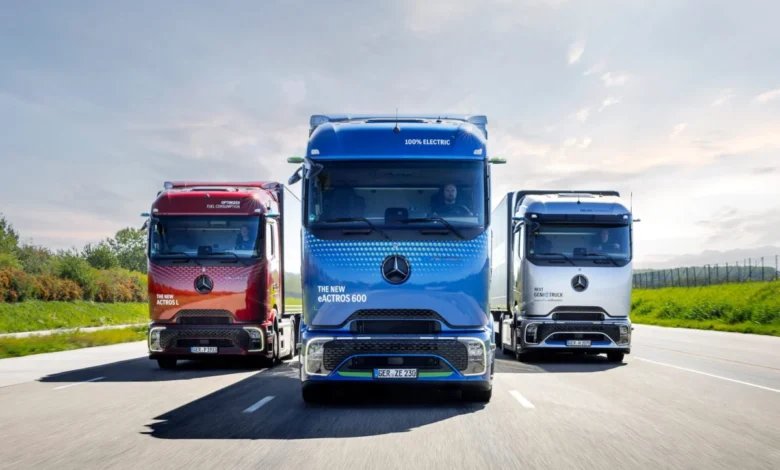
Daimler Truck Holding AG has demonstrated a robust financial recovery in the third quarter of the fiscal year, staging a remarkable rebound across the North American market following a deeply challenging second-quarter period. Driven by surging global volume and strong operational execution, the Stuttgart-headquartered commercial vehicle manufacturer reported an 89% year-on-year increase in group operating profit, clearing the €1 billion threshold and reaching approximately US$1.1 billion. However, despite this impressive quarterly leap, industry analysts and company insiders are maintaining a cautious outlook. A noticeable cooling in incoming order intake over the course of the year suggests that future growth may face distinct macroeconomic and structural ceilings as the heavy-duty truck market navigates shifting economic headwinds.
The Third-Quarter Rebound: Financials and Global Volumes
The third-quarter financial results released by Daimler Truck offer a stark and welcome contrast to the turbulence experienced earlier in the year. Group operating profit more than doubled compared to the same period in the previous year, buoyed by an expansive global delivery footprint. During the three-month period ending September, total global sales volumes surged by 26.3%, pushing total unit deliveries to 91,260 vehicles across the company’s diverse brand portfolio, which includes Freightliner, Western Star, Mercedes-Benz Trucks, Thomas Built Buses, and Fuso.
This volume expansion was primarily propelled by the North American market, where demand for heavy-duty commercial transport rebounded sharply. Fleet operators in the United States and Canada, who had previously paused capital expenditures due to supply chain bottlenecks, inflationary pressures, and regulatory uncertainty, returned to the market to replace aging vehicles. This regional surge allowed Daimler Truck to maximize factory utilization rates, drive operating leverage, and expand its profit margins significantly compared to the depressed levels witnessed in the previous quarter.
A Retrospective Chronology: From Tariff Blows to Operational Resilience
To fully understand the scale and significance of Daimler Truck’s third-quarter performance, it is necessary to examine the tumultuous chronological trajectory of the company’s fiscal year.
The year began with optimism as fleet demand remained relatively robust across both Europe and North America, fueled by lingering post-pandemic freight volumes and infrastructural spending. However, the operational landscape shifted dramatically in the second quarter. During Q2, Daimler Truck absorbed a withering blow primarily attributed to escalating trade tensions, localized protectionist measures, and stringent tariff implementations. These macroeconomic pressures severely compressed profit margins, resulting in a staggering 99% profit drop in the North American segment for that specific quarter. Supply chain friction, combined with the sudden cost spikes driven by newly levied tariffs on imported raw materials and specialized component parts, caught the manufacturer in a severe cost squeeze.
Facing these sudden headwinds, Daimler executive leadership initiated aggressive mitigation strategies. These included localized supply chain optimization, dynamic pricing adjustments to absorb tariff impacts, and rigorous cost-containment measures across manufacturing plants in North America and Europe. By the end of the second quarter, management had signaled confidence that the worst of the tariff-induced shock was temporary. The subsequent third-quarter results validate those assertions, showcasing a swift operational pivot that allowed the company to recover lost ground and restore profitability to pre-crisis trajectories.
Macroeconomic Context and the North American Heavy-Duty Market
The North American commercial vehicle market remains the primary profit engine for Daimler Truck, making regional stability vital to the company’s global health. Brands like Freightliner command a dominant share of the Class 8 heavy-duty truck market in the United States. Consequently, any micro or macroeconomic fluctuation in North America immediately reverberates through Daimler’s corporate balance sheets.
The region’s recovery in Q3 was underpinned by persistent, albeit moderating, freight demand. Despite high interest rates intended to cool the broader U.S. economy, consumer spending on goods remained resilient, keeping domestic supply chains active. Furthermore, logistics companies faced mounting pressure to maintain operational efficiency, prompting them to invest in newer, more fuel-efficient truck models that promised lower maintenance costs and compliance with upcoming environmental standards.
Nevertheless, the broader economic backdrop remains complex. Persistently elevated interest rates have increased the cost of capital for fleet operators, many of whom rely heavily on commercial financing to purchase fleets of heavy-duty vehicles. This financial constraint has begun to manifest in order book trends, introducing a layer of vulnerability for the commercial vehicle sector as a whole.
Analyzing the Order Intake Ceiling
While the headline figures for the third quarter reflect undeniable financial strength, a closer examination of incoming orders reveals potential headwinds for future quarters. Throughout the year, Daimler Truck has observed a steady tapering off in new order intake. While the company has been comfortably clearing its existing backlog of orders—a remnant of the pandemic-era supply chain backlog—the rate at which new contracts are signed has slowed.
This divergence between robust delivery volumes and softening new orders indicates that the market may be approaching a cyclical peak. Fleet operators, having largely replenished and updated their vehicle inventories over the past twenty-four months, are adopting a more conservative posture. Heightened macroeconomic uncertainty, fluctuating diesel prices, and concerns over a potential economic slowdown or soft landing in the United States have prompted transport companies to defer long-term capital investments.
Industry analysts suggest that this cooling order dynamic will likely place a structural ceiling on growth moving into the subsequent fiscal year. Without a continuous influx of new orders matching the current delivery pace, Daimler Truck’s revenue growth could moderate, forcing the company to rely even more heavily on aftermarket services, parts sales, and cost discipline to protect its operating margins.
Official Responses and Corporate Strategy
In communications accompanying the financial release, Daimler Truck leadership emphasized the company’s structural resilience and its ability to navigate external macroeconomic shocks, such as tariffs and supply chain volatility. While acknowledging the softening of order intake, executives framed the trend as a normalization of the commercial vehicle market following an intense, multi-year post-pandemic replacement cycle.
Corporate strategy moving forward is expected to focus heavily on technological transformation alongside traditional manufacturing execution. Daimler Truck continues to channel substantial capital into zero-emission vehicle infrastructure, developing both battery-electric trucks (such as the Freightliner eCascadia) and hydrogen fuel-cell technologies designed to meet stringent global carbon reduction mandates. The ability to fund these massive research and development expenditures relies directly on the healthy cash flows generated by conventional diesel truck sales in profitable regions like North America.
Implications for the Global Commercial Vehicle Sector
Daimler Truck’s third-quarter performance offers broader insights into the current state of the global manufacturing and logistics sectors. The swift transition from a 99% profit collapse in North America to an 89% year-on-year operating profit surge demonstrates the acute elasticity of modern industrial supply chains. It also highlights the vulnerability of multinational corporations to sudden geopolitical and trade policy shifts, such as tariffs.
For the commercial vehicle sector at large, Daimler’s experience serves as a case study in balancing short-term operational agility with long-term structural transitions. As traditional truck demand normalizes and order books stabilize at lower levels, manufacturers must carefully manage production capacity to avoid oversupply while continuing to fund the costly transition toward sustainable, zero-emission freight transportation.
Ultimately, while Daimler Truck has successfully engineered a convincing and profitable recovery in North America, the sustainability of this momentum will depend on how effectively the company navigates the incoming order plateau and balances macroeconomic pressures against its ambitious technological roadmap in the quarters ahead.
Related posts: