Europe’s Commercial Vehicle Sector Faces Multibillion-Euro Penalties Over Stalled EV Transition While Chinese Competitors Advance

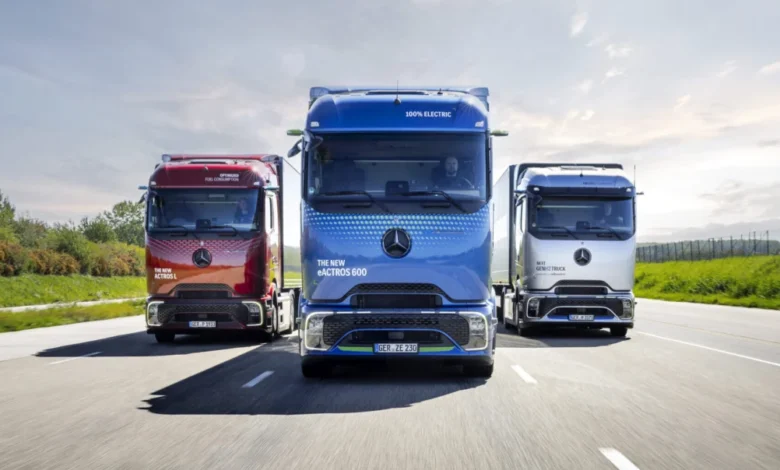
The landscape of European heavy transport is facing a structural crisis that has brought the continent’s premier heavy-duty truck manufacturers into direct and urgent conflict with Brussels regulators. Meeting at the IAA transportation summit, the chief executives of Europe’s seven dominant commercial vehicle manufacturers—DAF, Daimler Truck, Ford Otosan, Iveco, MAN, Scania, and Volvo Group—issued a joint appeal calling on the European Commission to delay compliance with its strict 2030 CO2 emissions targets by three years. Representing virtually the entire native manufacturing base of European commercial transport, these executives warn that an unyielding regulatory timeline, paired with a glaring deficit in charging infrastructure and prohibitively high regional energy costs, threatens to impose catastrophic financial penalties while inadvertently handing the European market to fast-moving international competitors.
At the heart of the standoff are the European Union’s binding decarbonization milestones for heavy-duty vehicles (HDVs). Under current regulations, manufacturers are legally mandated to reduce the average emissions of their newly registered vehicle fleets by 43% by 2030, compared to a 2005 baseline. This threshold escalates sharply to a 64% reduction by 2035, culminating in a near-total decarbonization requirement of 90% by 2040. Failure to meet these intermediate benchmarks carries severe monetary consequences designed to force compliance. However, industry leaders argue that the enforcement mechanism penalizes truckmakers for systemic failures in the wider energy and infrastructure ecosystem that remain entirely outside corporate control.
The Reality Gap: Slow Adoption Rates Across Europe
The core argument put forward by the industry centers on a stark divergence between regulatory ambitions and the realities of commercial fleet operations. While policymakers in Brussels drafted targets assuming a rapid, linear transition to zero-emission mobility, real-world adoption among commercial transport operators has stalled. According to data from the European Automobile Manufacturers’ Association (ACEA), zero-emission vehicles accounted for a paltry 2.4% of total new heavy-duty vehicle registrations across Europe at the time of the joint appeal.
With less than four years remaining until the 2030 deadline, industry analysts consider it mathematically improbable that the market will close the gap organically. A granular look at individual member states highlights the fragmented nature of the transition. The adoption of heavy-duty electric trucks remains virtually nonexistent in several key transit corridors; Poland, Spain, and Italy each register zero-emission adoption rates sitting below 1%. Meanwhile, the continent’s two largest heavy-duty truck markets—Germany and France—are performing only marginally better, recording adoption rates of 4.3% and 2.4% respectively.
For commercial fleet operators, purchasing a battery-electric or hydrogen fuel-cell truck remains an economically unviable gamble. Diesel trucks continue to offer unmatched operational flexibility, rapid refueling times, and predictable total cost of ownership. Without a robust public ecosystem to support heavy commercial electric vehicles, logistics companies have largely chosen to defer fleet upgrades, leaving manufacturers holding the financial liability for unsold green inventory.
Financial Exposure and the Multibillion-Euro Fine Threat
The urgency expressed by Europe’s truck manufacturers is driven by the sheer arithmetic of the EU’s penalty structure. Under the existing rules, manufacturers face non-compliance fines amounting to €4,250 (approximately $4,935) per gram of CO2 emitted over the permitted threshold per vehicle. Given the projected sales volumes of heavy commercial vehicles through the end of the decade, ACEA calculations indicate that missing the 2030 target by a mere 3% could expose the collective industry to financial penalties totaling roughly €2.2 billion.
The European Commission has demonstrated some awareness of the industry’s structural constraints. Earlier in 2026, regulators granted manufacturers increased flexibility in how emission credits are calculated for the transitional period spanning 2005 through 2009. While ACEA welcomed this regulatory adjustment as a constructive step, the concession ultimately provided little comfort, leaving the binding 2030 targets and their corresponding financial penalties completely untouched. For corporate balance sheets already strained by high inflation, supply chain normalization costs, and massive research and development expenditures in zero-emission technologies, a multi-billion-euro fine represents an existential threat.
Karin Rådström, Chief Executive of Daimler Truck and Chair of the ACEA Commercial Vehicle Board, underscored the industry’s dilemma during the IAA summit. "The investments have been made, and a wide range of CO2-free vehicles is available today," Rådström stated, emphasizing that manufacturers have fulfilled their side of the technological bargain. "But making them commercially viable at scale also depends on the wider ecosystem that is clearly delayed and not yet developing fast enough. This means two things: doubling down on the enabling conditions fast, and for the EU to delay the 2030 compliance timeline by three years, to prevent penalties for manufacturers."
The Infrastructure Deficit: Chargers, Grids, and Hydrogen Gaps
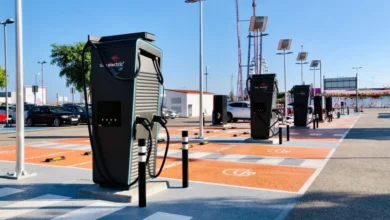
The grievances raised by Europe’s automotive leaders are heavily substantiated by empirical data regarding the continent’s lack of foundational charging and refueling infrastructure. Commercial electric trucks possess vastly different power demands than passenger vehicles, requiring ultra-fast megawatt-level chargers and secure parking facilities with dedicated grid access.
By the industry’s own accounting, fewer than 2,000 public charging points capable of supporting heavy-duty trucks are currently operational across the entire European Union. To keep pace with the European Commission’s 2030 emissions trajectory, independent studies estimate that the continent requires the installation of at least 700 new heavy-duty charging points every single month. At the current pace of deployment, that target is mathematically out of reach.
The situation is similarly bleak for alternative fuel vectors like hydrogen. Fewer than a dozen operational hydrogen refueling stations capable of servicing heavy commercial vehicles exist across the entire European road network, and even those frequently suffer from reliability issues, maintenance downtime, and supply chain bottlenecks. Compounding the physical installation problem is the bureaucratic inertia surrounding power grids. Securing heavy-duty grid connections for new commercial charging depots frequently requires administrative approval processes and engineering work that can take several years to complete, rendering private corporate investments idle for extended periods.
Beyond the physical charging deficit, manufacturers are lobbying policymakers to implement supplementary framework changes to level the playing field. Industry representatives are pressing member states to expand CO2-based road toll systems—which currently exist in only four EU member states—to penalize high-emitting legacy diesel fleets and incentivize cleaner alternatives. Furthermore, truckmakers are demanding immediate revisions to EU weights and dimensions regulations. Because battery packs add substantial mass to heavy commercial vehicles, electric trucks currently suffer from a severe payload capacity disadvantage compared to their diesel-powered counterparts; relaxing weight limits for zero-emission trucks would allow operators to carry equivalent cargo loads without violating legal mass restrictions.
The Rise of Chinese Competitors at IAA
While European manufacturers navigate the regulatory squeeze and infrastructure bottlenecks, a parallel development at the IAA summit has amplified industry anxieties: the aggressive, well-coordinated entry of Chinese commercial vehicle makers into the European market.
Chinese manufacturers arrive in Europe armed with structural and economic advantages that their domestic European counterparts largely lack. Propelled by massive state support, early industrial planning, and a fiercely competitive domestic market, electric trucks already account for approximately 30% of total commercial truck sales within China. This high domestic adoption rate has allowed Chinese supply chains to scale battery production, power electronics, and charging technology at a pace, efficiency, and cost structure that European suppliers have struggled to match.
Recognizing the protectionist tariff hurdles erected by Brussels against Asian automotive imports, several Chinese firms are bypassing potential trade barriers by establishing local manufacturing and assembly operations directly within Europe. Moreover, rather than viewing Europe’s severe charging infrastructure shortage as an insurmountable obstacle, these entrants are treating the gap as a commercial opportunity, frequently bundling vehicle sales with proprietary charging infrastructure solutions and regional energy service networks.
The most prominent example of this strategic pivot was on display by BYD, which used the IAA exhibition to unveil its most comprehensive zero-emission heavy-truck lineup to date. Among the exhibits was a flagship heavy tractor boasting a driving range of up to 600 kilometers on a single charge, equipped with 1.5-megawatt ultra-fast charging capabilities. BYD announced concrete plans to manufacture these vehicles locally within Europe, accompanied by the deployment of a proprietary regional charging network designed to support its customer base. Additional Chinese commercial vehicle brands showcased similar ambitions, utilizing competitive pricing models, advanced battery chemistry, and integrated software services to court European logistics operators who are desperate for viable, cost-effective decarbonization pathways.
Broader Implications and Outlook for Brussels
The standoff between Europe’s legacy truckmakers and EU regulators highlights a fundamental tension at the heart of the European Green Deal: the danger of setting regulatory endpoints disconnected from the pace of industrial infrastructure development. By treating decarbonization compliance as a strict corporate accountability metric rather than a shared societal responsibility, critics argue that Brussels risks penalizing the very industrial base required to execute the green transition.
Commercial vehicle manufacturers are effectively asking European regulators to reframe the debate over potential CO2 penalties as an ecosystem failure. Because heavy-duty charging infrastructure, electrical grid expansion, and regional energy pricing sit largely outside the operational control of truck assembly corporations, automotive leaders argue that penalizing them for systemic government and utility delays is counterproductive.
Whether the European Commission will heed the joint appeal from DAF, Daimler Truck, Ford Otosan, Iveco, MAN, Scania, and Volvo Group remains highly uncertain. Having already offered targeted calculation flexibilities earlier in the year, regulatory authorities face intense political pressure to maintain climate credibility. However, as the window to 2030 rapidly closes and foreign competitors accelerate their footprint across European highways, the stakes for both regulatory flexibility and industrial survival have never been higher.