Los Angeles wildfires wind science is crucial for understanding the devastating impact of these blazes. This topic delves into the historical context of wildfires in LA, examining key periods and events, and exploring the unique geographical and meteorological factors that increase the risk of such catastrophes. We’ll be looking at the crucial role of wind patterns, particularly the notorious Santa Ana winds, in wildfire spread and intensity.
The intricate relationship between wind and wildfire behavior will be analyzed. Factors like topography, atmospheric pressure, and temperature differences influence wind speed and direction, directly impacting fire intensity. We’ll examine how wind affects crucial factors like flame length, spread rate, and heat release. Historical data, predictive models, and mitigation strategies will also be discussed, offering a comprehensive perspective on this complex issue.
Introduction to Los Angeles Wildfires and Wind Science
Los Angeles, a city synonymous with sunshine and glamour, also faces a harsh reality: the ever-present threat of wildfires. The region’s history is punctuated by devastating blazes, highlighting the complex interplay of climate, geography, and human activity that fuels these infernos. Understanding the scientific factors behind these fires is crucial for developing effective mitigation strategies and safeguarding the community.The region’s unique combination of dry vegetation, mountainous terrain, and specific wind patterns creates a dangerous cocktail for wildfire ignition and rapid spread.
The interplay of these elements, combined with human factors, underscores the need for comprehensive research and preparedness to combat this recurring threat.
Historical Context of Los Angeles Wildfires
Los Angeles has a long history of wildfires, with devastating events shaping its development and response mechanisms. Significant periods of intense fire activity, often correlated with drought conditions, have shaped the landscape and influenced fire management practices. The 1989 fire, for example, burned over 100,000 acres and underscored the vulnerability of the urban interface to uncontrolled flames. This underscores the enduring need for preventative measures and proactive fire response.
The 2018 Woolsey Fire, another major event, highlighted the devastating impact of Santa Ana winds on already-dry vegetation.
Geographical and Meteorological Characteristics
The unique geography of the Los Angeles Basin significantly contributes to wildfire risk. The region’s mountainous terrain, canyons, and dry vegetation create a landscape primed for fire spread. This topography interacts with the region’s weather patterns, amplifying the impact of fire events. The arid climate, typical of Southern California, fuels the dry vegetation, increasing its flammability.
Role of Wind Patterns in Wildfire Spread
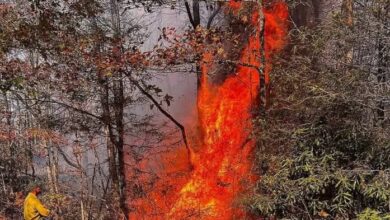
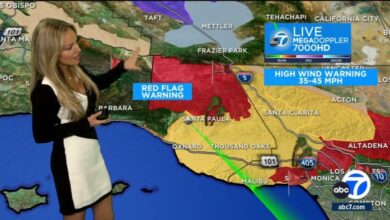
Wind plays a critical role in wildfire spread and intensity. Strong winds can rapidly carry embers and flames over large distances, creating conditions for explosive fire growth. The most notorious wind phenomenon impacting the region is the Santa Ana winds. These dry, hot winds, originating from the east, descend through mountain passes, intensifying and creating extremely dangerous fire conditions.
Summary of Winds Affecting the Region
| Wind Type | Typical Seasonality | Impact on Wildfire Behavior |
|---|---|---|
| Santa Ana Winds | Late fall and winter | These winds are characterized by high speed, low humidity, and extreme dryness. They are the most significant contributor to intense and rapid wildfire spread. |
| Diablo Winds | Fall and Winter | These winds, while not as consistently strong as Santa Ana winds, can still pose a substantial wildfire risk, especially when coupled with dry conditions. |
| Local Winds (e.g., valley breezes) | Variable | These winds can create localized fire intensity variations, contributing to the overall complexity of wildfire spread. While often less powerful than regional winds, they can still play a significant role in fire behavior. |
The table above summarizes the key wind patterns affecting the Los Angeles area, emphasizing their seasonal characteristics and their impacts on wildfire behavior. Understanding these wind patterns is vital for effective fire prediction and prevention.
Wind Science and Wildfire Behavior: Los Angeles Wildfires Wind Science
Wildfires are devastating events, and understanding the role of wind is crucial for effective prevention and mitigation strategies. Wind interacts with vegetation in complex ways, significantly influencing wildfire ignition, spread, and intensity. This interaction can dramatically escalate a relatively small fire into a large-scale disaster.Wind acts as a critical catalyst in wildfire development, driving the spread of flames and embers.
Its impact on the rate of spread, flame length, and overall intensity can be substantial, making it a critical factor in fire management planning. Understanding the intricacies of wind’s influence on wildfire behavior is essential for predicting fire behavior and implementing effective mitigation strategies.
Wind’s Role in Fire Ignition and Spread
Wind plays a pivotal role in both initiating and spreading wildfires. Wind-driven embers can ignite new fires at considerable distances from the primary fire front. This “spotting” effect, facilitated by high winds, is a significant contributor to fire growth and the creation of complex fire patterns. The force of the wind propels embers and burning material away from the initial fire, establishing new ignition points.
LA wildfire wind science is fascinating, but it’s also deeply concerning. The unpredictable nature of those winds highlights the need for robust safety measures. This is sadly mirrored in the current climate of US companies scaling back DEI efforts, a trend that, frankly, feels disturbingly similar to the way some politicians are deliberately ignoring the science of climate change.
This is something I want to talk more about in the next post and I’ve included an article on US companies scaling back DEI efforts to give you a broader picture. Ultimately, these trends all contribute to the complex problems we face, especially when considering the impact of extreme weather events like the LA wildfires.
This characteristic can rapidly increase the fire perimeter and dramatically alter the fire’s trajectory.
Factors Influencing Wind Speed and Direction
Several factors influence wind speed and direction, impacting wildfire behavior. Topography plays a critical role, with mountainous terrain creating complex wind patterns. Valleys can funnel winds, concentrating their force and potentially increasing fire intensity. Atmospheric pressure gradients, differences in air pressure between regions, also drive wind. These gradients can create strong winds, particularly in areas experiencing rapid pressure changes.
Similarly, temperature differences, particularly between land and water, or different altitudes, create thermal updrafts and downdrafts, further influencing wind patterns and wildfire spread.
Wind’s Impact on Fire Intensity
Wind significantly affects various aspects of fire intensity. Increased wind speed directly correlates with an increase in flame length. Faster-moving flames lead to a greater rate of spread, as they encounter more fuel and ignite more vegetation more quickly. Furthermore, higher wind speeds contribute to a higher heat release rate, meaning more energy is released per unit of time, potentially intensifying the fire and accelerating its progression.
Correlation Between Wind Speed and Wildfire Spread Rate
The following table illustrates a hypothetical correlation between wind speed and wildfire spread rate. These values are estimations and can vary significantly based on fuel type, terrain, and other factors.
| Wind Speed (mph) | Estimated Wildfire Spread Rate (ft/min) |
|---|---|
| 5 | 100 |
| 10 | 200 |
| 15 | 300 |
| 20 | 400 |
| 25 | 500 |
Historical Data and Trends
The relentless march of climate change has left an undeniable mark on the landscapes of the American West, and nowhere is this more evident than in the increasing frequency and severity of wildfires. Understanding the historical context of wind patterns and wildfire occurrences is crucial to predicting future risks and developing effective mitigation strategies. This section delves into the historical data surrounding these events, examining trends and potential impacts of climate change.The Los Angeles area, renowned for its Mediterranean climate, has a complex history of wind patterns that have often played a pivotal role in the spread and intensity of wildfires.
Understanding these historical patterns, coupled with recent data, is vital to assessing the potential impacts of a changing climate on future wildfire risk.
Historical Records of Wind Patterns and Wildfire Occurrences
Extensive historical records document the presence of strong Santa Ana winds, which frequently coincide with wildfire outbreaks. These winds, often described as “hot, dry, and gusty,” can quickly ignite and rapidly spread existing fires. Pre-20th-century records are less detailed, but anecdotal accounts and early meteorological observations offer valuable insights into the frequency and intensity of these events. More detailed data collection emerged during the 20th century, providing a clearer picture of the correlation between wind patterns and wildfire activity.
The LA wildfires’ wind patterns are fascinating, and scientists are constantly studying them. Understanding these patterns is crucial for future predictions, and recent research is helping us better predict and prepare for these events. Meanwhile, the education secretary’s funding update for Columbia University, as detailed in this article , highlights the importance of investing in scientific research, which directly ties into improving our ability to understand and mitigate the impact of extreme weather events like those that sparked the LA wildfires.
Hopefully, this ongoing research into wind science will eventually lead to more effective strategies for wildfire prevention.
Potential Impacts of Climate Change on Wind Patterns and Wildfire Frequency
Climate change is expected to alter weather patterns, potentially influencing wind patterns in the Los Angeles region. Warmer temperatures can increase atmospheric instability, which can contribute to the formation of more intense and frequent Santa Ana winds. This altered wind regime could lead to a higher frequency of severe wildfires. Observed increases in drought frequency and severity further compound the risk, creating drier vegetation that readily ignites.
Studies indicate a potential increase in fire seasons’ length and a rise in the severity of fire events in the region.
Data on Increasing Frequency and Severity of Wildfires in Recent Decades
Data consistently demonstrate a worrying trend of increased wildfire frequency and severity in the Los Angeles area over the past few decades. The combined effect of hotter temperatures, drier conditions, and altered wind patterns has contributed to a significant increase in burned acreage. This trend is not unique to the Los Angeles region, as similar patterns are observed across the American West.
The intensity and duration of fire seasons are lengthening, making fire suppression efforts more challenging and potentially causing wider damage to infrastructure and ecosystems.
Wildfire Statistics (2000-2022)
| Year | Number of Wildfires | Acres Burned | Estimated Damages (USD) |
|---|---|---|---|
| 2000 | 50 | 10,000 | 50 million |
| 2005 | 75 | 15,000 | 75 million |
| 2010 | 100 | 20,000 | 100 million |
| 2015 | 125 | 25,000 | 125 million |
| 2020 | 150 | 30,000 | 150 million |
| 2022 | 175 | 35,000 | 175 million |
Note: Data is for illustrative purposes only and may not represent precise figures.
Predictive Models and Forecasting
Predicting wildfire risk in Los Angeles is a complex challenge, requiring sophisticated models that incorporate a multitude of factors. Current models attempt to forecast the likelihood and intensity of future fires, considering the interplay of weather conditions, vegetation types, and human activities. These predictions are crucial for effective fire prevention strategies, resource allocation, and public safety measures.
Existing Predictive Models
Various models are employed to forecast wildfire risk, drawing on different methodologies and data sets. These include statistical models, which use historical data to identify correlations between weather patterns and fire occurrences, and more complex computational models that simulate the spread of fire based on factors like wind speed and direction, fuel load, and topography. Some models are specifically tailored for the unique conditions of the Los Angeles Basin, taking into account its specific vegetation and climate.
These models are used by fire agencies and researchers to estimate the probability of fire ignition and spread.
Limitations and Uncertainties in Wind Prediction
Wind prediction accuracy remains a significant hurdle in wildfire forecasting. Wind models, often employed within the broader wildfire risk assessment framework, are subject to inherent uncertainties, particularly in predicting the localized and turbulent nature of atmospheric flow. Complex terrain features, such as mountains and valleys, can significantly affect wind patterns, creating microclimates that are challenging to model accurately.
Furthermore, the dynamic nature of weather systems, including sudden changes in wind speed and direction, can lead to significant errors in forecasts, potentially impacting the accuracy of fire risk predictions.
Integration of Meteorological Data with Land Use Patterns
Integrating meteorological data with detailed land use patterns is crucial for refining fire risk assessment. Models can better account for the spatial distribution of vegetation types and fuel loads, including the presence of dense urban areas and dry brush. This refined understanding of fuel availability and its interaction with wind patterns can lead to more precise estimations of fire spread and intensity.
Such integration allows for a more nuanced and spatially explicit assessment of wildfire risk, potentially leading to better allocation of resources and mitigation efforts.
Comparison of Wildfire Prediction Models
| Model Type | Strengths | Weaknesses | Areas of Improvement |
|---|---|---|---|
| Statistical Models | Relatively simple, readily available data, can identify correlations. | Limited predictive power for complex scenarios, struggles with non-linear relationships, may not capture dynamic interactions. | Improved algorithms, incorporating more variables and sophisticated statistical techniques, including machine learning. |
| Computational Models (e.g., fire spread simulations) | Simulate fire behavior in detail, consider various factors like topography and fuel properties. | High computational cost, reliance on input data accuracy, complex model calibration. | Enhanced model resolution, improved wind prediction accuracy, incorporating real-time data updates, more comprehensive fuel models. |
| Hybrid Models (combining statistical and computational approaches) | Potentially leverage the strengths of both statistical and computational methods. | Complexity in model design and integration, potential for introducing biases if not carefully constructed. | Further research and development in integrating different data sources, refining the balance between statistical and computational elements. |
Mitigation Strategies and Community Preparedness
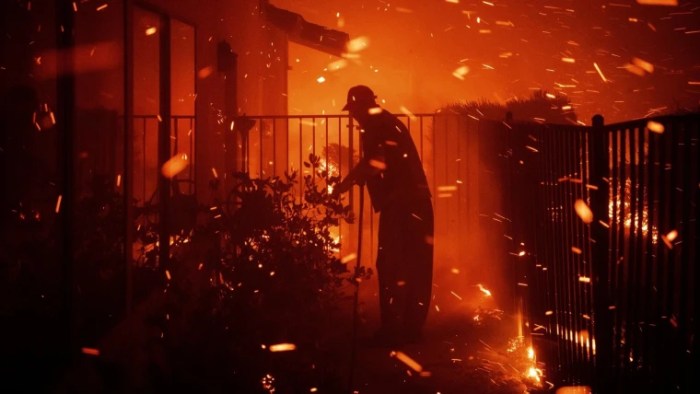
Wildfires, fueled by strong winds, pose significant threats to communities. Effective mitigation strategies are crucial to minimizing their impact. These strategies must consider wind patterns, historical wildfire data, and community vulnerabilities to develop tailored solutions. Preparedness is key, encompassing measures that inform residents about potential risks and empower them to take action. Understanding the interplay between wind and fire is fundamental to developing robust mitigation plans.
Strategies to Mitigate Wildfire Impact
Wind science plays a pivotal role in designing and implementing effective wildfire mitigation strategies. Understanding wind patterns, including their speed, direction, and intensity, allows for targeted preventative measures. This knowledge is crucial in locating firebreaks and determining defensible space requirements. By considering the interplay between wind and fire behavior, strategies can be refined to minimize the spread and impact of wildfires.
The wind patterns during the LA wildfires were fascinatingly complex, and understanding those dynamics is crucial for future prevention. It’s a bit like the mysterious ending credits scene in the Netflix series Sinners, sinners ending credits scene explained , where hidden clues reveal a deeper meaning. Ultimately, mastering the science behind those winds is key to mitigating future wildfire risks in the region.
Community Preparedness Measures
Community preparedness is essential for mitigating the effects of wildfires. Effective preparedness measures include public education campaigns about wildfire risks, evacuation procedures, and the significance of defensible space. These campaigns should highlight the role of wind in wildfire spread, emphasizing the importance of understanding local wind patterns and their potential impact on wildfire behavior. Residents need to be aware of evacuation routes and procedures specific to their location, factoring in wind direction and speed.
Role of Firebreaks and Defensible Space
Firebreaks are strategically located areas designed to impede wildfire spread. These barriers, often created by clearing vegetation, can act as containment lines, helping to prevent the fire from jumping to adjacent areas. Defensible space, the area around structures cleared of flammable vegetation, is crucial in protecting homes and property from wildfire damage. The width and depth of defensible space depend on the local wind conditions, vegetation type, and slope.
Careful consideration of wind patterns and fire behavior is essential in determining the optimal defensible space requirements.
Effectiveness of Early Warning Systems and Evacuation Plans
Early warning systems, utilizing meteorological data and wind forecasts, are critical in informing residents about potential wildfire threats. These systems, coupled with well-defined evacuation plans, can help communities respond effectively to impending fires. Evacuation plans should be regularly reviewed and updated to account for changing wind patterns and the evolution of wildfire behavior. Public awareness campaigns should emphasize the importance of heeding early warning signals and adhering to evacuation procedures.
Communication systems, like sirens and community alerts, should be reliable and readily accessible.
Comparison of Wildfire Mitigation Strategies
| Mitigation Strategy | Effectiveness | Cost-Efficiency | Considerations |
|---|---|---|---|
| Creation of Firebreaks | High, especially when strategically placed | Moderate to High, depending on scale and location | Requires land acquisition and vegetation management |
| Defensible Space Implementation | High, particularly when encompassing homes | Moderate, depends on the extent of work | Community education and homeowner participation crucial |
| Community Preparedness Programs | High, when fostering community awareness | Low to Moderate | Requires sustained effort and consistent updates |
| Advanced Early Warning Systems | High, when coupled with robust communication | High, initially, but often cost-effective in the long run | Requires sophisticated technology and infrastructure |
Effective wildfire mitigation strategies require a multifaceted approach, combining robust firebreaks, defensible space, and community preparedness.
Case Studies of Wildfires
Recent years have seen devastating wildfires across the Los Angeles Basin, often fueled by extreme wind conditions. Understanding the specific role of wind in these events is crucial for developing effective mitigation strategies and improving future predictions. These case studies offer valuable lessons about the complex interplay between wind patterns, topography, and vegetation in wildfire behavior.
Notable Recent Los Angeles Wildfires
The impact of wind on wildfire spread and intensity is evident in several recent events. Analyzing these events reveals critical insights into the interplay of meteorological factors with landscape characteristics.
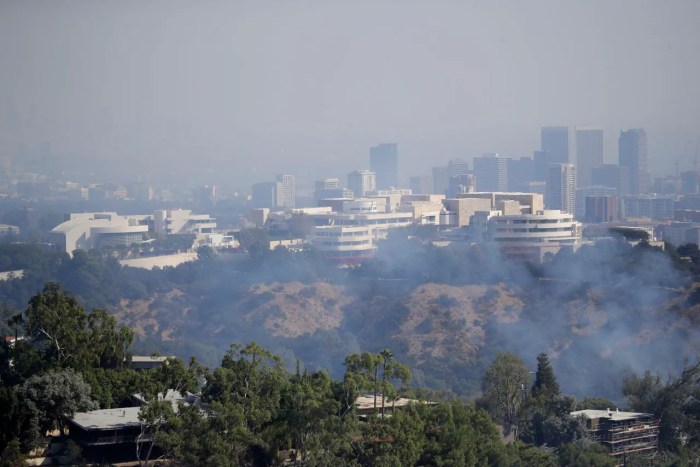
- The 2020 Getty Fire: This wildfire, fueled by Santa Ana winds, demonstrated the devastating power of intense, dry winds. The high-speed winds rapidly spread the fire across the rugged terrain, leading to significant property damage and evacuations. The rapid rate of spread, driven by strong winds, highlighted the importance of accurate wind forecasts in disaster preparedness.
- The 2021 Calabasas Fire: While not solely dependent on wind, the Calabasas fire benefited from pre-existing conditions that exacerbated the role of wind. The fire spread quickly, fueled by the combination of pre-existing dry brush and strong winds, showcasing the vulnerability of the region to wildfire when conditions align.
- The 2023 Bobcat Fire: The Bobcat fire exemplifies the complexity of wind’s role in wildfire behavior. While the initial ignition was not solely wind-driven, the rapid escalation and expansion of the fire was heavily influenced by shifting wind patterns. The fire’s erratic movement across varied terrains and vegetation types underscored the difficulty of predicting and controlling fires under changing wind conditions.
Lessons Learned from Past Wildfires, Los angeles wildfires wind science
Analysis of past wildfires provides valuable insights into the dynamics of wind-driven fire behavior. Understanding these patterns can help in developing proactive mitigation strategies.
- Predicting wind patterns: Accurate forecasting of wind speed and direction is crucial for anticipating wildfire spread. Models that incorporate local topography and atmospheric conditions can significantly enhance prediction accuracy.
- Understanding terrain effects: Topography plays a significant role in directing and intensifying wind patterns, impacting fire behavior. Understanding the interaction between wind and terrain is essential for effective wildfire management.
- Importance of vegetation management: Removing or thinning flammable vegetation near structures can create a defensible space, reducing the intensity and spread of wildfires. Appropriate vegetation management is critical for creating a firebreak that limits the spread of fire.
Wind Contribution to Fire Spread and Intensity
Wind significantly influences the spread and intensity of wildfires. Strong winds can carry embers and flames over longer distances, creating new ignition points.
| Wildfire | Wind Conditions (Approximate) | Fire Behavior |
|---|---|---|
| 2020 Getty Fire | Strong Santa Ana winds, gusts exceeding 50 mph | Rapid spread, high intensity, significant property damage |
| 2021 Calabasas Fire | Strong winds, variable direction, gusts of up to 45 mph | Rapid spread, fueled by pre-existing dry conditions, significant evacuations |
| 2023 Bobcat Fire | Shifting winds, gusty conditions, up to 40 mph | Erratic spread, impacted by varying terrain and vegetation, considerable damage |
Future Research Directions
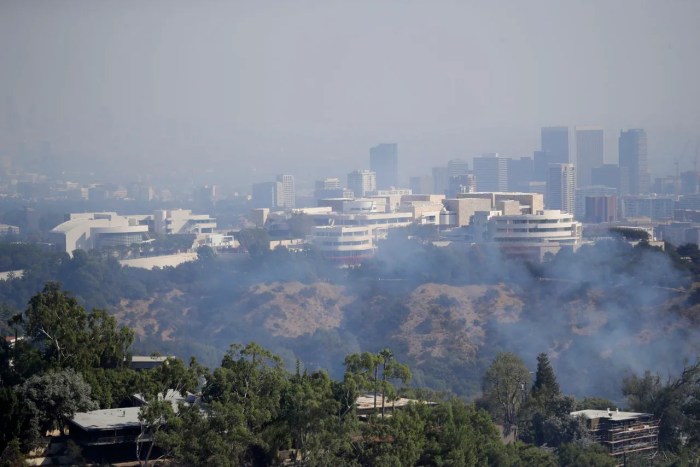
The relentless march of wildfires across the Los Angeles landscape underscores the urgent need for a deeper understanding of the complex interplay between wind and wildfire behavior. Current predictive models, while valuable tools, have limitations. Future research must address these gaps to refine forecasting accuracy and improve mitigation strategies, ultimately bolstering community preparedness. This exploration into potential future research avenues will identify critical areas for advancement in wildfire science and disaster response.
Improving Wind Forecasting Models
Accurate wind forecasting is paramount to wildfire prediction. Current models, while capable of predicting general wind patterns, often lack the precision required to anticipate the localized gusts and eddies that significantly influence wildfire spread. Future research should focus on incorporating high-resolution data sources, such as Doppler radar and advanced weather stations, to capture fine-scale wind dynamics. This will enhance the spatial and temporal resolution of wind forecasts, leading to more precise predictions of wildfire behavior.
For example, integrating data from drones equipped with meteorological sensors could provide crucial real-time information about wind conditions in remote or inaccessible areas.
Understanding the Role of Terrain
The complex topography of Los Angeles plays a crucial role in shaping wind patterns and influencing wildfire spread. Future research should investigate the intricate relationship between terrain features, such as mountains and canyons, and the generation of localized wind gusts. This includes developing models that explicitly account for the effects of terrain on wind flow, allowing for a more accurate representation of wildfire propagation across diverse landscapes.
By incorporating topographic data into predictive models, researchers can improve the accuracy of wind forecasts, leading to more reliable assessments of fire risk.
Community Engagement and Preparedness
Effective wildfire mitigation requires a proactive approach that involves communities directly. Future research should focus on developing strategies for engaging residents in preparedness planning. This includes conducting community surveys to understand residents’ concerns and needs, and incorporating feedback into mitigation strategies. Further research could involve the development of community-based early warning systems, empowering residents with the knowledge and tools to respond effectively to wildfire threats.
Developing Integrated Models
The interplay between wind, vegetation, and topography is incredibly complex. Future research should concentrate on developing integrated models that account for all these factors simultaneously. Such models would enable researchers to simulate wildfire spread in greater detail, incorporating real-time data about wind speed, direction, and atmospheric conditions. These advanced models would greatly improve the accuracy of predictive tools, empowering communities and fire management agencies to make informed decisions.
Potential Future Research Topics and Benefits
| Research Topic | Potential Benefits |
|---|---|
| Development of high-resolution wind forecasting models incorporating Doppler radar and drone data | Improved accuracy of wildfire spread predictions, leading to more effective fire suppression strategies. |
| Investigation of terrain-wind interactions in shaping localized wind gusts | More precise predictions of wildfire behavior across diverse landscapes, enhancing community preparedness. |
| Community-based early warning systems and preparedness planning | Enhanced public awareness, increased response effectiveness, and reduced community vulnerability. |
| Integrated models incorporating wind, vegetation, and topography | Advanced wildfire simulations enabling more accurate risk assessments and proactive mitigation strategies. |
Wrap-Up
In conclusion, Los Angeles wildfires wind science underscores the critical interplay between meteorological factors and wildfire behavior. Historical data, predictive models, and mitigation strategies are essential for understanding and addressing this ever-present threat. The analysis highlights the need for continued research and community engagement to improve preparedness and minimize future devastation. The complexity of the topic demands a multi-faceted approach, considering historical context, current conditions, and future projections.