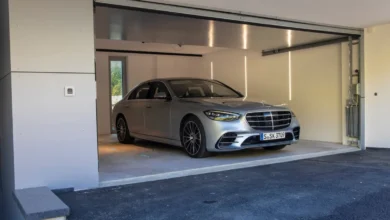
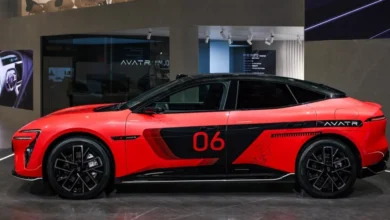
Auto+’s soft EU-content preference shows Spain choosing a gentler protectionism than France’s explicit exclusion of Chinese BEVs

Spain’s Council of Ministers has formally approved the regulatory framework for Auto+, a comprehensive nationwide electric vehicle (EV) incentive scheme designed to anchor the country’s decarbonization efforts through the remainder of the decade. Representing a significant pivot in the nation’s industrial and environmental strategy, Auto+ succeeds the long-standing MOVES III program. The new framework introduces a centralized management system processed through a unified online platform, aiming to resolve the bureaucratic inefficiencies that historically hampered the adoption of battery-electric vehicles (BEVs) across the Iberian Peninsula.
The scheme is backed by an initial funding tranche of €400 million (approximately US$430 million). While the figure is viewed by industry analysts as relatively modest for a multi-year program, its application is retroactive to January 1, ensuring that consumers who have already transitioned to electric mobility this year are not penalized by the timing of the legislative rollout. This move signals the Spanish government’s commitment to maintaining market momentum during a period of transition for the European automotive sector.
A Two-Pillar Subsidy Framework
The architecture of Auto+ is divided into two distinct pillars, tailored to address the needs of both the private consumer market and the commercial sector. For private individuals, the scheme offers a baseline grant of up to €4,500 for the purchase of a new or nearly-new passenger car. This "nearly-new" provision is a strategic addition, designed to stimulate the secondary market for electric vehicles and make cleaner transport more accessible to a broader demographic.
The second pillar targets businesses, the self-employed, and long-term leasing arrangements. In this category, the incentives are more aggressive. Self-employed individuals and micro-enterprises can access up to €6,000 in subsidies. Most notably, businesses eligible under the European Union’s Climate Social Fund can receive grants as high as €12,000. This tiered approach recognizes the higher capital expenditure required for commercial fleets to transition away from internal combustion engines. Separate funding structures have also been established for light commercial vehicles, motorcycles, and quadricycles, ensuring that the electrification effort encompasses the full spectrum of urban and logistical mobility.
Strategic Shifts: Content Preference over Exclusion
One of the most defining features of Auto+ is its nuanced approach to "protectionism." Unlike the French government’s "Eco-score" system—which effectively bars Chinese-made BEVs from receiving subsidies by calculating the carbon footprint of their manufacturing and long-distance shipping—Spain has opted for a "soft" EU-content preference.
Under the Spanish model, additional financial support is reserved for vehicles priced under €35,000 that are either manufactured within the European Union or utilize batteries with a significant percentage of EU-sourced components. However, Chinese-manufactured models are not entirely excluded. They remain eligible for a lower tier of subsidies, provided they meet the basic price and technical criteria.
This policy choice is deeply rooted in Spain’s industrial ambitions. As the second-largest vehicle manufacturer in Europe, Spain has actively positioned itself as a primary gateway for Chinese automakers looking to establish a manufacturing foothold on the continent. By maintaining a more inclusive subsidy structure, Madrid avoids alienating major players like Chery—which recently signed a joint venture to produce vehicles at the former Nissan plant in Barcelona—and MG, which is considering Spain for its first European factory. This "gentler protectionism" seeks to protect local jobs by encouraging foreign direct investment rather than merely erecting trade barriers.
Correcting the MOVES III Legacy: Administrative Efficiency
While the financial tiers of Auto+ are critical, the most impactful change is arguably administrative. The predecessor program, MOVES III, was widely criticized for its decentralized nature, which required regional governments to manage funds. This led to a fragmented landscape where buyers often waited between 12 and 24 months for their reimbursement. For many middle-income families and small businesses, this delay functioned as a significant barrier to entry, as they were forced to carry the full cost of the vehicle on their balance sheets for up to two years.
Auto+ addresses this bottleneck through a centralized, state-managed processing system. By utilizing a single online platform for all applications, the government aims to reduce the reimbursement window from years to a matter of weeks. This shift is expected to significantly lower the barrier for cost-sensitive, mass-market buyers who rely on the subsidy to make the monthly financing of an EV comparable to a traditional gasoline or diesel vehicle.
The Spanish Market in Context: Bridging the Adoption Gap
Spain currently faces a steep climb to reach the electrification levels of its Northern European peers. As of mid-2024, BEVs account for approximately 10% to 11% of new car sales in Spain. While this outperforms the United States, it lags significantly behind the European Union average, which hit a record 23.6% in June 2023. Major markets like Germany, France, and the United Kingdom frequently see BEV market shares exceeding 25%.
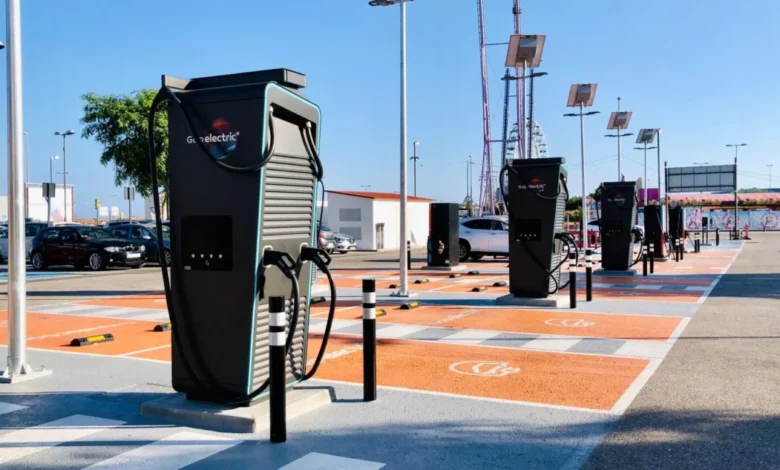
Several factors contribute to this "lag." Lower average purchasing power in Spain, relative to the high upfront sticker prices of BEVs, has historically limited the market to more affluent buyers. Furthermore, the public charging infrastructure remains a concern. While major highway corridors are increasingly well-served, the density of chargers in rural areas and smaller municipalities remains lower than the EU average. Interestingly, Spain’s closest peer in this regard is Italy, which maintains a comparable BEV market share of roughly 8.5%.
Chronology of Spanish EV Incentives
The evolution of Spain’s EV policy reflects a growing, albeit cautious, commitment to the energy transition:
- 2019: MOVES I – Launched with a modest €45 million budget, primarily testing the waters for consumer interest.
- 2020: MOVES II – Budget increased to €100 million as the government sought to stimulate the economy during the COVID-19 pandemic.
- 2021–2024: MOVES III – The longest-running iteration, which saw multiple budget extensions. Despite its funding, it became synonymous with bureaucratic delays.
- 2025–2030: Auto+ – The current framework, characterized by centralized management and a strategic "middle-path" on trade and manufacturing.
Industrial Implications and Stakeholder Reactions
The introduction of Auto+ has drawn a mixed but generally positive response from industry stakeholders. ANFAC (the Spanish Association of Automobile and Truck Manufacturers) has long advocated for a direct discount at the point of sale rather than a retroactive grant. While Auto+ does not go as far as a point-of-sale discount, the promise of a "weeks-long" reimbursement cycle is seen as a major step forward.
However, some environmental groups and infrastructure providers have expressed concern over the removal of certain MOVES III components. Auto+ has dropped specific support for charging infrastructure and scrappage bonuses (incentives for retiring older, polluting vehicles). The government appears to have made a calculated decision to prioritize direct vehicle adoption subsidies within a limited budget, potentially leaving the expansion of the charging network to other programs like the PERTE (Strategic Project for Economic Recovery and Transformation) funds.
Fact-Based Analysis: The Risk of Budget Exhaustion
A primary concern regarding Auto+ is the adequacy of its €400 million budget. Because the fund is retroactive to the start of the year and covers nearly-new vehicles, a significant portion of the capital may already be spoken for by the time the online platform is fully operational. Local media reports and automotive analysts estimate that the funds could be exhausted as early as September or October if sales volumes continue at their current pace.
If the budget is not replenished quickly, Spain risks a "stop-start" market dynamic where sales surge when funds are available and plummet when they are not. This volatility can be damaging to dealership networks and consumer confidence. For Auto+ to truly serve as a bridge to 2030, the government will likely need to secure additional tranches of funding from the European Recovery and Resilience Facility.
Conclusion: A Delicate Balancing Act
Auto+ represents Spain’s most sophisticated attempt yet to reconcile its environmental targets with its industrial realities. By fixing the "payment friction" that plagued MOVES III, the government is addressing the most direct obstacle to mass-market adoption. Simultaneously, by adopting a "soft" content preference, Spain is navigating a delicate geopolitical path—protecting the European battery supply chain without slamming the door on the Chinese investment that is crucial to the future of its domestic manufacturing plants.
The success of Auto+ will not be measured solely by the number of EVs on Spanish roads by the end of the year, but by whether it can sustain a steady adoption curve. While closing the gap with the EU average will take more than just a bureaucratic fix, the transition to a centralized, efficient system is a necessary foundation. As the 2030 deadline for the cessation of new internal combustion engine sales approaches, Auto+ stands as a pragmatic, if financially constrained, blueprint for Spain’s automotive future.
Related posts: