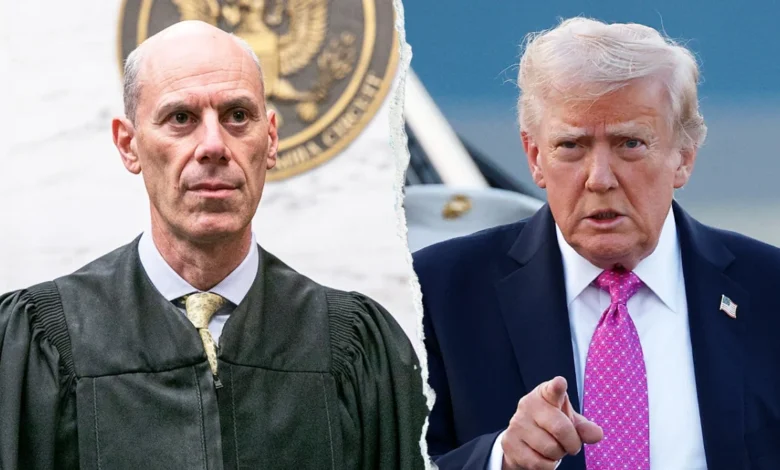
The Trump administration has initiated a significant legal maneuver by moving to deport an unnamed individual suspected of terrorism through the Alien Terrorist Removal Court (ATRC), a specialized judicial body that has remained dormant and unused since its inception nearly three decades ago. This unprecedented action marks the first time in the court’s history that an application for a removal order has been filed, signaling a potential paradigm shift in the United States’ approach to expelling non-citizens deemed national security threats. The Justice Department formally filed its application with the ATRC on July 15, aiming to invoke a little-known law that permits the government to deport foreign nationals suspected of terrorism based on sealed classified evidence, a process distinct from conventional immigration proceedings. If successful, this move could revive what many legal scholars have dubbed a "zombie" court, transforming it into a powerful new instrument for the rapid removal of suspected terrorists from U.S. soil.
The Alien Terrorist Removal Court: A Dormant Power Awakens
The Alien Terrorist Removal Court was established under the Antiterrorism and Effective Death Penalty Act (AEDPA) of 1996, a landmark piece of legislation signed into law by President Bill Clinton. The Act was a direct response to a heightened sense of national security vulnerability following the 1993 World Trade Center bombing and the devastating Oklahoma City bombing in 1995. At the time of its signing, President Clinton articulated the urgent need for such a mechanism, stating, "From now on we can quickly expel foreigners who dare to come to America and support terrorist activities." The court was designed to address a critical gap in existing immigration law, allowing the government to pursue deportation cases against non-citizens suspected of terrorism even when the evidence against them is classified and cannot be publicly disclosed without jeopardizing national security.
The ATRC is composed of five federal district judges, each appointed to serve five-year terms. These judges are drawn from across the U.S. federal judiciary and are tasked with presiding over highly sensitive cases where the government asserts that public disclosure of evidence would compromise intelligence sources or methods. In such instances, the respondent is typically provided with an unclassified summary of the evidence rather than the classified materials themselves. This unique procedural framework, intended to balance national security imperatives with due process, has long been a point of contention among legal experts and civil liberties advocates. Despite its creation with much fanfare and its explicit mandate, the ATRC has never heard a single case prior to the Justice Department’s recent filing. Its prolonged inactivity led many to believe it was a relic of a bygone era, an unused tool gathering dust in the legal arsenal.
The Inaugural Application: Unveiling a New Strategy
The Justice Department’s application, filed on July 15, marks a pivotal moment in the court’s history. According to reports, the one-page sealed document contained minimal details, omitting the identity of the suspected illegal immigrant, the specific alleged conduct, and the precise section of the anti-terrorism law being invoked. This lack of public information is consistent with the ATRC’s design, which allows for proceedings to be largely shrouded in secrecy to protect national security interests. Following initial arguments from Justice Department officials, ATRC Chief Judge Joan N. Erickson, a George W. Bush appointee, requested additional information from the government.
Judge Erickson’s request highlighted the need for greater clarity regarding the "nexus that the government alleges between the actions of the respondent and the specific sections and subsections it invokes with respect to those actions." This indicates the court’s intention to rigorously scrutinize the application, even in its inaugural case, ensuring that the government’s claims meet the statutory requirements for ATRC jurisdiction. The court granted the Justice Department until the following Wednesday to provide the requested documentation, underscoring the immediate nature of these proceedings. This initial judicial query suggests that while the ATRC is designed for expediency and the handling of classified information, it will still operate with a degree of judicial oversight to ensure the proper application of the law.
A Shift in Immigration Enforcement Strategy Amidst Judicial Resistance
This unprecedented activation of the ATRC comes at a time when the Trump administration has repeatedly faced significant resistance from federal judges concerning its broader immigration enforcement agenda. The administration’s aggressive "America First" policies, aimed at tightening border security and increasing deportations, have frequently encountered legal challenges, leading to injunctions, delays, and narrowing of key enforcement measures. This judicial pushback has often forced the administration to seek alternative legal avenues or to intensify its use of existing, sometimes obscure, statutes.
A direct impetus for the administration’s decision to pursue the ATRC path can be traced back to comments made by Chief U.S. District Judge James Boasberg in Washington, D.C., earlier in the year. During a March hearing, Judge Boasberg, while presiding over litigation challenging the administration’s controversial use of the Alien Enemies Act, explicitly pointed to the long-dormant Alien Terrorist Removal Court as a viable alternative for handling terrorism-related deportation cases. "In fact, Congress has an answer for us, doesn’t it? Because they created the Alien Terrorist Removal Court," Boasberg stated. "So if there’s a national security concern with having these hearings, whether via habeas or otherwise, you can always go to the ATRC, which would be a first, but that’s what it’s there for, right?"
Judge Boasberg’s remarks were made in the context of a high-profile legal battle concerning the administration’s attempt to deport alleged members of the Venezuelan gang Tren de Aragua using the Alien Enemies Act, a wartime law. He had temporarily blocked the administration from employing this statute for those removals, questioning its legality and even ordering deportation flights already in the air to return. The judge’s suggestion to utilize the ATRC, therefore, offered a judicial endorsement, or at least an acknowledgment, of an existing, albeit unused, legal framework tailored precisely for national security deportations. This likely served as a significant signal to the Justice Department, providing a potential pathway to bypass the frequent judicial hurdles encountered in other immigration enforcement efforts.
Historical Context and Previous Considerations
The ATRC’s nearly three decades of inactivity are not without a history of deliberation. While no cases ever formally proceeded to a hearing, the 9/11 Commission staff report revealed that Justice Department attorneys did consider approximately 50 cases for the ATRC by 1998, and another 50 over the subsequent two years. However, every single one of these potential cases was ultimately rejected for various reasons. Instead, many terrorism-related deportation cases during that period were pursued through the regular immigration court system, which, while offering greater transparency and traditional due process protections, can be slower and more susceptible to public legal challenges.

The reasons for this historical reluctance to activate the ATRC are multi-faceted. Legal scholars have often cited concerns about the constitutionality of secret evidence and the potential for due process violations. The high bar for initiating such proceedings, combined with the complexities of presenting classified information in a judicial setting while still providing some semblance of due process to the respondent, likely contributed to its dormancy. Furthermore, previous administrations may have preferred to utilize established immigration channels or criminal prosecutions where possible, avoiding the legal and political complexities associated with a court designed for extraordinary circumstances. The decision to activate it now reflects a calculated move by the Trump administration, likely driven by a combination of frustration with judicial interference in other immigration policies and a perceived urgent need for more direct national security tools.
Expert Perspectives and Legal Ramifications
The activation of the ATRC has elicited strong reactions from legal experts and political commentators. Hans von Spakovsky, a senior legal fellow at Advancing American Freedom, expressed support for the administration’s move, telling Fox News Digital, "I think it is a sign of negligence, frankly, of prior presidents that they did not use this special court, this special procedure that was specifically set up by Congress, so that they could quickly get aliens — aliens who were either terrorists or supported terrorist activities — out of the U.S." Von Spakovsky views the ATRC as a "much stronger tool" that could not only streamline terrorism-related deportation cases but also "reduce interference from what I consider to be rogue liberal judges." His comments highlight the ongoing political and ideological divide over judicial oversight of executive actions, particularly in areas of national security and immigration.
Conversely, the ATRC’s very design has long been a source of significant criticism from civil liberties advocates and some political figures. Then-Senator Joe Biden, a Democrat from Delaware, vehemently opposed the law at the time of its passage in 1996. He famously blasted the concept of using secret evidence in deportation proceedings, stating, "You and me, Judge—me, the prosecutor; you, the judge—let’s deport him in a secret hearing, using secret evidence. We know you did it, and we can’t tell you how we know. Now I think that is about as un-American as it gets." Biden’s strong words encapsulate the core concern that the ATRC’s reliance on classified information undermines fundamental principles of fairness, transparency, and the right to confront one’s accusers – tenets central to the American justice system. This historical criticism underscores the enduring tension between national security imperatives and individual due process rights, particularly when the individual in question is a non-citizen facing deportation.
Balancing National Security and Due Process
The central legal and ethical debate surrounding the ATRC revolves around the delicate balance between safeguarding national security and upholding due process rights. While the government has a clear and compelling interest in protecting its citizens from terrorism, the use of classified evidence that the respondent cannot fully review or challenge raises serious questions about the fairness of the proceedings. Critics argue that providing only an unclassified summary may not be sufficient for a respondent to mount an effective defense, potentially leading to deportations based on information that cannot be properly scrutinized or contested.
Proponents, however, contend that the ATRC offers a necessary mechanism for addressing threats that cannot be safely managed through traditional criminal justice or immigration court systems without compromising vital intelligence. They argue that the judges on the ATRC are experienced federal jurists who are well-equipped to review classified evidence and ensure that the government’s claims are legitimate and meet the statutory burden of proof, even if the full scope of that evidence cannot be shared with the respondent or their counsel. The very existence of the ATRC, created by Congress, implies a legislative determination that such a specialized process is sometimes required in extreme national security circumstances. The activation of the court will inevitably reignite these long-standing debates, forcing a re-evaluation of how the U.S. legal system navigates these complex and often conflicting priorities.

Broader Implications for U.S. Immigration Law and National Security
The Trump administration’s activation of the Alien Terrorist Removal Court could have profound implications for U.S. immigration law and national security policy. If the Justice Department’s application is successful, it would establish a powerful precedent, potentially opening the door for more frequent use of the ATRC by this and future administrations. This could significantly alter the landscape of how the U.S. government handles individuals suspected of terrorism who are not U.S. citizens, providing a more direct and expedited pathway for their removal.
The move could empower the executive branch by providing a legal avenue less susceptible to the challenges faced in general federal courts, particularly those related to the public disclosure of sensitive national security information. However, it also promises to invite renewed scrutiny and potential legal challenges from civil liberties organizations, who are likely to monitor the ATRC’s proceedings closely and challenge its application on due process grounds. Any ruling from the ATRC, especially one that leads to the successful deportation of a suspected terrorist, would likely be appealed to higher courts, further testing the legal boundaries of this dormant statute.
The activation of the ATRC underscores a broader trend in U.S. counterterrorism efforts: the continuous search for effective legal tools to manage and mitigate threats from non-state actors and foreign nationals. It represents a concrete step by the Trump administration to fulfill its promise of aggressive immigration enforcement and national security protection, utilizing every available instrument in its legal arsenal. Whether this "zombie" court will indeed become a frequently used tool or remain a rarely invoked last resort will depend on the outcome of this inaugural case and the subsequent legal and political landscape it helps to shape. The eyes of the legal community, national security experts, and civil liberties advocates will remain fixed on the proceedings of the Alien Terrorist Removal Court as it embarks on its first, and potentially most consequential, case in history.
Related posts: