The Endurance Game: Coca-Cola’s James Quincey on the Brutally Competitive Path to the C-Suite and the Evolving Debate on Work-Life Balance

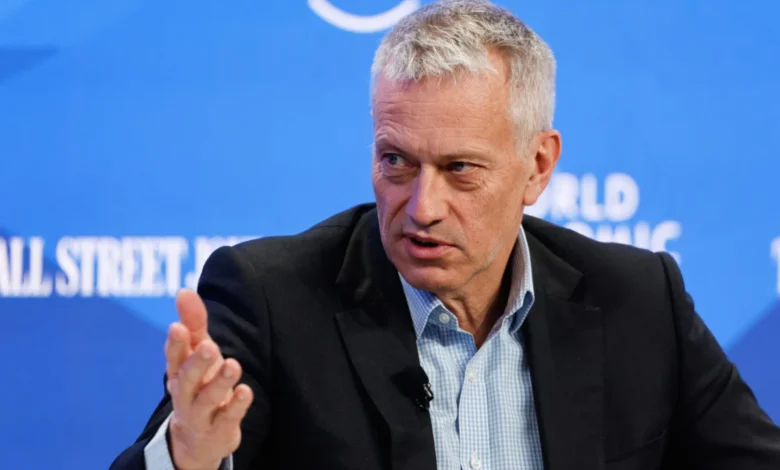
The journey to the pinnacle of corporate leadership is often depicted as a carefully charted ascent, a meticulously planned career trajectory punctuated by strategic moves and calculated risks. However, for James Quincey, the recently transitioned Executive Chairman of The Coca-Cola Company, his rise to the C-suite had less to do with a predefined roadmap and more with sheer endurance, a relentless capacity to navigate successive challenges until he was, in his own words, "the only one left." This candid admission, delivered during a recent interview at the London Business School, offers a stark, unfiltered perspective on the realities of high-stakes corporate advancement, a world Quincey humorously likened to the dystopian survival series, "Squid Game."
Quincey’s "survivor basis" analogy, while tongue-in-cheek, underscores a profound truth about executive careers: they are often brutally competitive arenas where adaptability and persistence trump meticulous planning. "In the end, how did I get to where I am?" Quincey mused, "You could argue it’s survivor basis. I just flipped heads every time the coin went after 20 job rounds and therefore I’m the only one left." This philosophy challenges the conventional narrative of linear career progression, suggesting instead a more Darwinian process where continuous engagement with challenges and a refusal to yield are paramount. The comparison to Netflix’s global phenomenon "Squid Game," known for its high-stakes elimination rounds, vividly illustrates the cutthroat environment that often characterizes top-tier corporate competition, where the ability to persevere through multiple tests of skill and fortitude can be the ultimate differentiator.
The Ascent to the C-Suite: A Test of Endurance
James Quincey’s career at Coca-Cola exemplifies this philosophy of endurance and adaptability rather than rigid planning. A British-born executive, Quincey joined the global beverage giant in 1996, embarking on a path that would see him traverse various leadership roles across different continents. His early career was characterized by a gravitation towards positions that offered significant challenges and opportunities for growth, rather than adhering to a preconceived notion of a "CEO track."
His journey within Coca-Cola began with strategic roles in Latin America, a region known for its dynamic and often complex market landscapes. He served as President of the company’s South American division, where he was instrumental in navigating economic fluctuations and adapting business strategies to diverse local consumer preferences. This was followed by a tenure as President of the Mexican division, a crucial market for Coca-Cola, where his leadership focused on innovation and market expansion. These experiences provided him with a deep understanding of international business operations, supply chain intricacies, and diverse cultural nuances—skills that would prove invaluable as he ascended the corporate ladder.
In 2015, Quincey was appointed President and Chief Operating Officer (COO), a pivotal role that positioned him as a key figure in the company’s global operations and strategic direction. His elevation to CEO in May 2017 marked a significant milestone, succeeding Muhtar Kent and taking the reins of one of the world’s most iconic brands. During his tenure as CEO, Quincey spearheaded several critical initiatives, including portfolio diversification beyond sugary sodas, investment in new categories like coffee and juices, and a strong focus on sustainable packaging and digital transformation. He navigated the company through a period of evolving consumer tastes and increased scrutiny on health and wellness, striving to modernize Coca-Cola’s offerings while maintaining its core brand identity.
In April 2019, he further consolidated his leadership by assuming the role of Chairman of the Board, adding the executive chairman title to his CEO responsibilities. This dual role provided him comprehensive oversight of both the company’s operational execution and its strategic governance. Recently, in late 2025, Quincey transitioned from his role as CEO, stepping down to focus solely on his responsibilities as Executive Chairman. This transition saw Henrique Braun, a 30-year veteran of Coca-Cola, ascend to the CEO position, signaling a carefully planned succession rooted in deep institutional knowledge. Quincey’s continued presence as Executive Chairman ensures a seamless leadership handover and ongoing strategic guidance, reflecting a commitment to long-term stability and direction for the global conglomerate. His trajectory underscores the idea that leadership at this level demands not just intellectual prowess, but also a profound capacity for resilience and sustained effort over decades.
Persistence Over Perfection: The Quincey Doctrine
Beyond the "survivor" metaphor, Quincey emphasizes that the ultimate secret to success lies not in achieving perfection, but in unwavering persistence. He advocates for a proactive approach to career development, urging individuals to actively seek opportunities to make an impact. "No one gets there by being the wallpaper. You’re going to have to be famous for something in each job," he stated, highlighting the necessity of standing out. This "Quincey Doctrine" posits that making a mark requires a willingness to take calculated risks, to innovate, and to accept that not every endeavor will yield immediate success. The corporate landscape is littered with examples of leaders who rose by challenging the status quo, even if it meant facing setbacks. The ability to learn from these "bets" that don’t pay off, and to pivot with renewed determination, is crucial for sustained progress.
This mindset aligns with contemporary leadership theories that stress the importance of agility and a growth mindset. In a rapidly changing global economy, the capacity to adapt, innovate, and continuously learn is often more valuable than rigid adherence to a pre-set plan. Quincey’s emphasis on persistence resonates with the idea that leadership is not merely about executing tasks, but about solving complex problems repeatedly, often under pressure, and inspiring others to do the same.
Rethinking Work-Life Balance: A Generational Divide?
Perhaps one of Quincey’s most provocative statements during the London Business School interview touched upon the widely discussed concept of "work-life balance." He expressed skepticism towards the phrase itself, calling it "a weird phrase" because, in his view, "work was part of life, not separate." He argued that individuals must choose how to invest their lives, acknowledging that this mix can evolve over time, but ultimately remains a personal choice. Furthermore, he stressed that these decisions compound, shaping opportunities and trajectories decades down the line.
Quincey’s perspective stands in stark contrast to prevailing trends, particularly among younger generations entering the workforce. The concept of "work-life balance" itself has evolved significantly over the decades. Initially emerging as a response to the demands of the industrial era, where rigid working hours often clashed with personal and family obligations, it gained prominence in the late 20th century as societies became more aware of the psychological and physical toll of excessive work. In the 21st century, particularly post-pandemic, the discussion has shifted from mere "balance" to "work-life integration" or "well-being," reflecting a desire for a more holistic approach to personal and professional fulfillment.
However, the emphasis on achieving a distinct separation or equilibrium between work and personal life has never been stronger. Recent data paints a clear picture of this shift in priorities. According to a 2025 Workmonitor report by Randstad, a global HR services provider, work-life balance has now surpassed pay as the top factor for talent when considering job opportunities. A remarkable 83% of respondents listed it as their most important consideration, marking the first time in the survey’s 22-year history that work-life balance outranked compensation. This represents a significant re-evaluation of career priorities, driven by a confluence of factors including the volatile job market, the psychological impact of the COVID-19 pandemic, and a broader societal re-assessment of values.
Generation Z, in particular, is at the forefront of this shift. Faced with a challenging job market where entry-level roles are increasingly scarce, Gen Z workers are demonstrating a willingness to prioritize quality of life over raw earning potential. A KPMG survey of interns conducted in early 2026 revealed that Gen Z individuals are prepared to sacrifice, on average, $5,000 in annual salary for a better work-life balance. This generation, having grown up amidst economic uncertainties and heightened awareness of mental health issues, places a premium on well-being, flexibility, and a sense of purpose that extends beyond their professional roles. They seek employers who recognize their holistic needs and offer environments that support both their career aspirations and personal lives.
HR experts and organizational psychologists widely acknowledge this generational divergence. While seasoned executives like Quincey, whose careers were forged in a different corporate era, might view work as an inseparable component of life’s investment, younger generations increasingly perceive a need to actively manage the boundaries to prevent burnout and foster personal growth. Many business leaders now contend that dismissing the concept entirely risks alienating a significant portion of the talent pool. Instead, a more nuanced approach, focusing on flexibility, employee well-being programs, and fostering a culture of respect for personal time, is seen as crucial for talent attraction and retention. This isn’t necessarily about working less, but about working smarter, with greater autonomy and a clearer sense of purpose, ensuring that work enhances, rather than detracts from, overall life satisfaction.
Strategic Focus: The Unconventional Habits of a C-Suite Leader
Even at the pinnacle of the corporate ladder, the challenge of maintaining focus and prioritizing effectively remains paramount. Quincey, at 61, shared his notably unconventional approach to managing his demanding schedule. He confessed to being a proponent of "daydreaming" and adopting a slow, deliberate start to his mornings. "I get up very slowly in the mornings, I drink lots of coffee and I have breakfast, and I don’t fill my day with meetings," he explained to the London Business School students. This deliberate pacing and avoidance of an over-scheduled diary stand in stark contrast to the often frenetic pace associated with C-suite executives.
This approach, however, is not simply about leisure; it’s a strategic choice for deep work and intentional thought. By carving out time for unhurried contemplation, Quincey allows himself space for strategic thinking, problem-solving, and crystallizing priorities without the constant interruption of back-to-back meetings. This echoes principles advocated by productivity experts who champion "deep work"—focused, uninterrupted periods of cognitive effort—as essential for complex problem-solving and innovation. For a leader overseeing a global enterprise like Coca-Cola, the ability to step back, process information, and formulate long-term strategies is far more valuable than simply being perpetually busy. His advice on "choosing what to focus on and sticking to a few priorities" becomes even more critical in an environment saturated with information and competing demands.
While such a level of autonomy and flexibility might not be realistic for everyone, particularly those in early or mid-career stages, Quincey’s underlying message remains universally applicable: intentionality in how one allocates time and mental energy is crucial for success at any level. His advice for young people looking to jumpstart their careers is refreshingly straightforward: "Do something that gets you out of bed in the morning. There’s no harder job than the one you don’t want to do." This underscores the profound importance of intrinsic motivation and passion as drivers of long-term endurance and success, a sentiment that resonates across generations, even if their approaches to "work-life" integration differ.
Implications for the Modern Workforce and Corporate Strategy
James Quincey’s reflections offer significant implications for both individuals navigating their careers and organizations striving to cultivate high-performing cultures. For individuals, his story is a testament to the power of persistence and adaptability in an increasingly complex and competitive professional landscape. It suggests that while ambition is vital, a rigid, linear career plan might be less effective than a flexible, resilient mindset capable of weathering challenges and seizing emergent opportunities. The "survivor basis" philosophy, when stripped of its "Squid Game" hyperbole, advocates for continuous learning, calculated risk-taking, and an unwavering commitment to making a tangible impact.
For organizations, Quincey’s views, particularly on work-life balance, highlight a growing chasm between traditional executive perspectives and the evolving expectations of the modern workforce. Companies face the critical challenge of reconciling the demands of high-performance cultures, which often necessitate significant personal investment, with the increasing desire for well-being and flexibility among employees, especially Gen Z. Ignoring this shift risks not only talent attrition but also a decline in engagement and productivity. Progressive companies are responding by implementing hybrid work models, enhancing mental health support, and fostering cultures that emphasize outcomes over hours, seeking to create environments where employees feel valued and empowered to integrate their work and personal lives in a meaningful way.
The debate sparked by Quincey’s comments on work-life balance is not merely semantic; it reflects a fundamental re-evaluation of societal values regarding labor, personal fulfillment, and the role of work in one’s overall life. While the path to the C-suite may indeed remain a test of endurance, the definition of success, and the pathways to achieving it, are clearly undergoing a profound transformation. Leaders like Quincey offer invaluable insights into the mindset required for top-tier corporate success, yet the broader corporate world must continuously adapt to ensure these demanding journeys remain sustainable and appealing to the talent of tomorrow. The conversation is far from over, and its outcome will shape the future of leadership and organizational culture for decades to come.